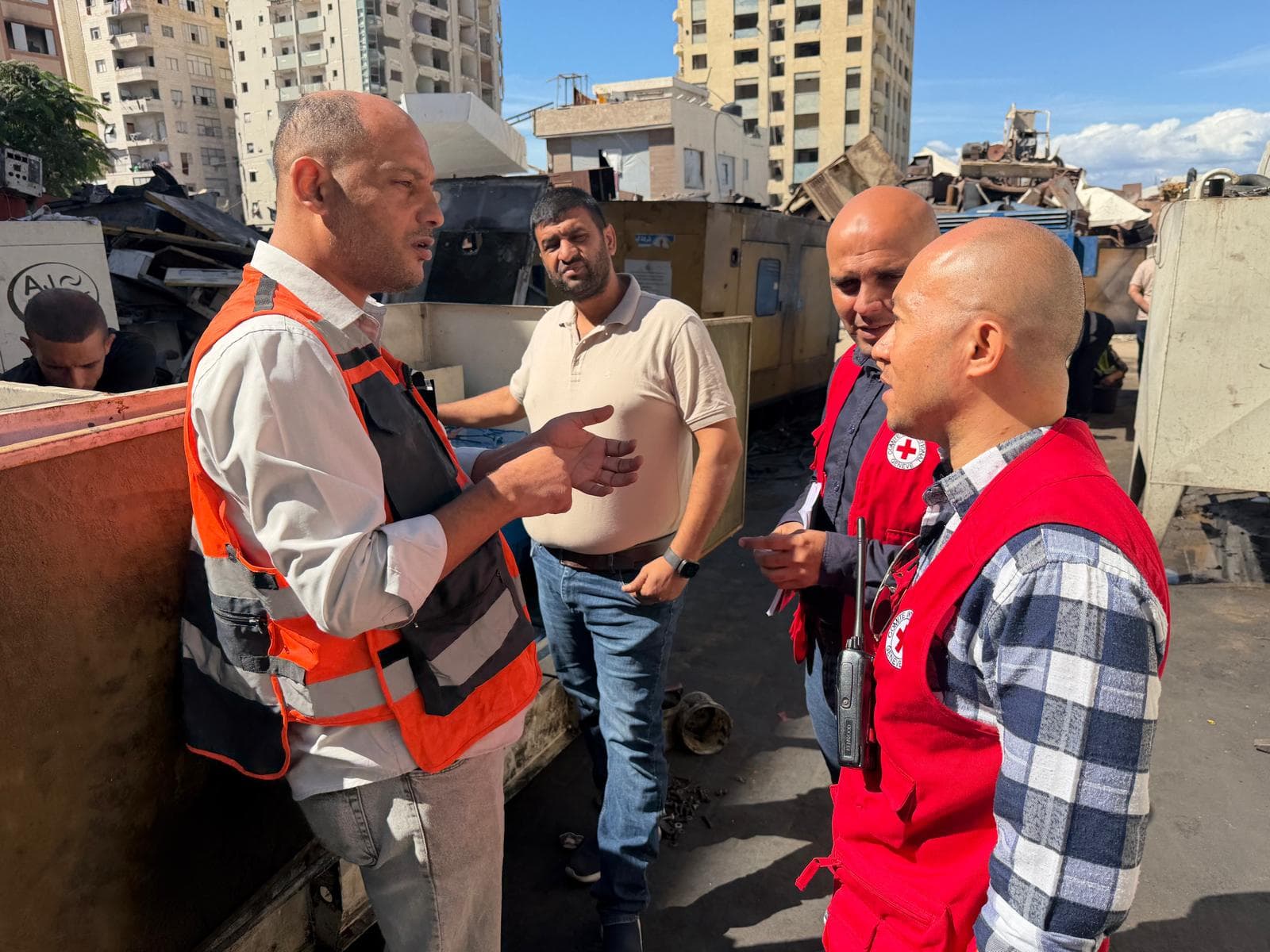
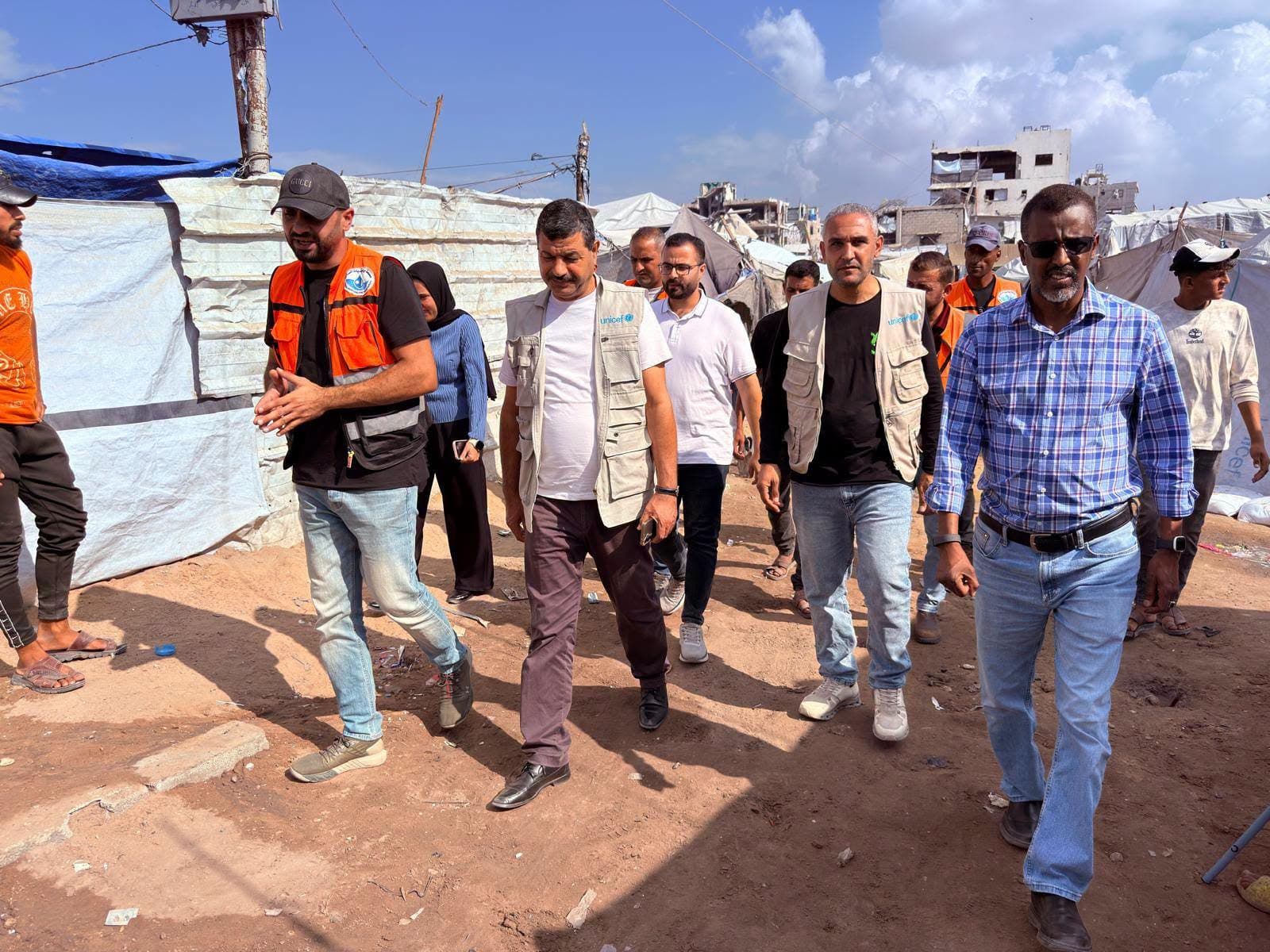
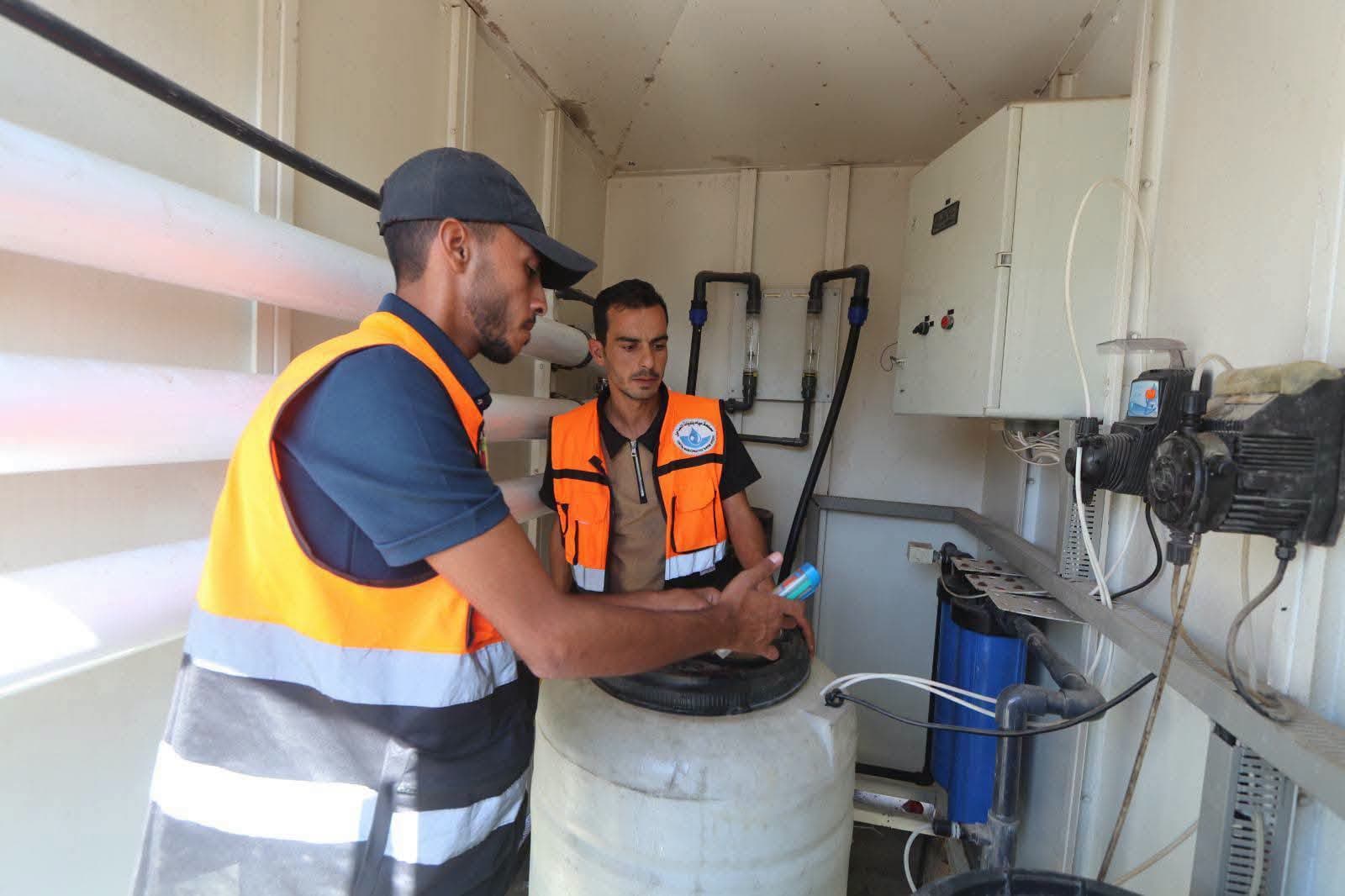
A training course titled "Communication and Liaison Mechanism" for eighty employees to develop an emergency plan, in cooperation with the International Committee of the Red Cross.
CMWU Organizes a Training Course Titled "Communication and Liaison Mechanism" in Cooperation with the International Committee of the Red Cross
CMWU - Gaza
CMWU organized a training course titled "Communication and Liaison Mechanism," in cooperation with the International Committee of the Red Cross, in the presence of Eng. Monther Shoblaq, the Utility's Director-General, and the Head of the International Committee of the Red Cross in Palestine.
The course aims to develop an emergency plan for working during emergencies and wars, forming emergency teams, and providing the capabilities to secure a minimum level of water and sanitation services for residents in the Gaza Strip, by repairing damage to the infrastructure and operating the water and sanitation systems.
Eng. Ashraf Ghanem, Director of the Occupational Safety Department at the Utility, oversaw the organization of the course, with eighty employees from CMWU and the Strip's municipalities working in the water and sanitation sector participating.
In his remarks, Eng. Monther Shoblaq, the Utility's Director-General, affirmed that this course comes within CMWU's keenness to raise the administrative and professional level of workers in the water and sanitation sectors, calling on all participants to benefit from this course and its outcomes.
For his part, Eng. Ashraf Ghanem affirmed that this course came as a product of previous experiences working with the Red Cross, especially during emergencies, crises, and wars, explaining that all participants would receive all the important information in various fields, including international humanitarian law, dealing with war remnants, the mechanism of communication, liaison, and coordination, and reading maps.
Ghanem pointed out that the course concludes with forming a central emergency team covering all the cities of the Gaza Strip's governorates and forming a central emergency room and sub-rooms distributed across the five governorates, calling on all participants in the course to benefit from the Red Cross's experience in dealing with wars and emergencies and raising the level of coordination for urgent intervention and carrying out repairs in border areas.
For their part, the course's participants thanked CMWU and the ICRC for organizing all the information theoretically and practically, which reflects the extent of their interest and keenness on the safety of workers in the water and sanitation departments and serving residents amid the repeated crises and wars on the Gaza Strip.