A press conference titled "Dry Taps" one year after the ceasefire in Gaza highlights the deterioration of the water and sanitation sectors.
The Emergency Water, Sanitation, and Hygiene Group and CMWU Organize a Press Conference Titled "Dry Taps - One Year after the Ceasefire in Gaza"
The Emergency Water, Sanitation, and Hygiene Group (EWASH), CMWU, and the Palestinian Water Authority organized a press conference titled "Dry Taps - One Year after the Ceasefire in Gaza," shedding light on the state of the water and sanitation sectors in the Gaza Strip and the most important problems hindering the development of water and sanitation facilities.
The group's Gaza coordinator, Abeer Abu Shawish, addressed the importance of focusing on the continuously deteriorating water situation in the Gaza Strip, hence this conference and the field tour following it, through which this crisis will be highlighted through the media.
Eng. Monther Shoblaq, CMWU's Director-General, spoke at the conference, noting at the outset that Gaza has shown great determination to move forward in rebuilding what was destroyed during the aggression at all levels, despite the numerous obstacles standing in the way of reconstruction. On another note, Shoblaq pointed out that the water sector has suffered for years from a gradual collapse, especially in water quality, and also the inability to reuse wastewater to ease the severity of the water crisis by reducing extraction from the groundwater aquifer.
Shoblaq said, "During the year following the aggression on Gaza, we were able to bring in $34 million to repair what was destroyed of water and sanitation facilities and installations," adding, "Many donor institutions shared with us the immediate, medium, and long-term reconstruction," mentioning among them the International Committee of the Red Cross, KfW, the Islamic Development Bank, UNICEF, the World Bank, and many friendly donor institutions.
Shoblaq explained that all the facilities that were partially destroyed had initially been repaired and rehabilitated, and work is still continuing to rebuild and reconstruct what was completely destroyed, despite the presence of major obstacles in bringing in the construction materials necessary for building due to the continuing siege imposed on the Gaza Strip.
Shoblaq affirmed that what increases the difficulty of the water and sanitation situation in Gaza is the worsening electricity crisis, represented in the shortage in the number of hours of electricity supply, which affects the operation of facilities, and the shortage of the fuel quantities necessary to operate generators, as well as the generators' inability to work for hours beyond their capacity, and pointed to the bad situation suffered by residents in Rafah city, especially in the summer season, where water reaches some of its areas only once a week due to the weak electrical current reaching it from the Egyptian lines and the inability to operate generators for enough hours to pump appropriate quantities of water to residents and operate sewage facilities to prevent environmental and health disasters.
At the end of his remarks, Shoblaq appealed to the whole world to help put an end to the suffering of residents in the Gaza Strip and prevent environmental and health disasters.
Deputy Chairman of the Water Authority Eng. Rebhi Al-Sheikh pointed out, in statements to journalists at the Water Authority's headquarters, the crisis suffered by the water and sanitation sector and the scale of the damage it sustained, explaining that the reconstruction of the damaged facilities is proceeding slowly but continuous efforts are being made in this regard.
Eng. Al-Sheikh also spoke about the strategic projects that would reduce the depletion of groundwater aquifer water, including seawater desalination projects and sewage water treatment and reuse projects by injecting it into the groundwater aquifer and using it in agriculture.
These projects also target improving water and sanitation networks to improve the quantity and quality of water provided to residents and reduce water losses. He said that there are obstacles and challenges facing these projects and their implementation, so there must be international support for these projects at both the political and financial levels.
The Emergency Water, Sanitation, and Hygiene Group added that the siege, in addition to the methods that had to be found to overcome it (such as the reconstruction mechanism and requests to import dual-use materials), has prevented maintenance, reconstruction, and development in the water and sanitation sector.
After the war there were widespread calls by the international community not to return to the situation that existed, but the situation in Gaza is currently worse than it was before the war. Gaza can only recover and develop if its economy is rehabilitated, where its residents can move freely, and it is reconnected with the rest of the Palestinian territories. All of this can only happen if the siege is lifted, which is considered illegal because it represents a form of collective punishment.
Accordingly, the Emergency Water, Sanitation, and Hygiene Group affirmed the necessity of serious steps being taken by the international community, donors, and European Union countries by pressuring Israel to immediately lift the siege on Gaza and allow the entry of all materials necessary to reconstruct water and sanitation facilities and installations and develop the sector, and bring in sufficient quantities of diesel to operate the Gaza Power Plant and the fuel necessary to operate backup electrical generators, as well as demanding that Israel respect international humanitarian law by protecting civilian facilities and water and sanitation infrastructure and not targeting them, and demanding that Israel provide compensation in the event of damage to or destruction of civilian facilities and infrastructure, and holding Israel accountable for its violation of international law and international humanitarian law.
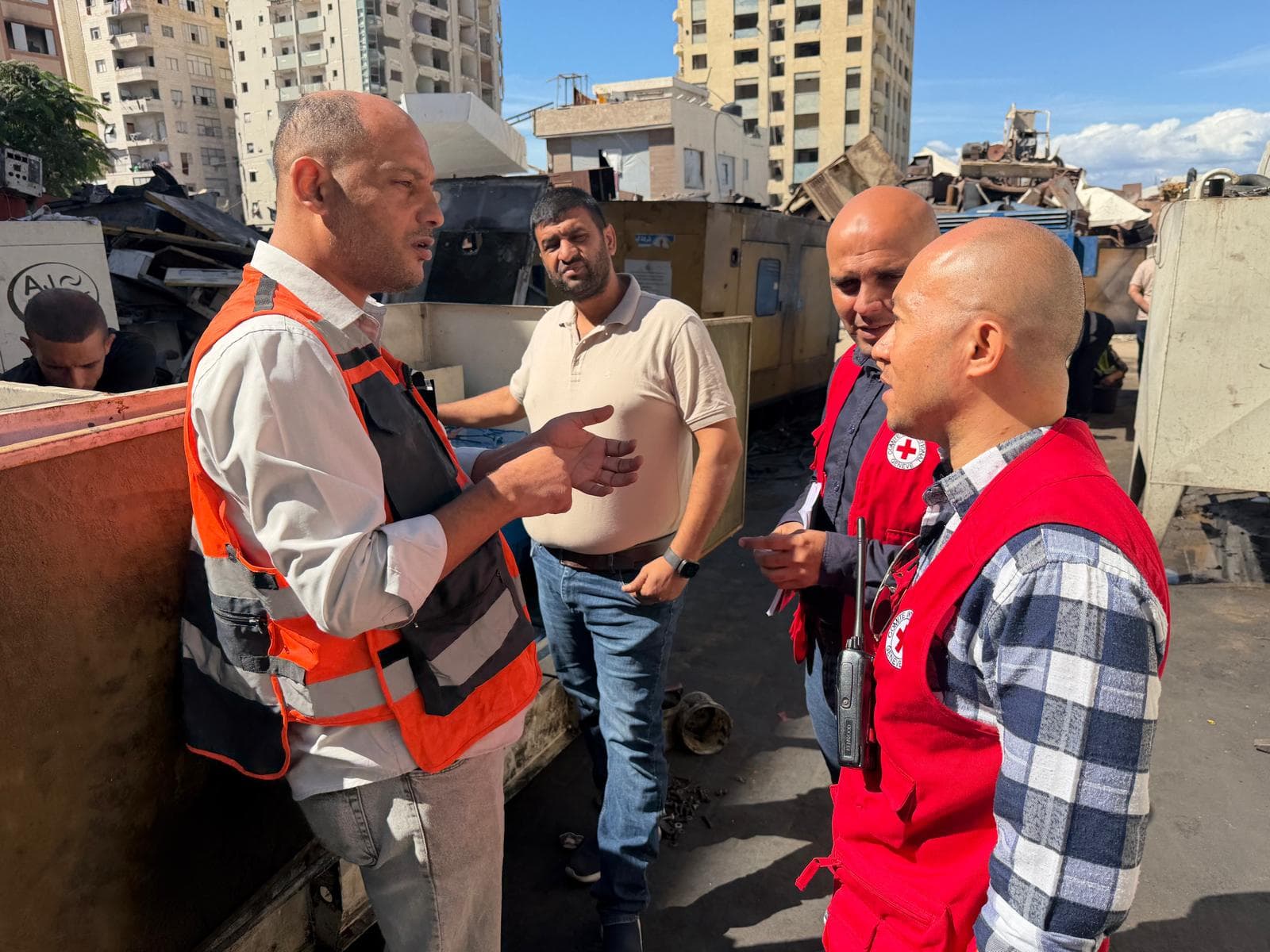
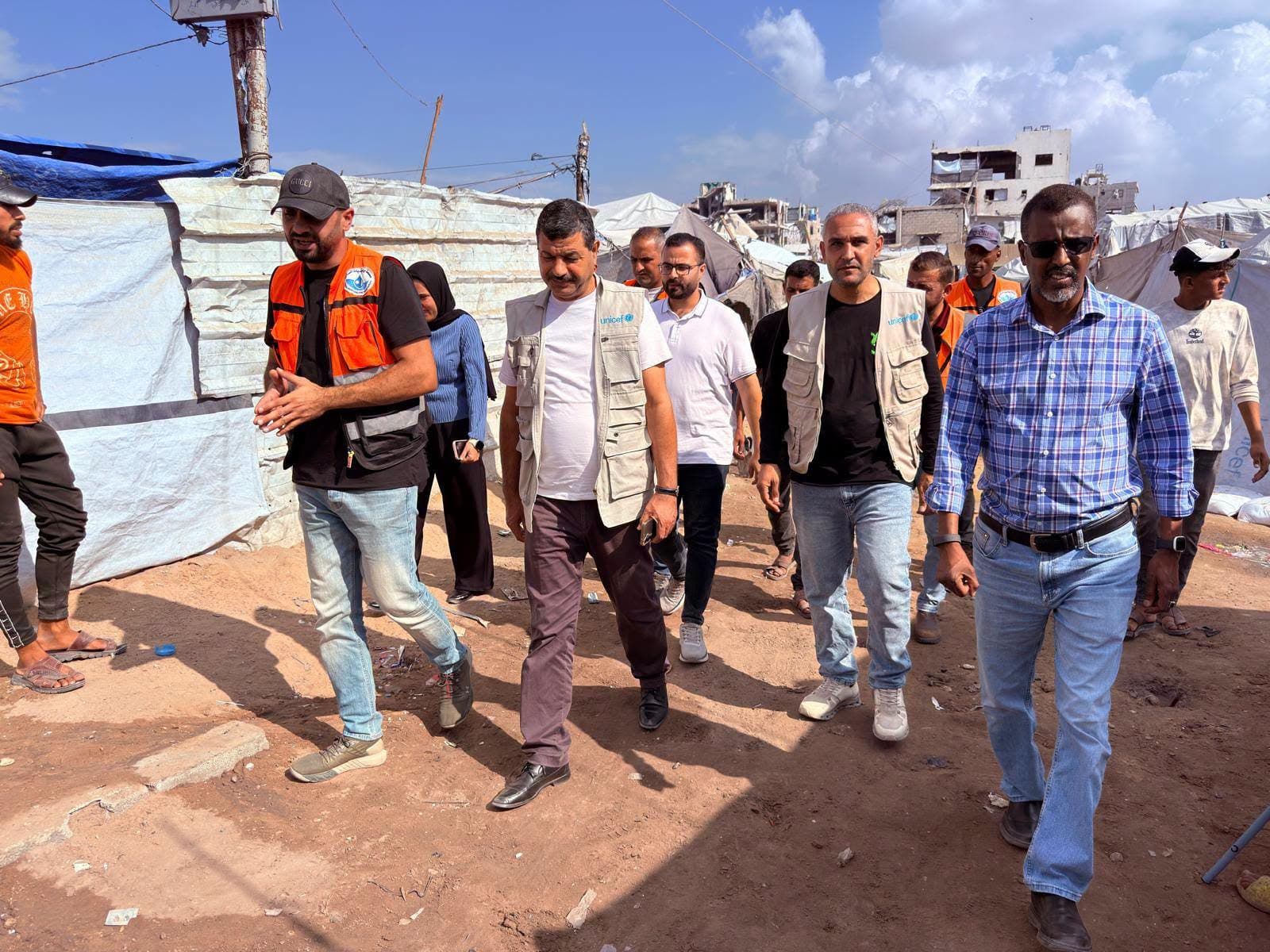
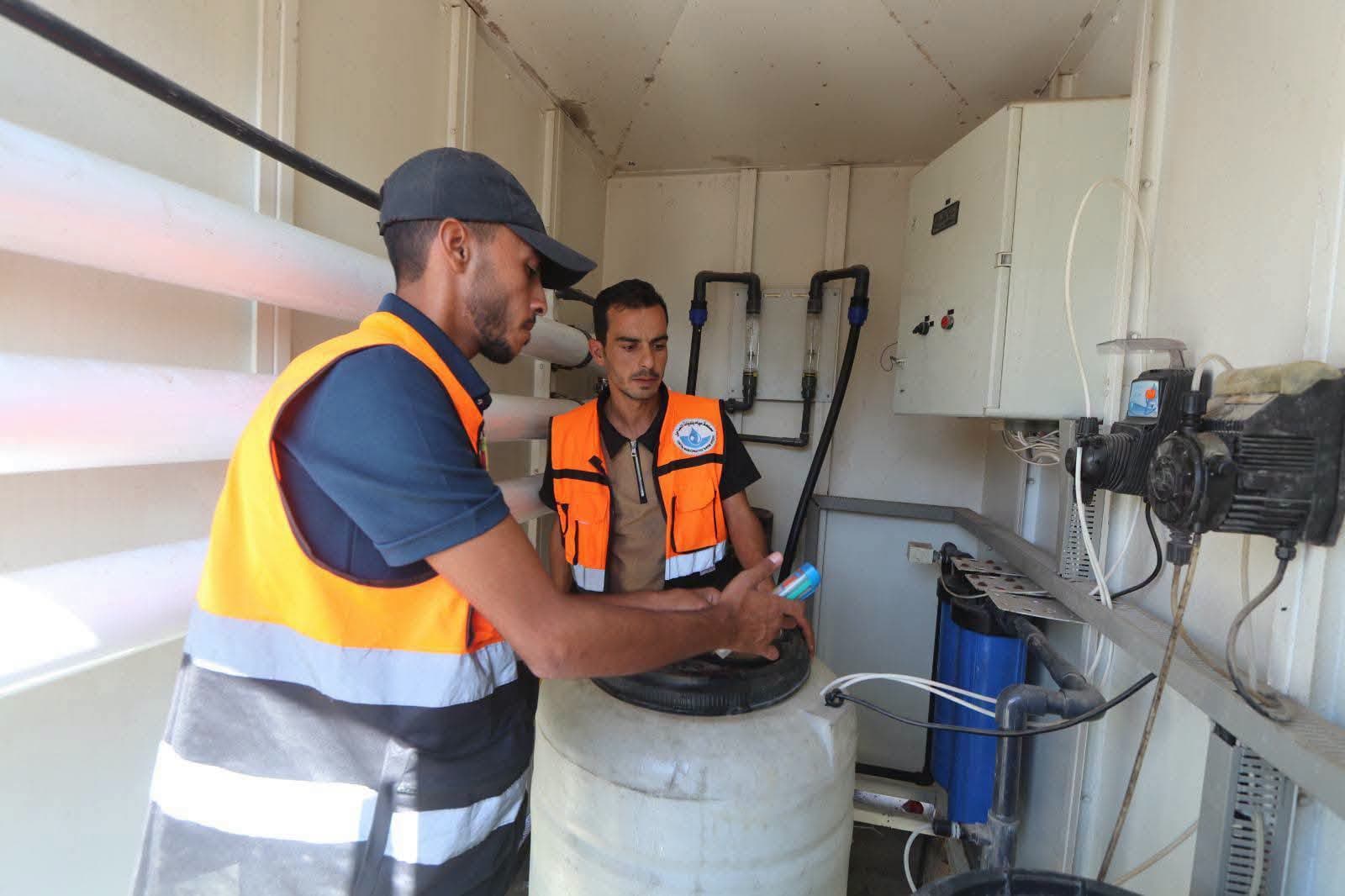
The conference's participants, from journalists, media professionals, and members of the Emergency Water, Sanitation, and Hygiene Group, then set off on a field tour of three water and sanitation facilities destroyed during the aggression, visiting the site of Al-Muntar water reservoir, which was completely destroyed during the aggression, and Gaza sewage pumping station No. 1, where they were received by Eng. Fareed Ashour, Director of the Gaza Central Wastewater project, who explained to the journalists the scale of the damage sustained by the two facilities and its impact on the level of services provided, and that the works of the Al-Muntar reservoir reconstruction project, which serves residents of the eastern area of Gaza, would begin within a week and be completed within 12 months, and that work is halted on repairing the sewage drainage line at pumping station No. 1 due to not being allowed to bring in the materials and equipment necessary as a result of the closure of crossings. The field tour concluded with a visit to the seawater desalination plant in Deir al-Balah, where Eng. Ahmed Al-Rubai, the plant's official, explained the damage sustained by the plant during the aggression and the expansion works and additional desalination units to increase its production capacity.