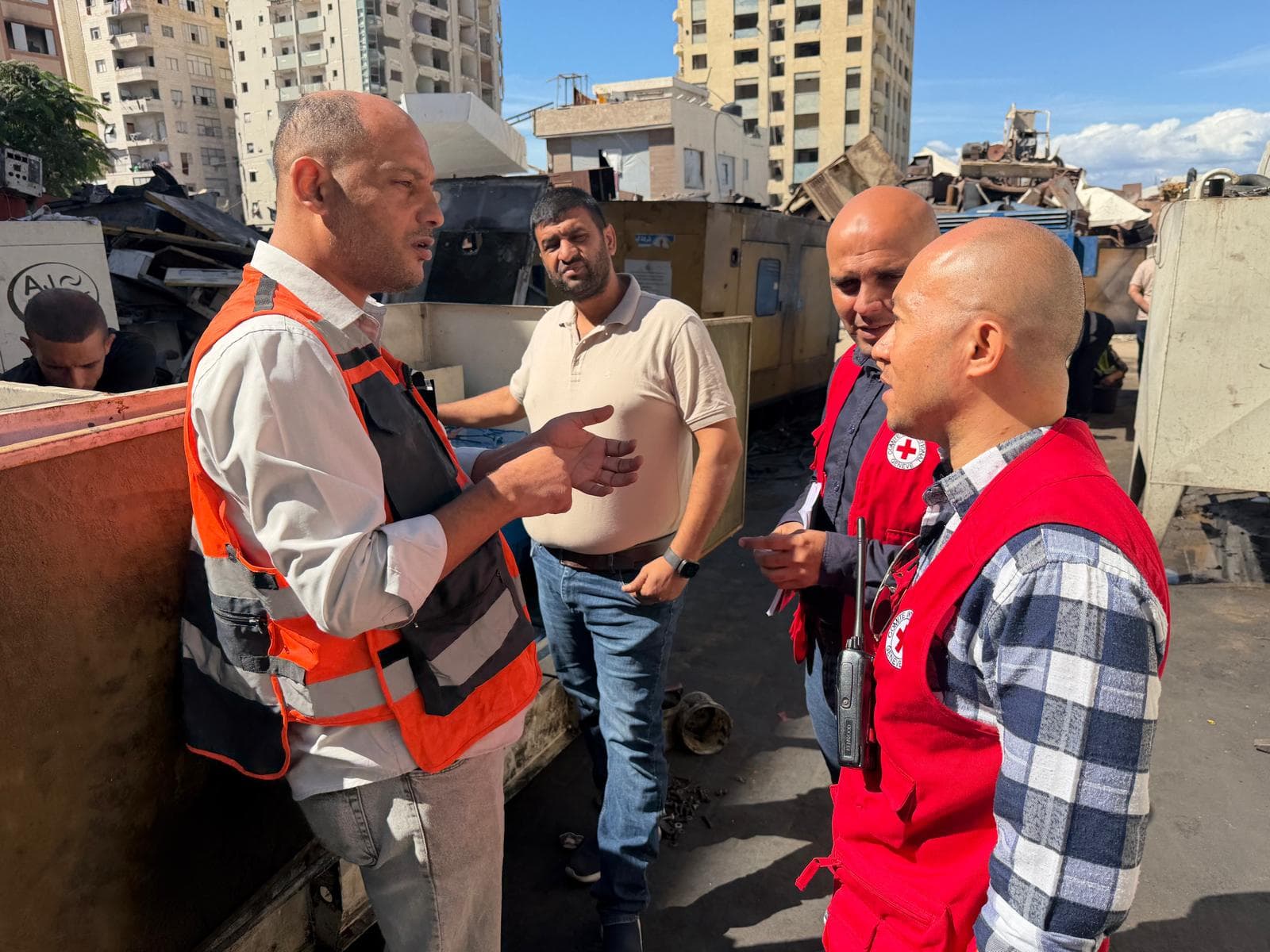
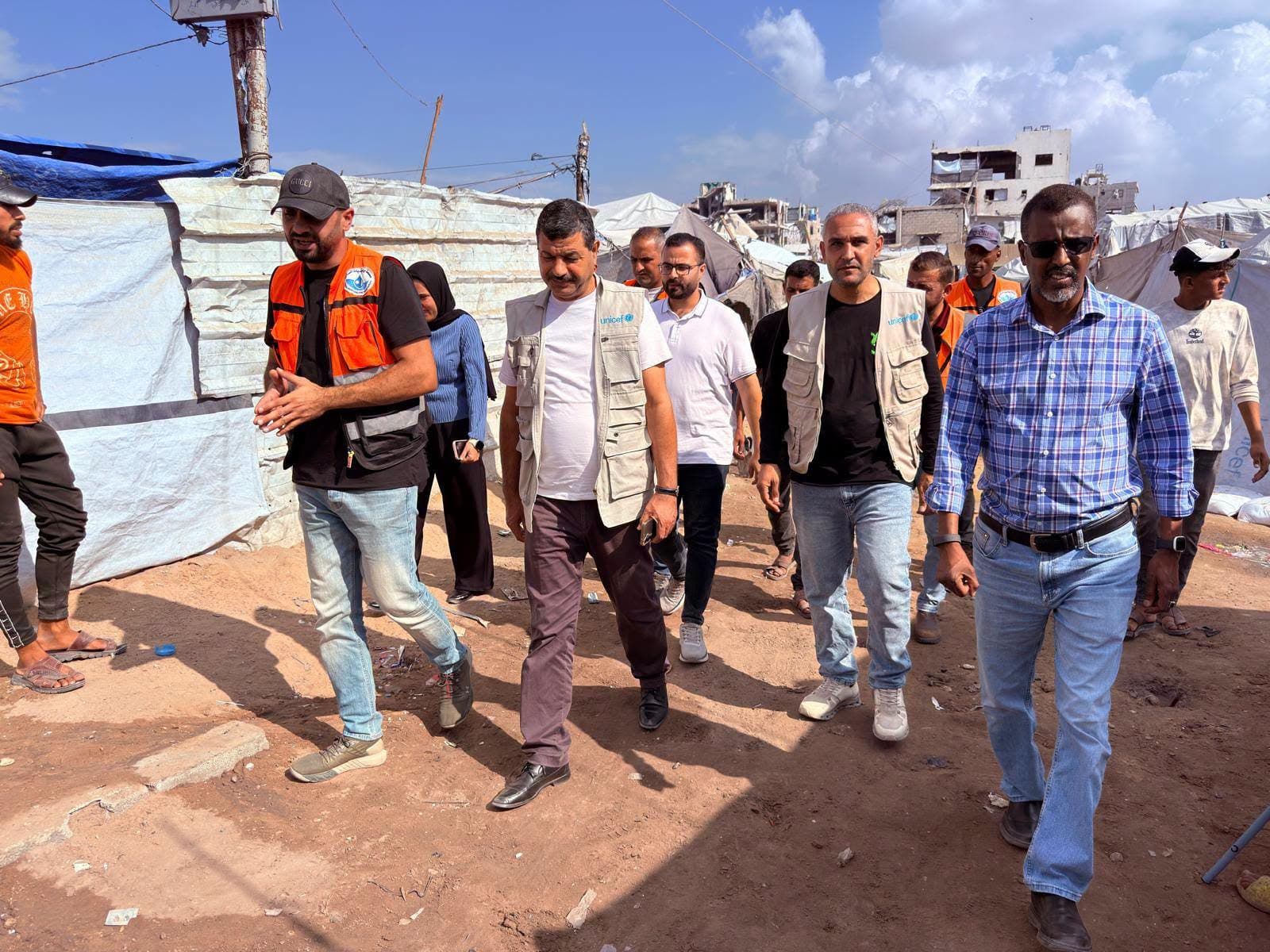
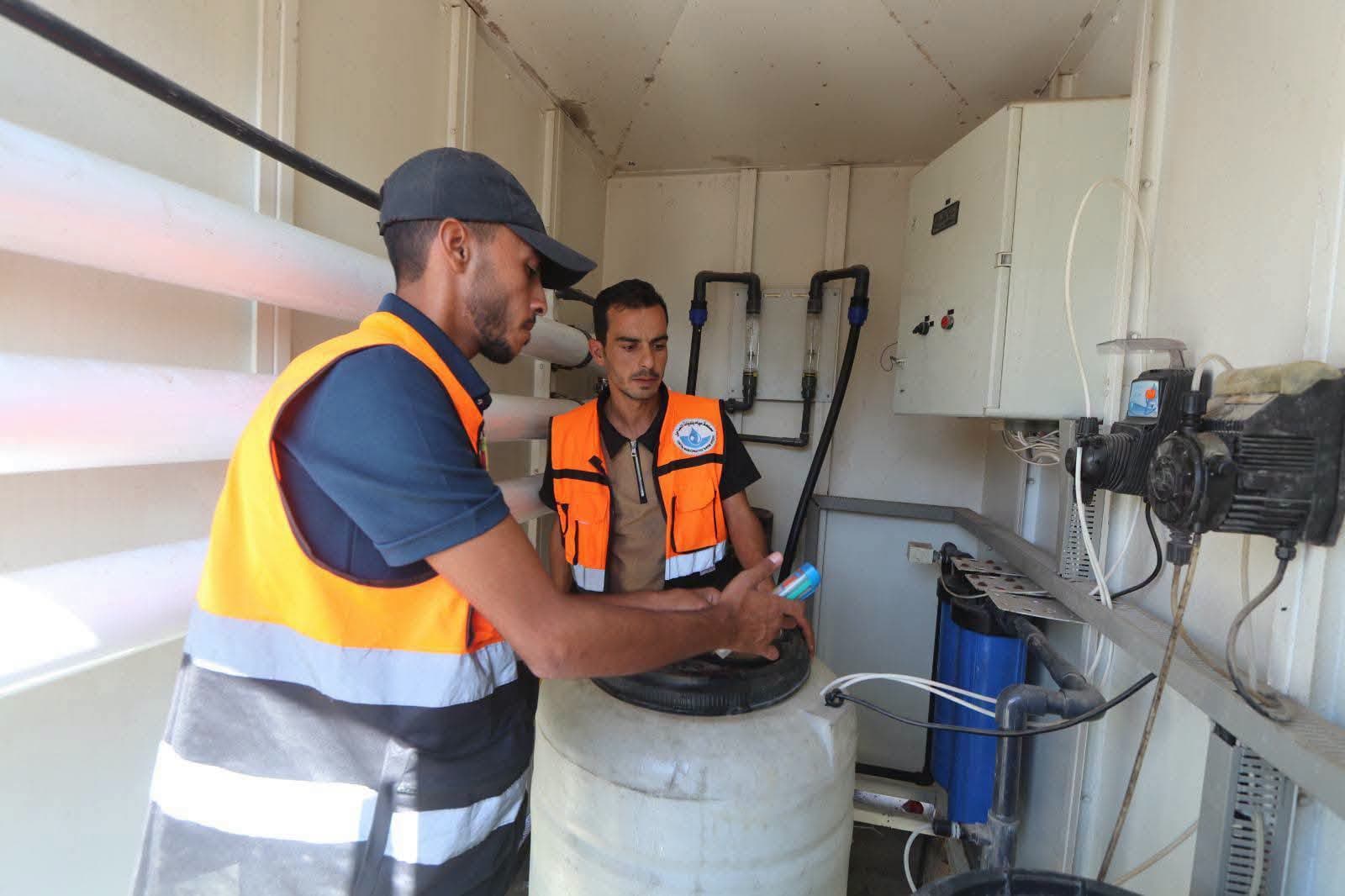
Signing an agreement to construct the central sewage treatment plant in Khan Younis at a cost of $55 million, funded by the Islamic Development Bank and the UN Development Programme, serving about 376,000 residents.
Generously Funded by the Islamic Development Bank and the United Nations Development Programme
Signing an Agreement to Construct the Central Sewage Treatment Plant in Khan Younis at a Cost of $55 Million
CMWU - Gaza
In the Jordanian capital, Amman, the agreement for the central sewage treatment plant construction project in Khan Younis was signed, generously funded by the Islamic Development Bank and the United Nations Development Programme, with the agreement signed by the representative of the UN Development Programme and the representative of the Islamic Development Bank - Jeddah, with the Kuwait Fund for Development, through the Islamic Development Bank, agreeing to fund the project with $42 million, while the Japanese government funded the project with $13 million through the UN Development Programme.
The project's signing was the culmination of numerous meetings and gatherings held since 2011 to agree on the mechanisms for implementing the project and determine the parties authorized to implement it, with the meetings held in the presence of representatives of the Palestinian Water Authority, the Islamic Development Bank, CMWU, the UN Development Programme, and the Ministry of Local Government.
This project will end the suffering of the residents of Khan Younis governorate, as the governorate, especially Khan Younis city, suffered from the problem of disposing of sewage water until it reached a point that threatened the safety and health of residents and also threatened the contamination of groundwater aquifer water.
It is noted that after the worsening of the sewage water disposal crisis in Khan Younis, where it used to be disposed of by pumping it into the rainwater collection pond in Al-Amal neighborhood, and the pond filling to its maximum capacity with sewage water, and to avoid the potential collapse of the collection pond, CMWU built a temporary sewage treatment plant in the sand dunes area near Khan Younis city until the central plant project began, where 12 thousand cubic meters daily of partially treated sewage water is discharged to the sea coast.
It is worth noting that the temporary treatment plant has come to receive larger quantities of sewage water exceeding its absorption capacity after the construction of parts of the main sewage collection networks in numerous areas in Khan Younis city, hence the urgent necessity of beginning the construction of the central sewage treatment plant, which will effectively contribute to improving residents' public health and protecting the environment and sea water from pollution and preserving groundwater aquifer water, and even increasing the quantity of water in it by injecting the groundwater aquifer with about 9 million cubic meters annually of treated water through filtration basins.
The central treatment plant project in Khan Younis includes building an integrated, effective plant for treating wastewater according to international standards, with the project divided into several phases: the first phase consists of constructing a treatment plant along with constructing the plant's main electricity supply; the second phase of the project consists of constructing filtration basins to receive the treated sewage water to filter it and inject it into the groundwater aquifer; while the third phase includes constructing the conveyance line to ensure the disposal of treated sewage water and an emergency pipeline to discharge into the sea, with the plant's absorption capacity expected to reach 44,900 cubic meters daily to serve 376,000 residents by 2025.
It was agreed that the project would be implemented by CMWU and the UN Development Programme, with CMWU to operate the plant after the construction phase is completed.
As CMWU affirms the importance and vitality of those projects in improving the level of health and environmental progress, which in turn is reflected in all aspects of Palestinian life, it extends its sincere thanks and appreciation to the partners who supported this important project, hoping for the continuation of support and cooperation with all partners in a way that improves the water and sanitation services provided to the residents of the Gaza Strip.