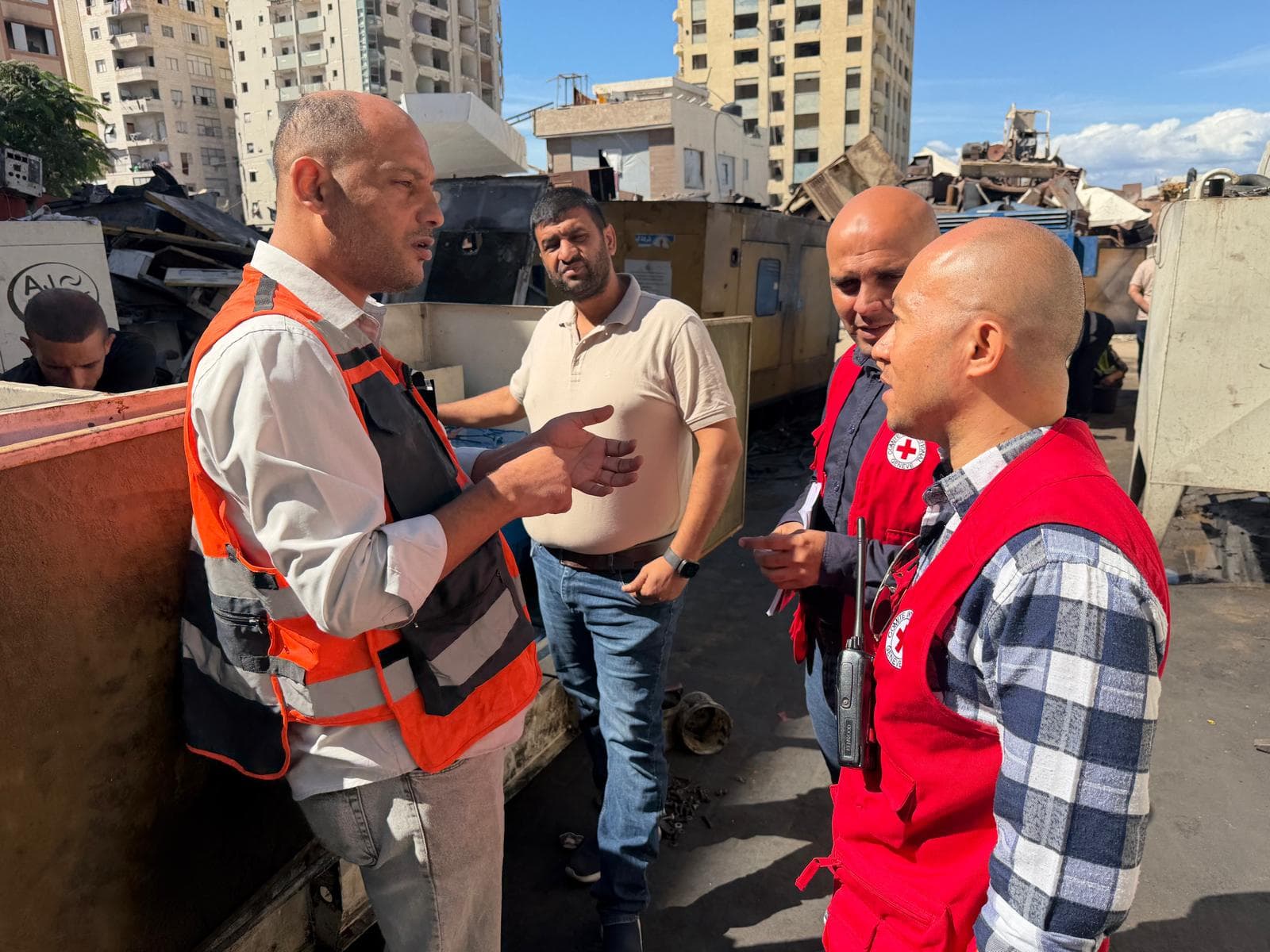
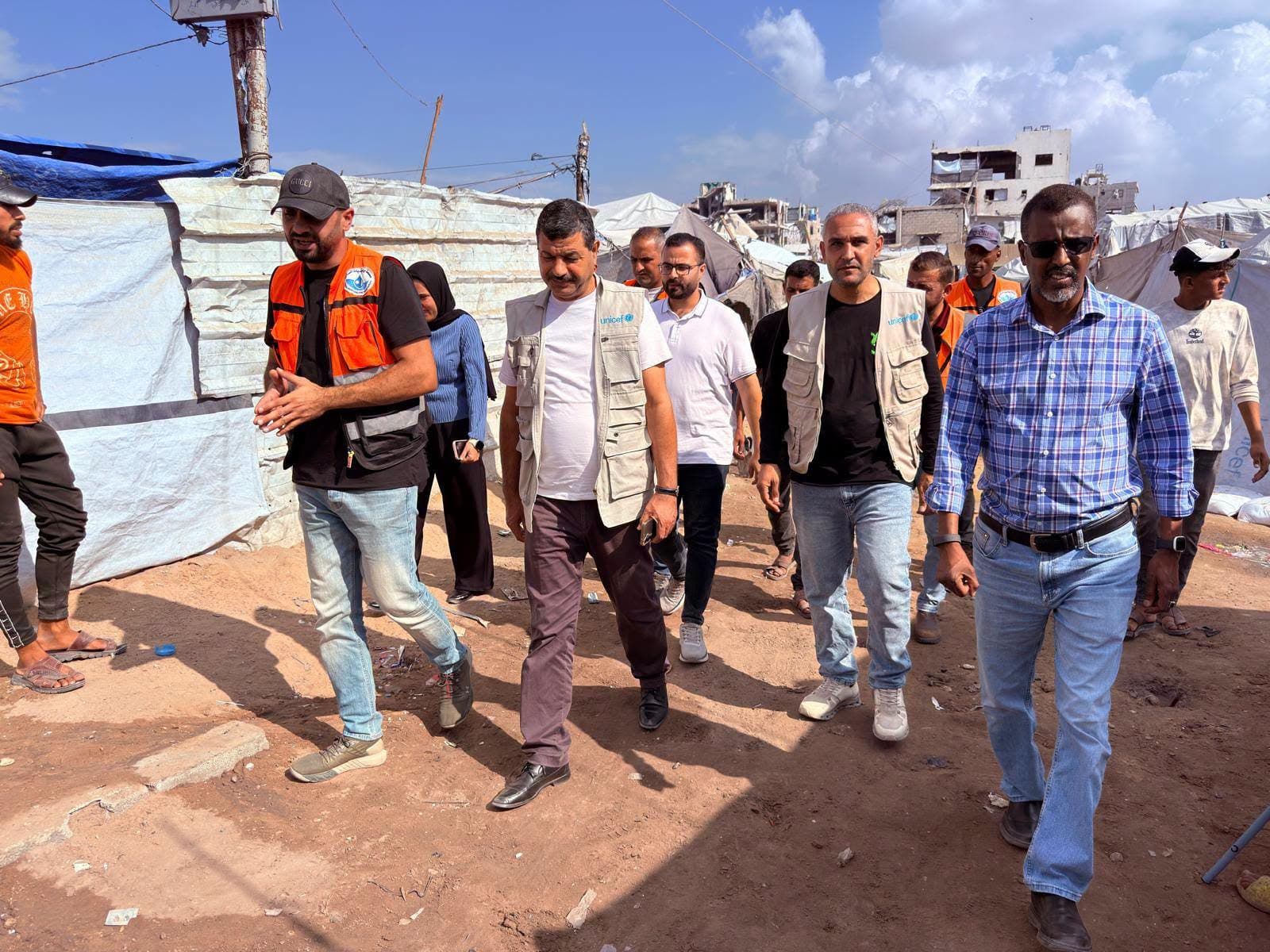
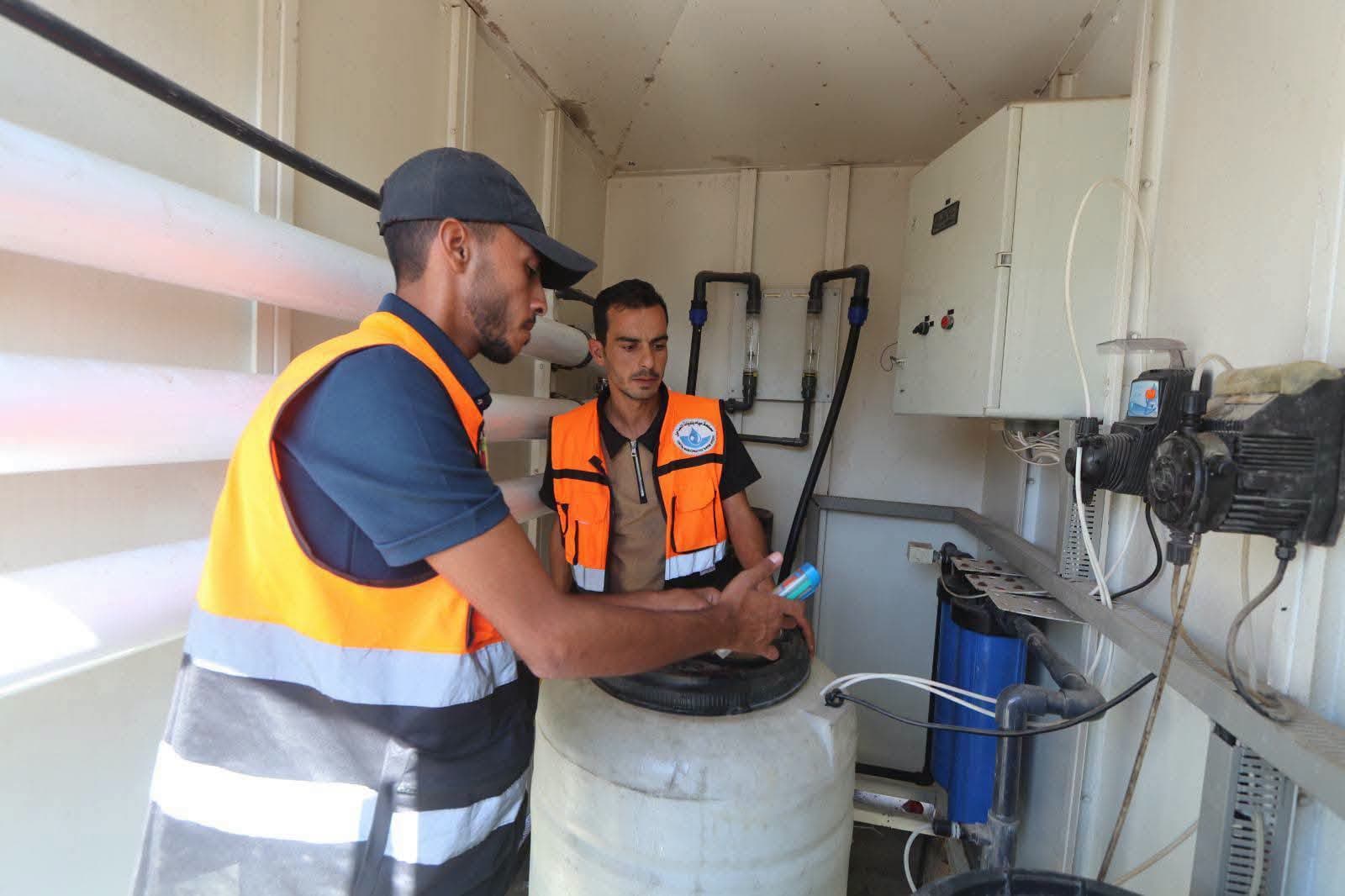
CMWU, with support from UNICEF, continued emergency maintenance of water and sanitation networks in Jabalia, Al-Salatin, and Gaza City, benefiting around 2,300 families.
CMWU continues to carry out maintenance work and emergency interventions on sanitation and water networks in the northern and central areas of the Gaza Strip, in cooperation with the Strip's municipalities and with support from UNICEF, as part of its ongoing efforts since the start of the war to maintain the continuity of essential services at the minimum possible level.
CMWU carried out maintenance and desludging work on manholes and sanitation networks on Halawa Street in the Jabalia al-Balad area, and carried out maintenance work on a damaged 12-meter sewage line in the Karama area, in addition to removing rubble and clearing streets to reach sanitation and water facilities, contributing to improving the level of service for about 1,000 families.
In the Salatin area of Beit Lahia, the teams continued their field work, which included desludging a number of manholes, unblocking networks, pumping out manholes filled with sewage, and removing obstacles to ensure the continued flow of the networks, benefiting about 1,300 families from these interventions.
In Gaza City, the Utility's crews carried out maintenance work on a water line in the Tal al-Hawa area west of Al-Hidaya Mosque, and worked in the Al-Manshiya area north of Al-Wahda Street, near the Manshiya desalination plant, to open a street, remove rubble, and part of a concrete roof to expose a water line ahead of its repair. Around the Al-Muqousi Towers, the teams carried out maintenance work on main sanitation networks with diameters of 20 inches and a length of 40 meters, enhancing the networks' efficiency and the continuity of services.
These interventions contributed to improving the efficiency of water and sanitation networks, reducing the risks of overflow and health and environmental problems, and strengthening the technical teams' capacity to respond to urgent needs in the target areas.
These interventions are part of urgent, life-saving response programs, through the redeployment and recycling of available materials and equipment, amid the continued ban on bringing equipment, materials, and spare parts into the Gaza Strip, ensuring the continuity of water and sanitation services and reducing health and environmental risks.