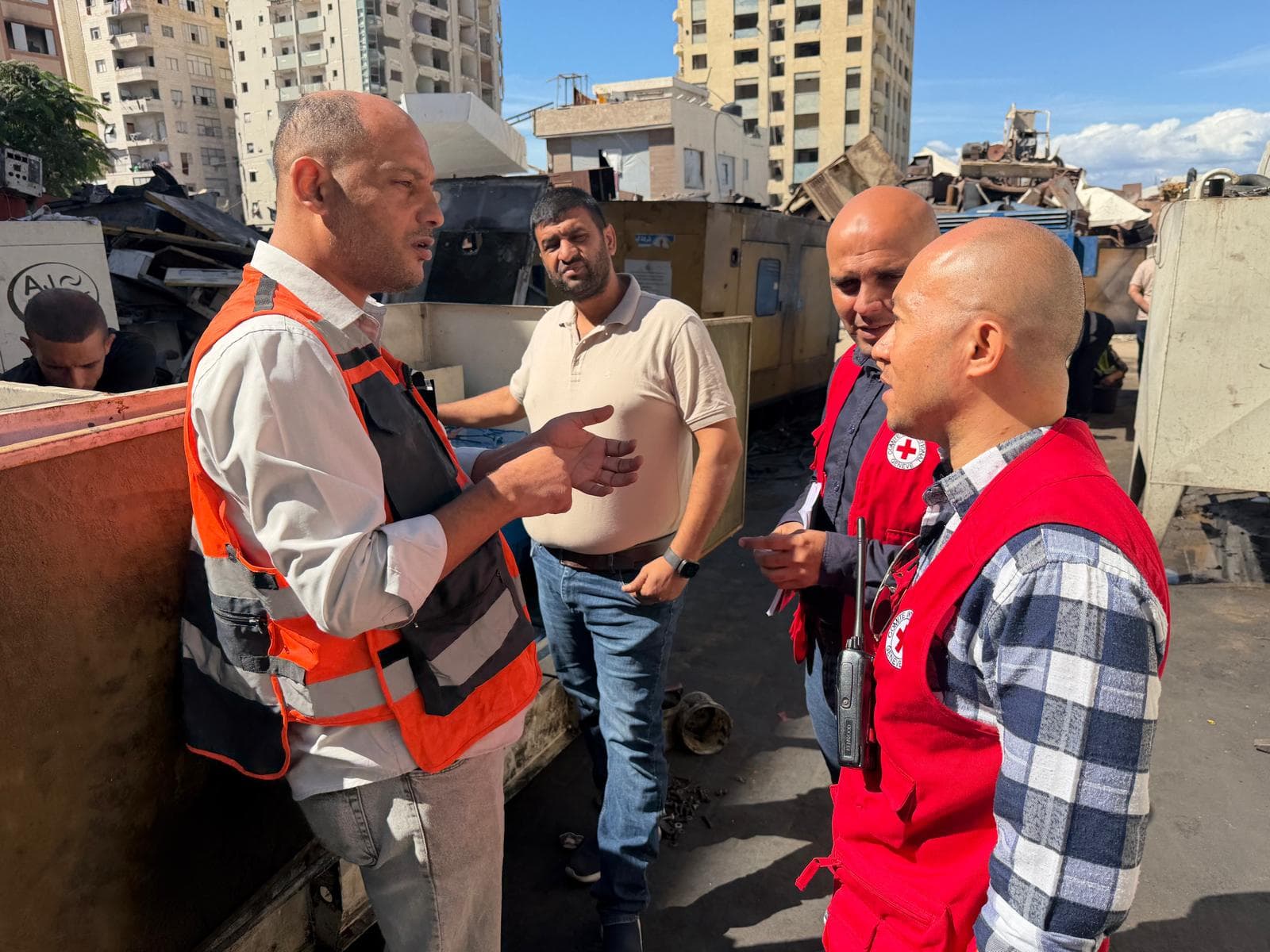
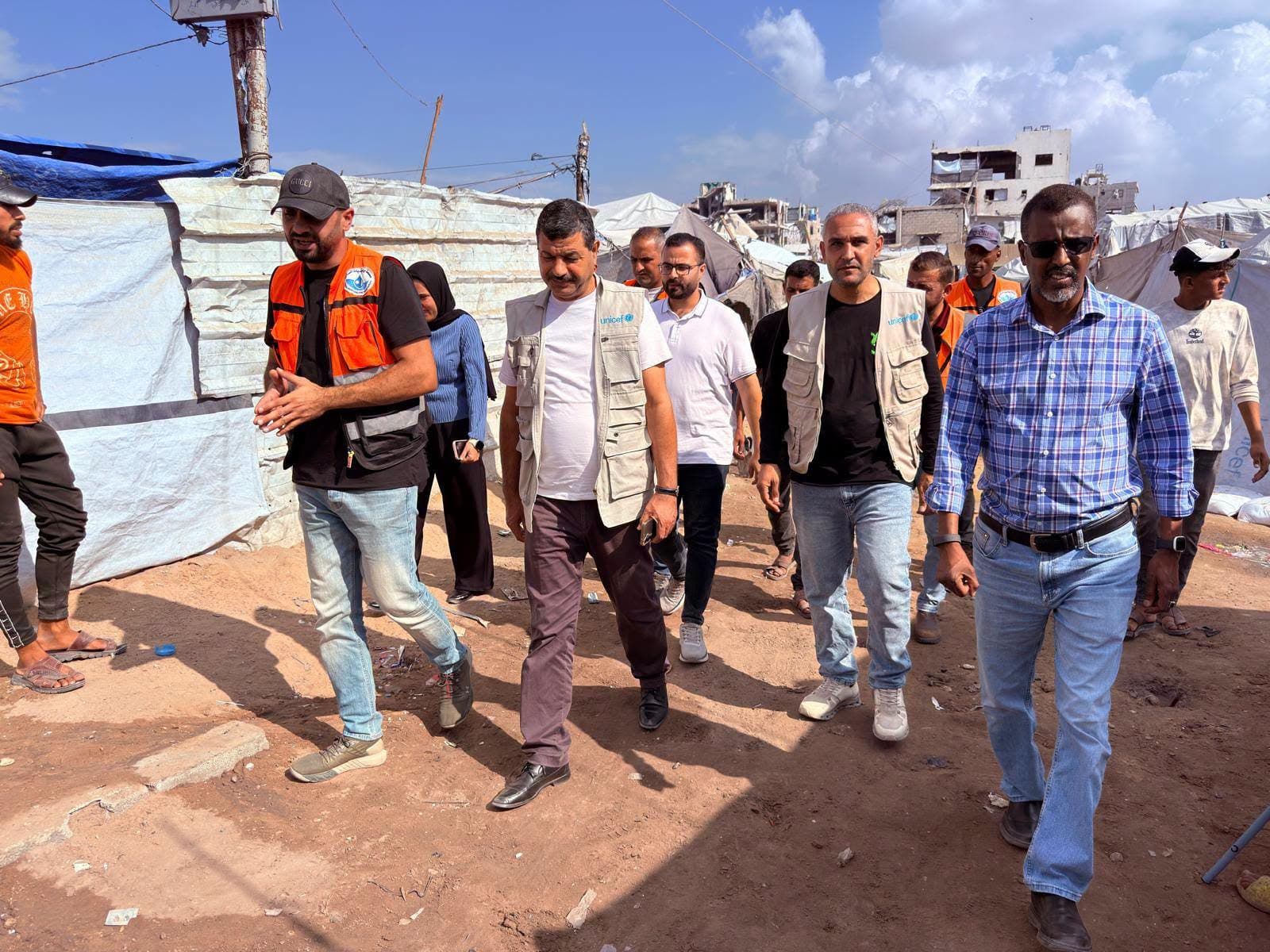
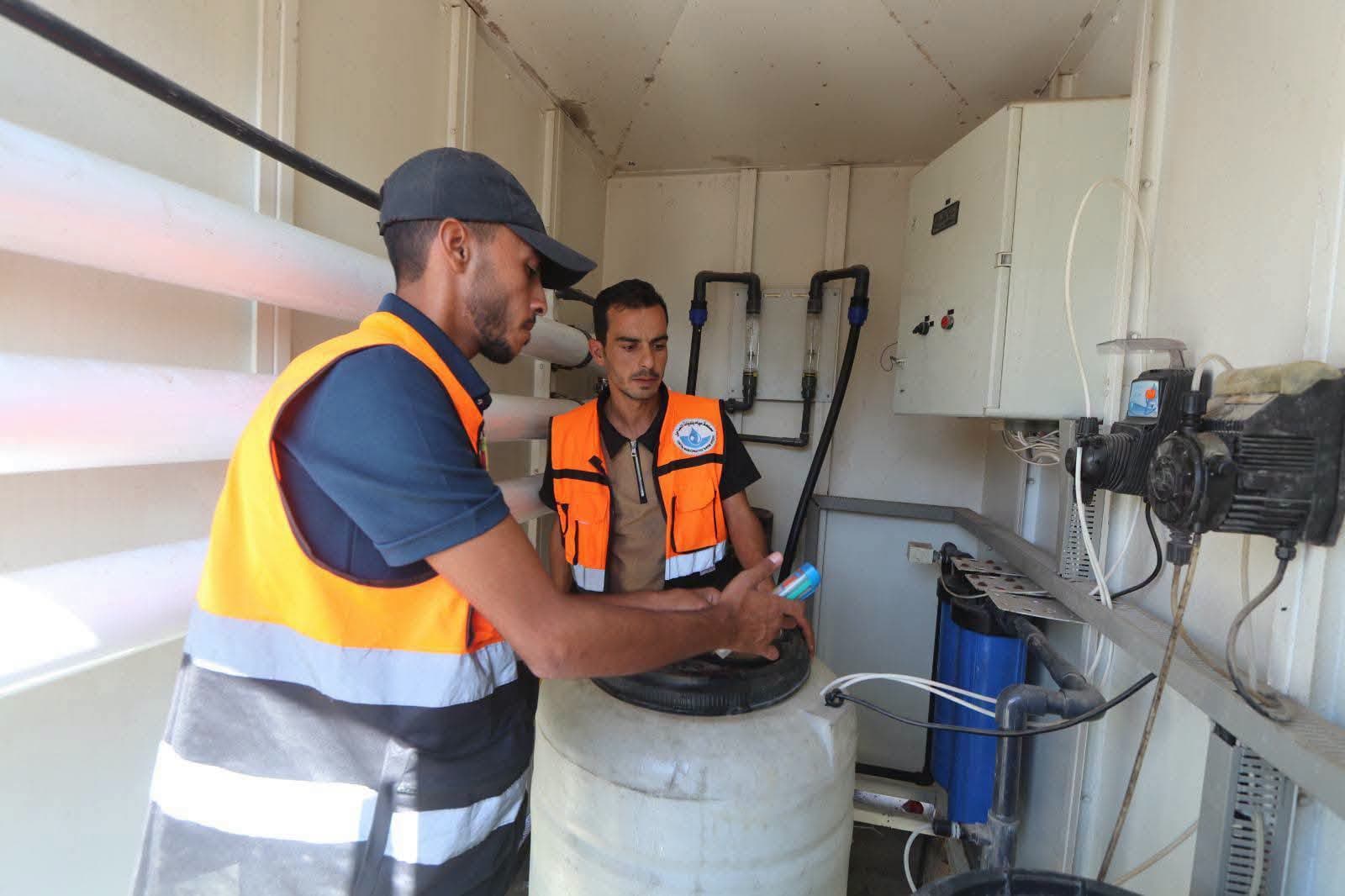
A dialogue with CMWU's Director Eng. Monther Shoblaq on the sewage treatment project in Wadi Gaza as a step to rehabilitate it as a nature reserve.
Treating Wastewater in Wadi Gaza: A Step to Restore "Dignity to Its Sanctity"
CMWU's Director in the Gaza Strip, Eng. Monther Shoblaq, affirmed that the Wadi Gaza rehabilitation project will see the light within the coming months, working to solve the environmental problem the valley suffers from as a result of the accumulation of wastewater in it and its impact on the aesthetic view, damage to the groundwater aquifer, and pollution of sea water. Eng. Shoblaq noted, in a special interview with "Filastin," that Wadi Gaza is considered a nature reserve by "its historical nature," according to the flow of water from Hebron and its consideration as a water source, "but what the Israeli occupation did by setting up water traps emptied the valley of water," noting that this led to the valley, due to its dryness, being used as a dump for solid and liquid waste such as sewage water, and residents of the area encroaching on it, causing great damage to the valley extending to the groundwater aquifer and the adjacent sea.
Underground Conveyance Lines
He affirmed the necessity of preserving Wadi Gaza, considering it a reserve containing biodiversity and a lung of oxygen for the Gaza Strip, so the strategic solution was to build a sewage water treatment plant east of the middle area, funded by the German Development Bank, adding: "But the project, which was worth (€170 million), was postponed due to the siege imposed on the Gaza Strip, and was not cancelled as rumored."
He continued: "Postponing the project worsened the problem in Wadi Gaza, since the area needs a wastewater treatment plant as the Sheikh Ajleen plant is not sufficient," pointing out that an alternative, temporary solution was resorted to, to save the valley as a nature reserve, noting that the priority requires saving the area to protect residents, given the air and water pollution in it.
CMWU's Director explained that the solution was an urgent call to intensify the efforts of all concerned parties, such as the Environment Quality Authority, Local Government, the Water Authority, and the surrounding municipalities, to begin collecting and treating sewage water and benefiting from it either in agriculture or re-pumping it into sea water after treating it, to avoid harming the sea, until the central sewage treatment plant is built in the eastern area.
He said: "The project was presented to the Red Cross organization, and approval was given to implement it after studying the goals and plans and completing the feasibility study for the project, and it is now in the implementation phase as a temporary solution to the Wadi Gaza problem during the coming months, at a cost reaching $2 million."
He added: "The project includes activities including collecting sewage water east of the valley in Salah Al-Din Street through underground conveyance lines, so that residents do not suffer from the smell or sight of sewage water."
The Valley's Sanctity
He pointed out that it will be collected in the delta area of Wadi Gaza, treated, and reused either for agriculture or injected into the sea, in addition to a number of awareness activities for the residents of the surrounding area, noting that it is difficult for the valley to return as a nature reserve unless all solid and liquid waste is completely removed and encroachments removed from the valley's boundaries, and it is restored to its natural width from 70m to 100m, and rain is allowed to flow through it, and the valley is planted with trees.
Eng. Shoblaq affirmed that if these steps are taken, what the Israeli occupation does by opening water traps on the valley's borders and flooding the area will have no effect, but rather the valley and the groundwater aquifer surrounding it will benefit from opening these traps, "whoever encroaches on nature and disrupts it, nature will encroach on him; there are those who sell and buy from the valley's lands and encroach on its area," according to him.
He stressed that restoring dignity to Wadi Gaza's sanctity means returning it to its natural state as a nature reserve, adding: "At the same time, negotiations are still ongoing with the German government to implement the treatment plant project east of the middle area."
Moving to talk about the Al-Mawasi area and the threat of sewage water to agricultural water, CMWU's Director pointed out that the Palestinian reality does not have wide options to achieve the desired dreams given donor institutions' reluctance to provide funding and the closure of crossings and the non-arrival of necessary equipment, "but this does not mean stopping work and leaving matters until a catastrophe occurs; rather, temporary solutions were put in place to ease the environmental reality, including what happened in Khan Younis governorate."
Searching for the Cause
He explained that Khan Younis governorate in 2007 was on the verge of an environmental catastrophe, as the rainwater collection pond in the Al-Amal neighborhood area is for collecting water and then filtering it to reach the groundwater aquifer, explaining that what happened was some residents' encroachment on the city's rainwater network and connecting it to the sewage network, turning the pond into a place for collecting sewage water, closing the pond's surface, contaminating the groundwater aquifer, and exposing the city to the risk of flooding due to the rise in the level of sewage water in it.
Therefore, the temporary solution resorted to - according to Eng. Shoblaq - was coordinating with the concerned parties to transfer sewage water from the Al-Amal neighborhood pond, before it worsened, to an area far from residents and close to sea water, using initial basins, given what the Gaza Strip was going through of Israeli siege, noting that sand was removed from the basins down to the clay layer in the ground, and the basin's lining was increased with a 60cm clay layer, then the basin's edges were lined with a plastic material, and sewage water was placed in it to prevent affecting and damaging the groundwater aquifer, with the aim of treating it and pumping it to the sea.
He continued: "It cannot be affirmed that what happened in the Al-Mawasi area is due only to these basins, as many geological experts have affirmed that the direction of water is from west to east, and that the area was exposed for many years to sewage water seeping from the Al-Amal neighborhood area and thus creeping towards Al-Mawasi," explaining that it is possible that constructing the sewage basins was a pressuring factor accelerating the creep of sewage water to the groundwater aquifer, not a primary factor in the event, given that groundwater aquifer water needs a long time to be affected and contaminated by sewage water.
A Pessimistic View
Eng. Shoblaq said: "Some residents encroached on one of these basins, causing 50 thousand cubic meters of sewage water to flow out, in addition to the presence of a sewage well next to a groundwater aquifer well in the area's homes," "and there is a commitment to seriously investigate by the concerned parties to know the real cause of the damage occurring in the Al-Mawasi area, to know the treatment methods and carry them out," explaining that the Utility is working to improve treatment in the Al-Mawasi basins and working to restore the standing of the Al-Amal neighborhood rainwater pond to become a national park that provides recreation for the area's residents.
CMWU's Director addressed the water situation in the Gaza Strip, pointing out that many carry a pessimistic view of the water reality in their remarks, given the reports that speak of the Strip not finding a single drop of drinking water by 2016, "it is true that the reports exist and their results are real, but the Utility did not stand idly by; rather, it dealt with all the concerned ministries to solve the catastrophe before it occurs, even in an emergency form, leading up to strategic solutions," according to him.
He pointed out that among the emergency solutions is designing the construction of a seawater desalination plant in the Deir al-Balah and Al-Qarara area to produce 6,000 cubic meters of desalinated seawater daily, reaching a production of 20 thousand cubic meters in 2015, to reach 8 million cubic meters, continuing: "And we, in cooperation with the Islamic Development Bank, are in the phase of developing the existing seawater desalination plant in the Deir al-Balah area, which currently produces 600 cubic meters daily, to expand it to reach 2,600 cubic meters per day, i.e., about 2 million cubic meters per year."
Efforts That Broke the Siege
He pointed out that negotiations are ongoing with the Islamic Development Bank to build an emergency seawater desalination plant for the benefit of Gaza city in its northern area, to serve its coastal strip from the northern shore to Al-Amin roundabout, i.e., providing the service to about 200 thousand residents of Gaza city, who are the most affected by the salinity of the groundwater aquifer and wells.
In figures, Eng. Shoblaq explained that a production of 13 million cubic meters annually is required to serve the coastal area extending from the north of the Gaza Strip to Rafah, given that the excessive consumption of saline water will increase the creep of sea water towards the groundwater aquifer, explaining that negotiations are underway to secure the necessary funding to complete this effort, reaching a production of 55 million cubic meters before 2017.
He said: "If we reach this stage of production, we can say that we have reached the sustainable solution to the water problem in the Gaza Strip, a quantity that will be mixed with groundwater aquifer water to double the quantity," pointing out that work would be done to try to reduce the cost of distributing water in the Gaza Strip given the economic conditions of residents and their inability to bear the cost of seawater desalination.
He stressed that even with reaching a production of 55 million cubic meters before 2017 and 100 million cubic meters in 2020, this will not have an effective impact unless water is distributed fairly, losses are reduced, water networks are improved, and dependence on energy is reduced.
CMWU's Director concluded his remarks by pointing out that the siege the Gaza Strip went through was overcome by relying on self-reliance to find many alternative solutions; at the sewage water treatment plant in the Rafah area, pieces of the wall separating the Palestinian and Egyptian borders were used to complete the project, and from the beginning of 2006 up to this date, projects worth $160 million have been implemented, while pressuring the Israeli side and coordinating with donor institutions to put in place alternative solutions for any suffering the Strip goes through.
"The Wadi Gaza project includes steps including collecting sewage water eastward in Salah Al-Din Street through underground conveyance lines, so that residents do not suffer from the smell or sight of sewage water, and it will be collected in the delta area of Wadi Gaza, treated, and reused either for agriculture or injected into the sea"
"The basins in the Al-Mawasi area had sand removed from them down to the clay layer in the ground, and the basin's lining was increased with a 60cm clay layer, then the basin's edges were lined with a plastic material, and sewage water was placed in it to prevent affecting and damaging the groundwater aquifer, with the aim of treating it and pumping it to the sea"
It is required to investigate the real causes to know the origin of the problem in the Al-Mawasi area
Breaking the siege by relying on self-reliance and finding alternative solutions saved the Strip from disasters
Constructing the sewage basins is a pressuring factor accelerating the creep of sewage water to the groundwater aquifer