CMWU, in cooperation with Gaza Municipality, and with support from the International Committee of the Red Cross (ICRC) and in partnership with the Palestinian Water Authority, continues to carry out emergency maintenance works on water and wastewater networks in several areas of Gaza City, as part of its ongoing efforts to maintain the continuity of essential services and address faults and urgent needs.
The works included Al-Mamouniya School, which is being used as a shelter for displaced people and accommodates around 700 individuals, equivalent to approximately 130 families. Field teams assessed wastewater accumulation and overflows around and between the school buildings, which pose health and environmental risks to displaced people, while also assessing the needs required to address the situation and improve the efficiency of the wastewater network at the site.
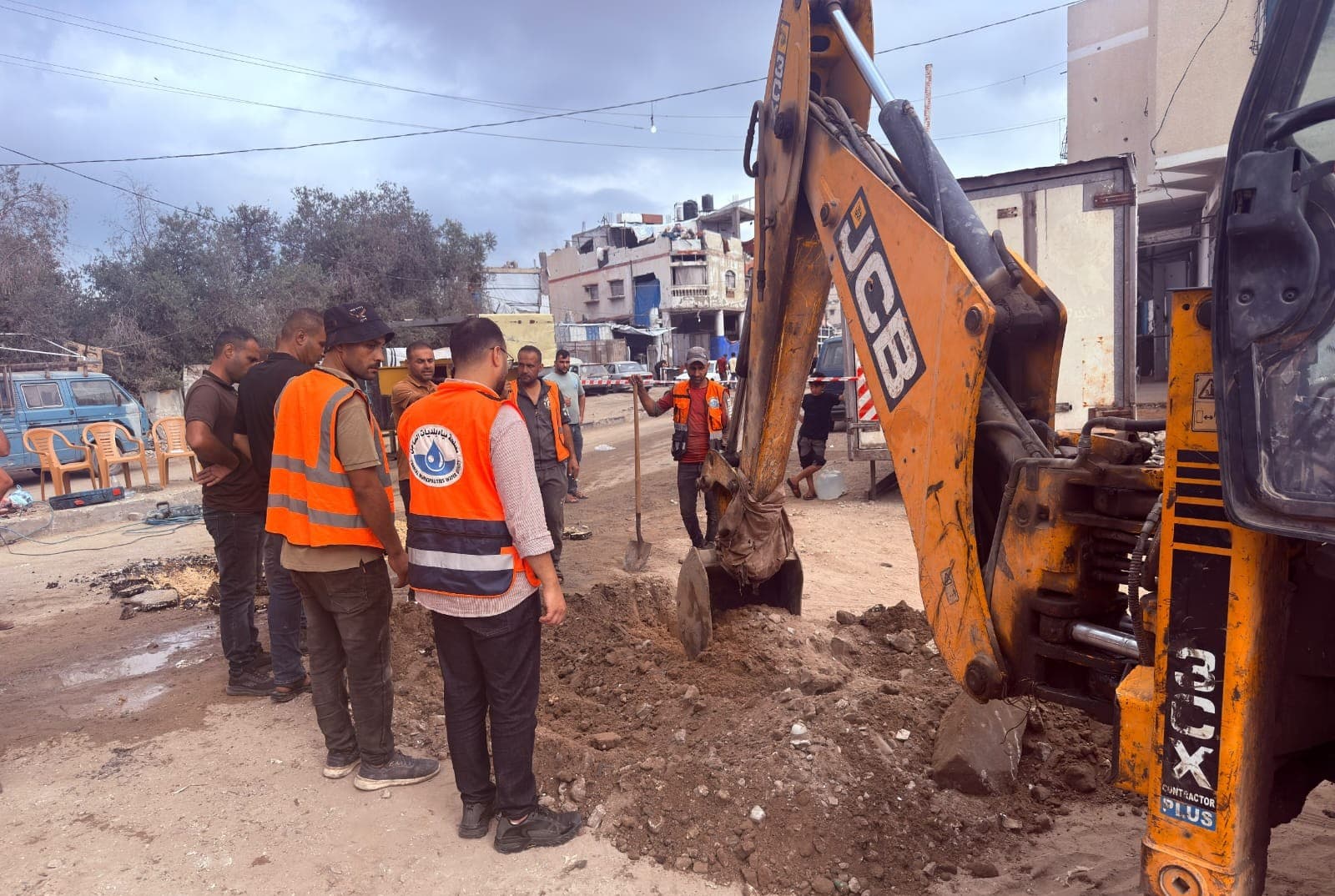
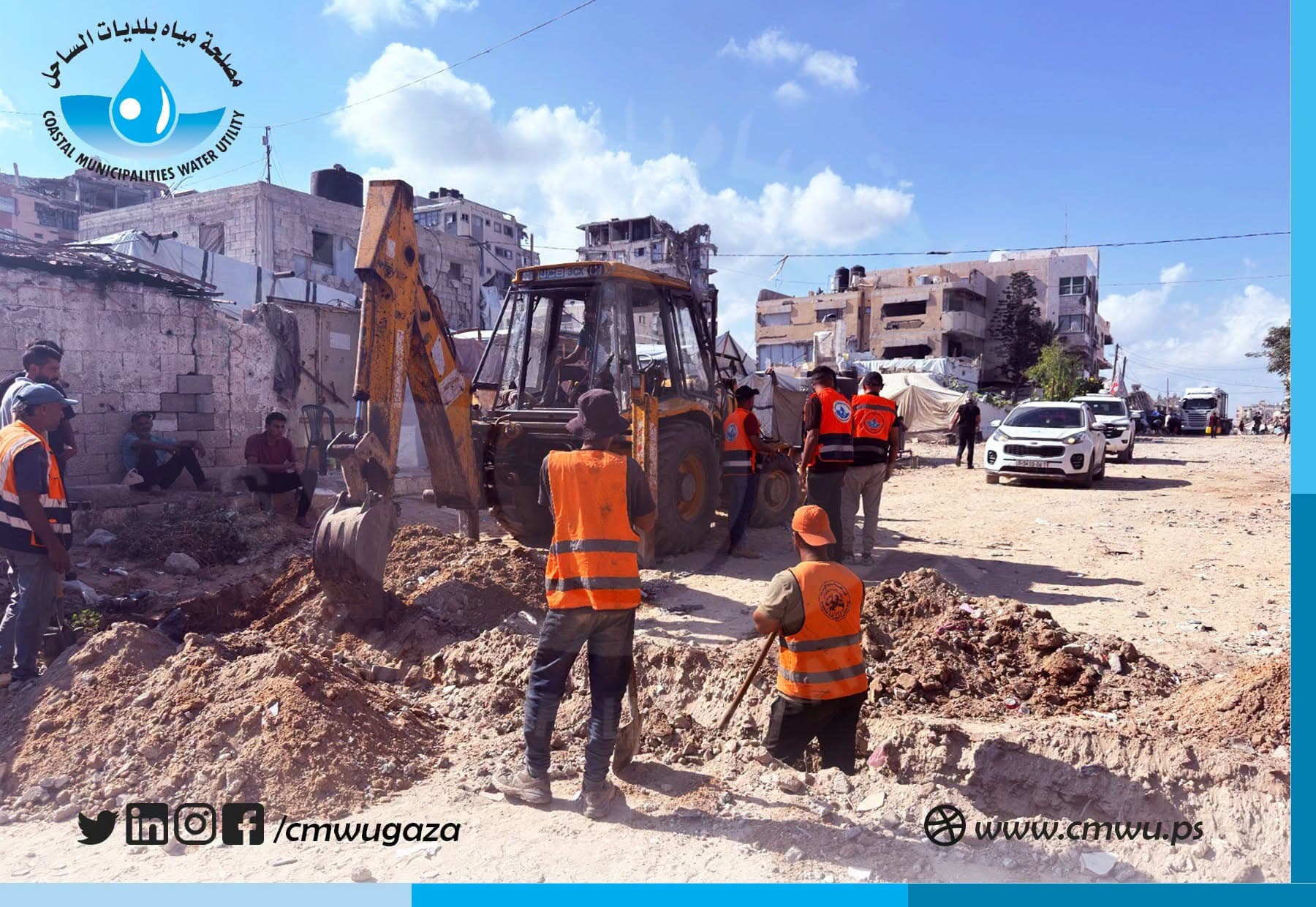
In Tal Al-Hawa, at the intersection of Oman and Tunisia Streets, teams carried out excavation and maintenance works on a 2-inch water line, in addition to excavating and exposing a 4-inch water line to facilitate the installation of a secondary water connection, helping improve water services for approximately 500 residents in the area.
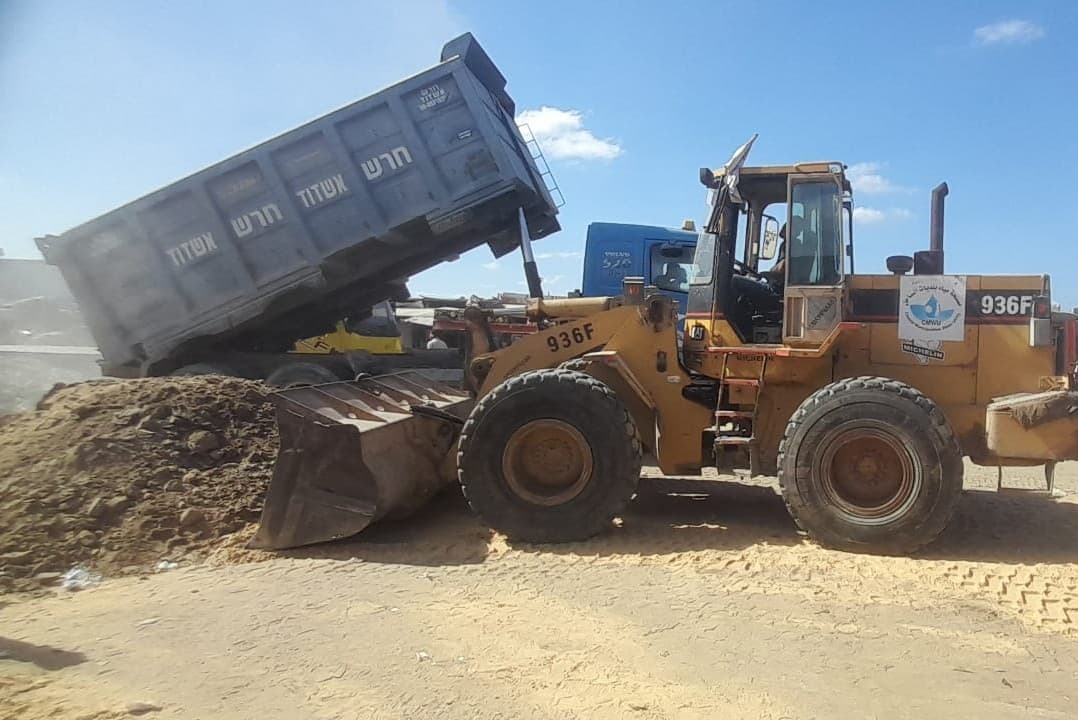
Teams also carried out emergency maintenance works on the wastewater network in Tal Al-Hawa, along Ministry of Labor Street, following reports of wastewater overflows inside residents’ homes. Inspection works identified a 9-meter-long break in the line. Six-inch pipes were installed and connected to the main line, in addition to cleaning two manholes and clearing the line. The works aim to address the overflow, improve network efficiency, and reduce health and environmental risks, benefiting approximately 700 residents in the area.
The sites were also visited by a delegation from the International Committee of the Red Cross (ICRC), together with a CMWU team, to review the progress of the works and assess field needs related to water and wastewater services.
CMWU continues its field efforts to implement urgent interventions and maintain damaged networks, contributing to the continuity of water and wastewater services, reducing health and environmental risks, and alleviating the difficulties faced by residents and displaced people under the current circumstances.