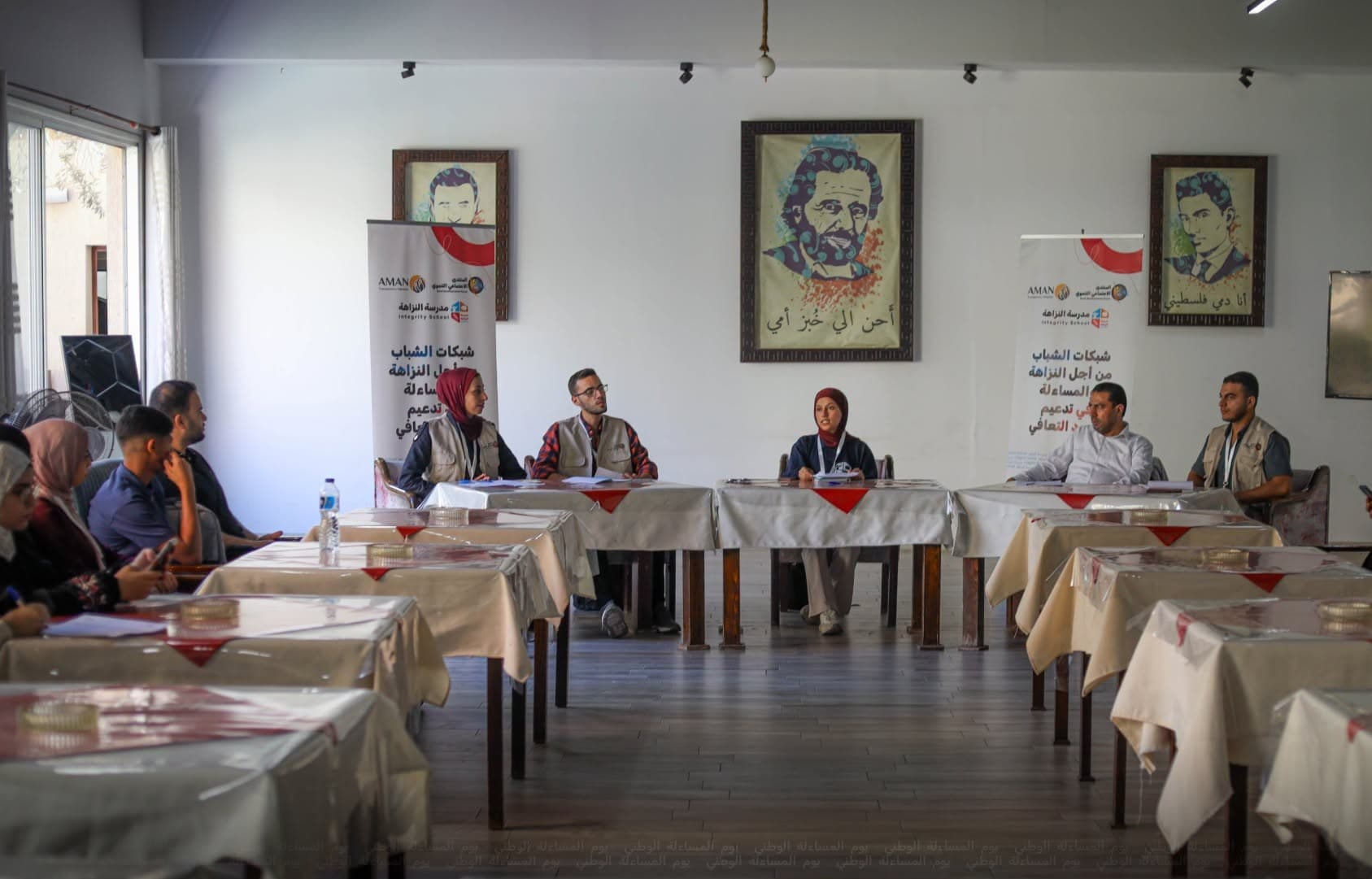
CMWU participated in a youth accountability session addressing the fairness and transparency of drinking water tanker distribution to displacement shelters, the criteria used to allocate water supplies, and the mechanisms for accessing the service. The session was held as part of broader efforts to promote community dialogue on the current state of water services and the challenges associated with providing them amid the ongoing humanitarian crisis.
During the session, Dr. Mohammed Al-Abouini, representing CMWU, explained the mechanisms followed by CMWU and its partners in distributing drinking water tankers to displacement shelters, as well as the criteria used to identify needs and prioritize interventions. He also outlined the scale of the water crisis and the challenges facing CMWU and its partners in responding to growing needs.
Al-Abouini noted that CMWU has continued to operate under extremely complex conditions to deliver safe drinking water to displacement shelters and residential communities, in cooperation with its partners. These efforts continue despite the difficulties involved in securing and transporting water, the damage sustained by infrastructure, and the growing needs resulting from the ongoing humanitarian crisis.
The session was held as part of the activities of the project “Youth Networks for Integrity and Accountability During Recovery,” implemented by the Social Developmental Forum in partnership with the Coalition for Integrity and Accountability (AMAN). It aims to provide a platform for direct dialogue on the fairness and transparency of water distribution, drawing on information and data collected and analyzed by the participants.
CMWU’s participation forms part of its efforts to strengthen dialogue and communication with young people and civil society organizations, creating opportunities to discuss the realities of water services, distribution mechanisms, and the challenges affecting service delivery. These efforts seek to promote transparency and accountability and contribute to improving responses to the needs of residents and displaced people within the available resources.