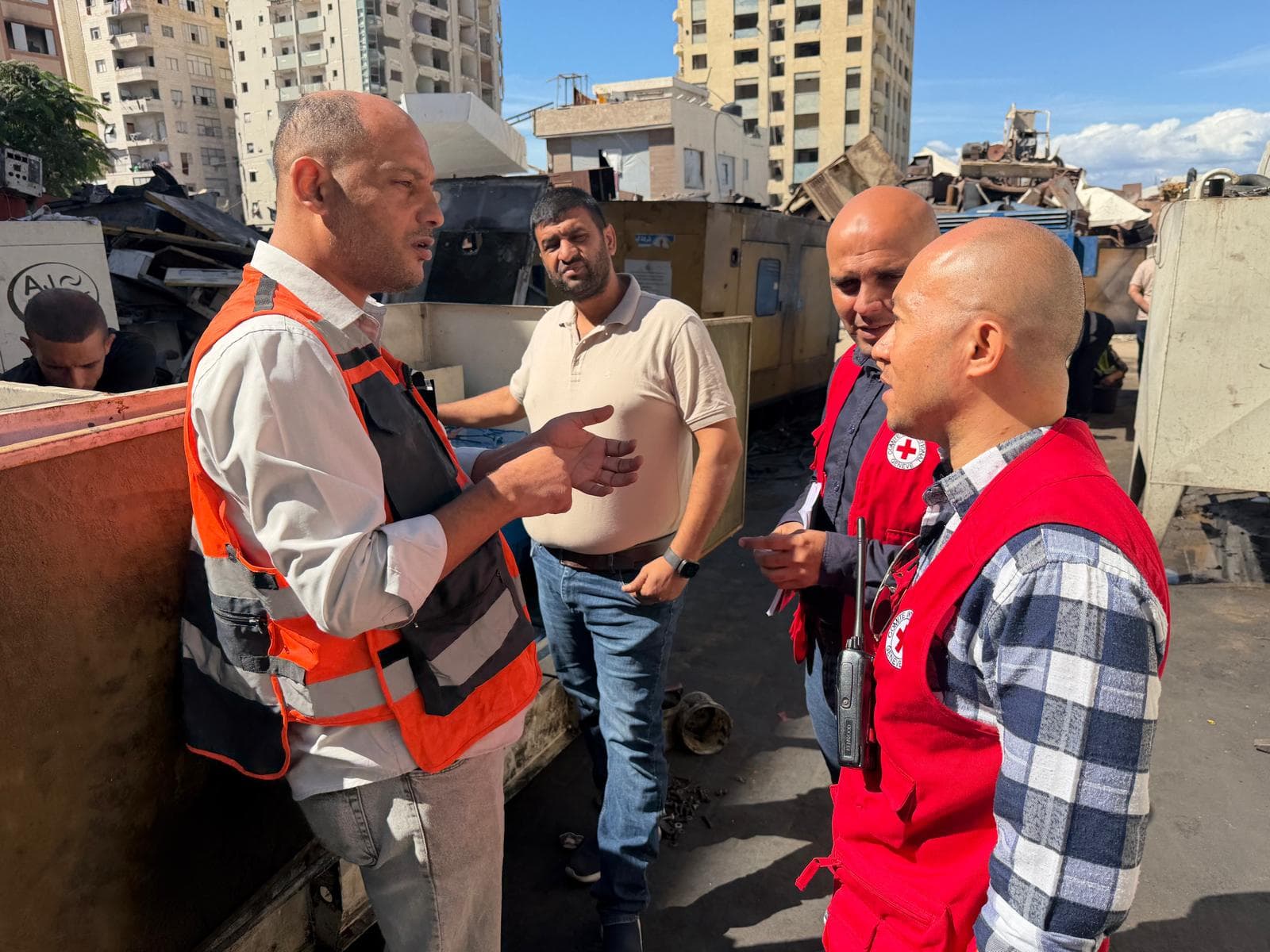
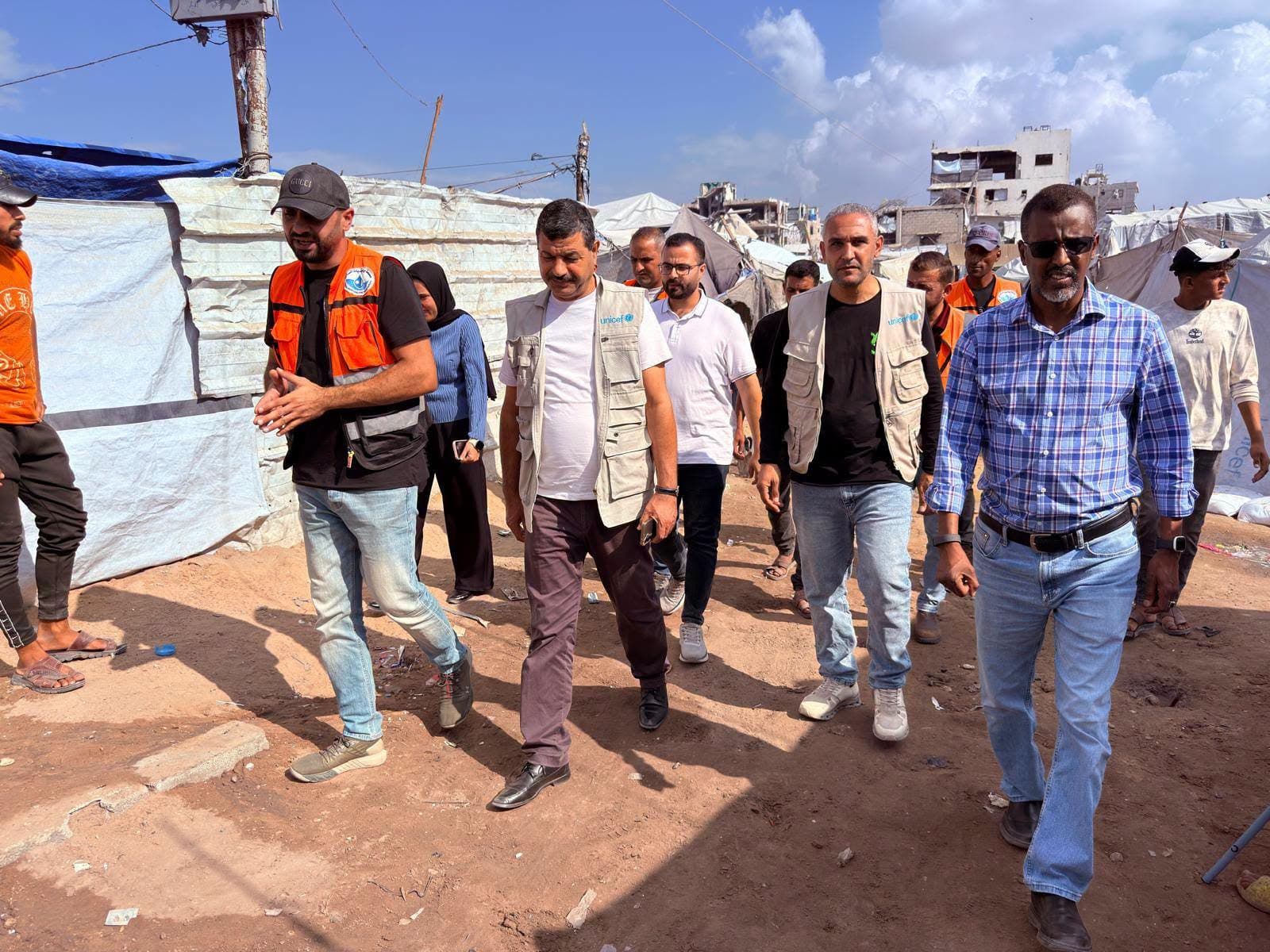
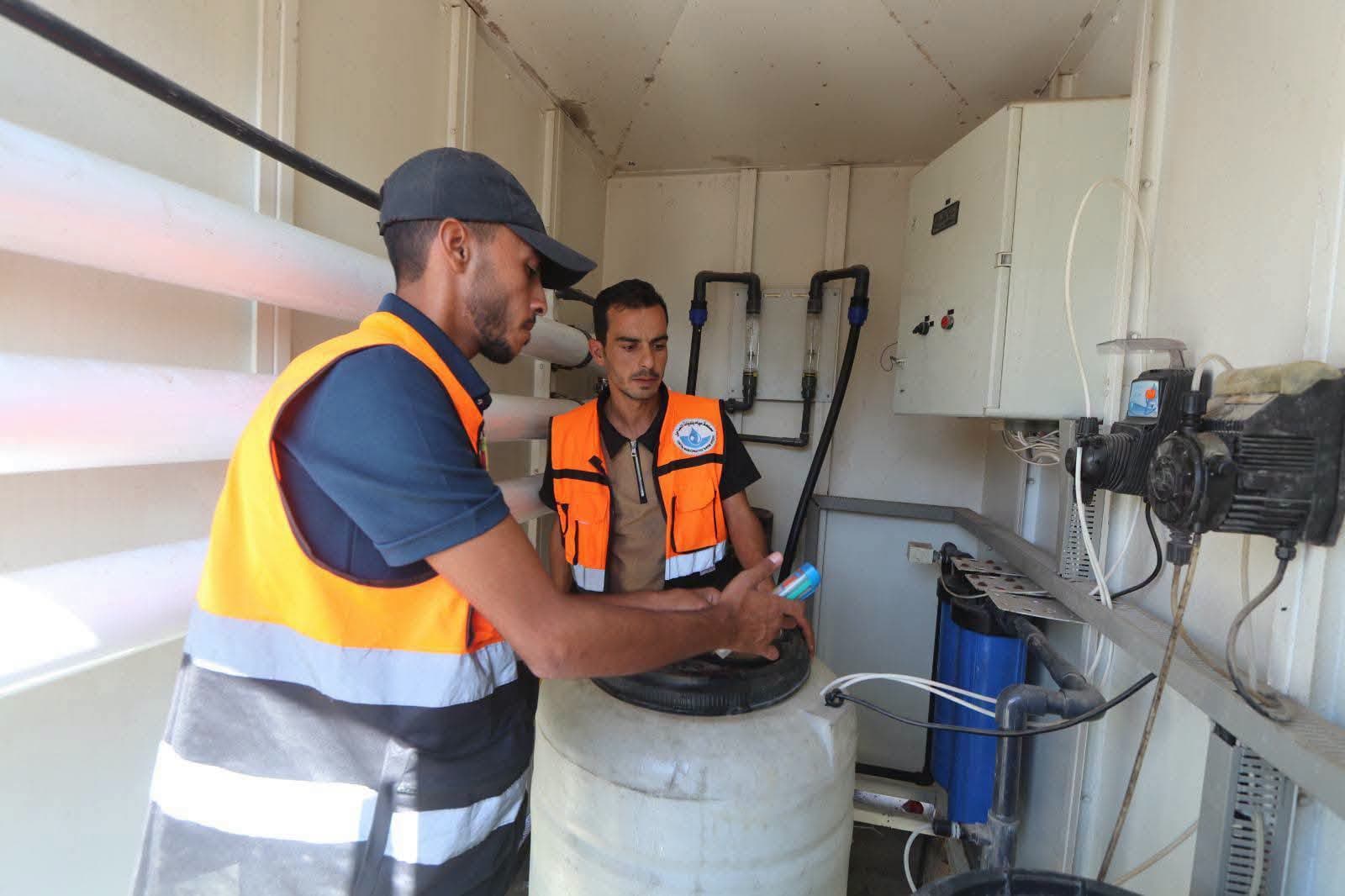
CMWU, funded by UNICEF, completed cleaning and rehabilitating the basins of the Sheikh Ejleen treatment plant, the only remaining sanitation treatment plant in Gaza, ahead of resuming its operation.
CMWU, funded by UNICEF and in cooperation with Gaza Municipality, has completed comprehensive cleaning and rehabilitation works on the wastewater treatment plant in the Sheikh Ejleen area of Gaza City, as a prelude to resuming the operation of this vital facility. The works included removing large quantities of accumulated sediment, sludge, and sand from the various treatment basins, including the anaerobic basins, maturation basins, sedimentation basins, the collection basin, the outlet basin, and the associated channels, using appropriate machinery and equipment, with the sludge transferred to the drying beds designated within the plant.
The works also included pumping out the accumulated water that was hindering the cleaning operations, removing wild vegetation and plants spread inside the plant and around the basins, in addition to removing the rubble of the destroyed administration and laboratory building and transferring the debris to environmentally approved disposal sites.
Local maintenance works were also completed on the concrete basins, repairing the various cracks and damage resulting from operation and cleaning works, along with maintaining, lubricating, and greasing the control gates to ensure their readiness and ease of operation once the plant resumes operation.
This vital project is being implemented amid the major challenges facing the water and sanitation sector in the Gaza Strip, with the aim of restoring the operation of the Sheikh Ejleen plant with all its components to treat sewage, being the only plant currently available given the destruction of the other four plants and the inability to access them, which will have a positive impact in improving the level of sanitation services and reducing the pressing environmental and health impacts amid the tragic living conditions of residents and displaced persons.
It is worth noting that CMWU carries out various emergency operation and maintenance works on water and sanitation facilities across the various areas of the Gaza Strip despite major challenges, foremost among them the acute shortage of fuel, engine oils, spare parts, and operational materials needed, in addition to the limited availability of machinery and equipment and the difficulty of accessing many work sites. These challenges pose a threat to the continuity of essential and life-saving services, requiring all actors to urgently work on providing the equipment and resources needed for the water and sanitation sector, to ensure the provision of a minimum level of life-saving services and avert the imminent and resounding collapse of these services, and the resulting health and environmental risks that could threaten the lives of residents and displaced persons.