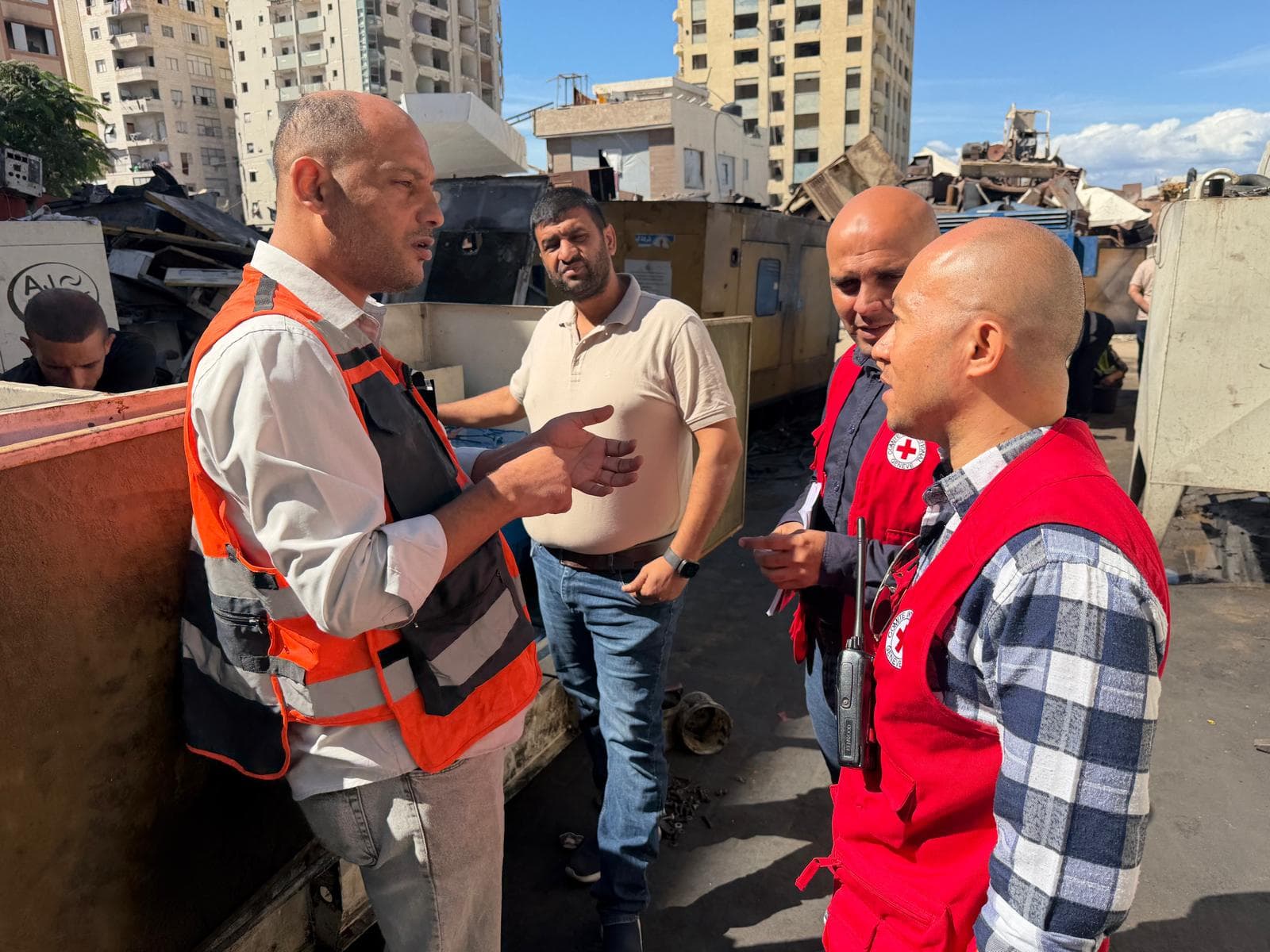
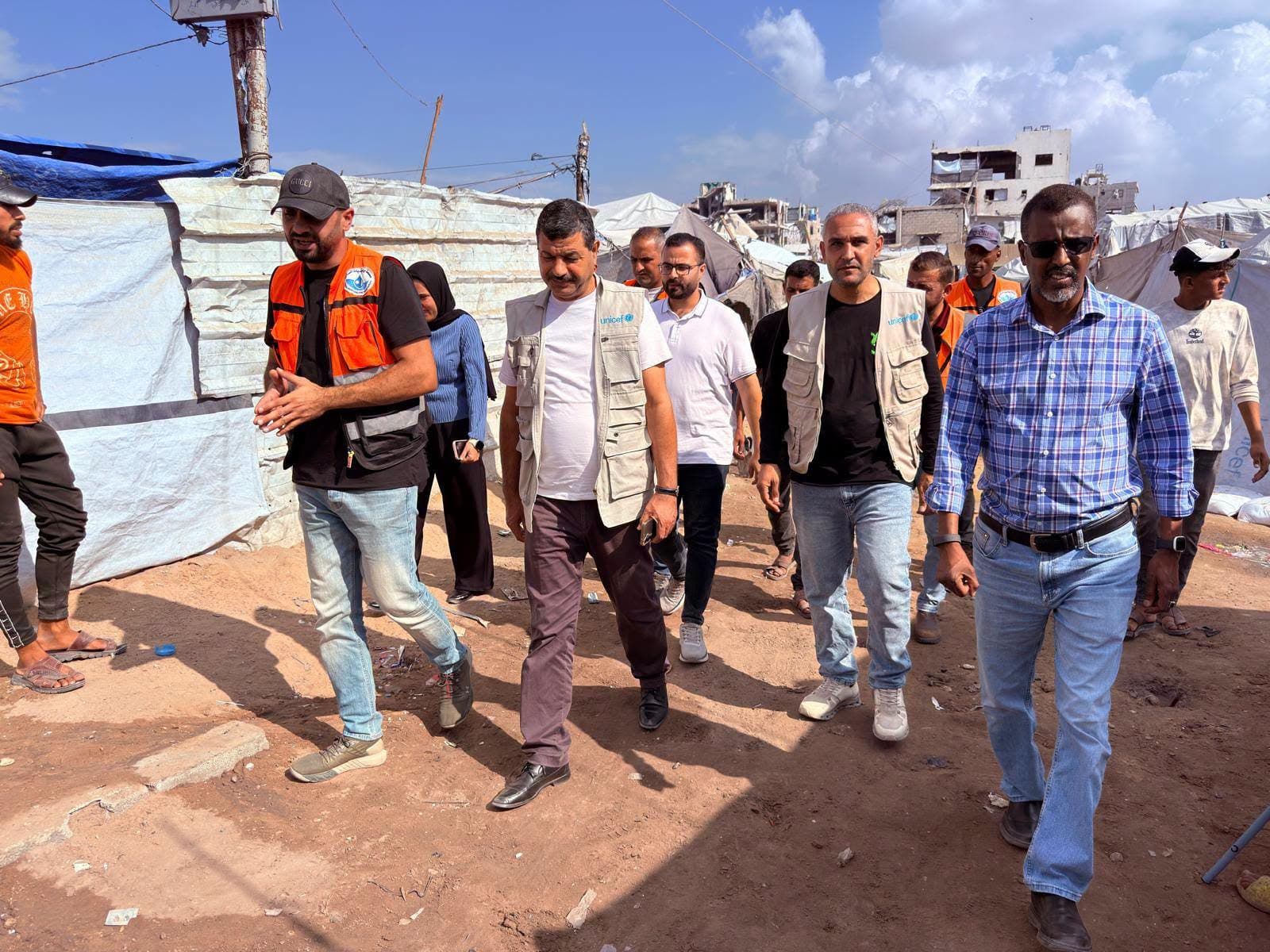
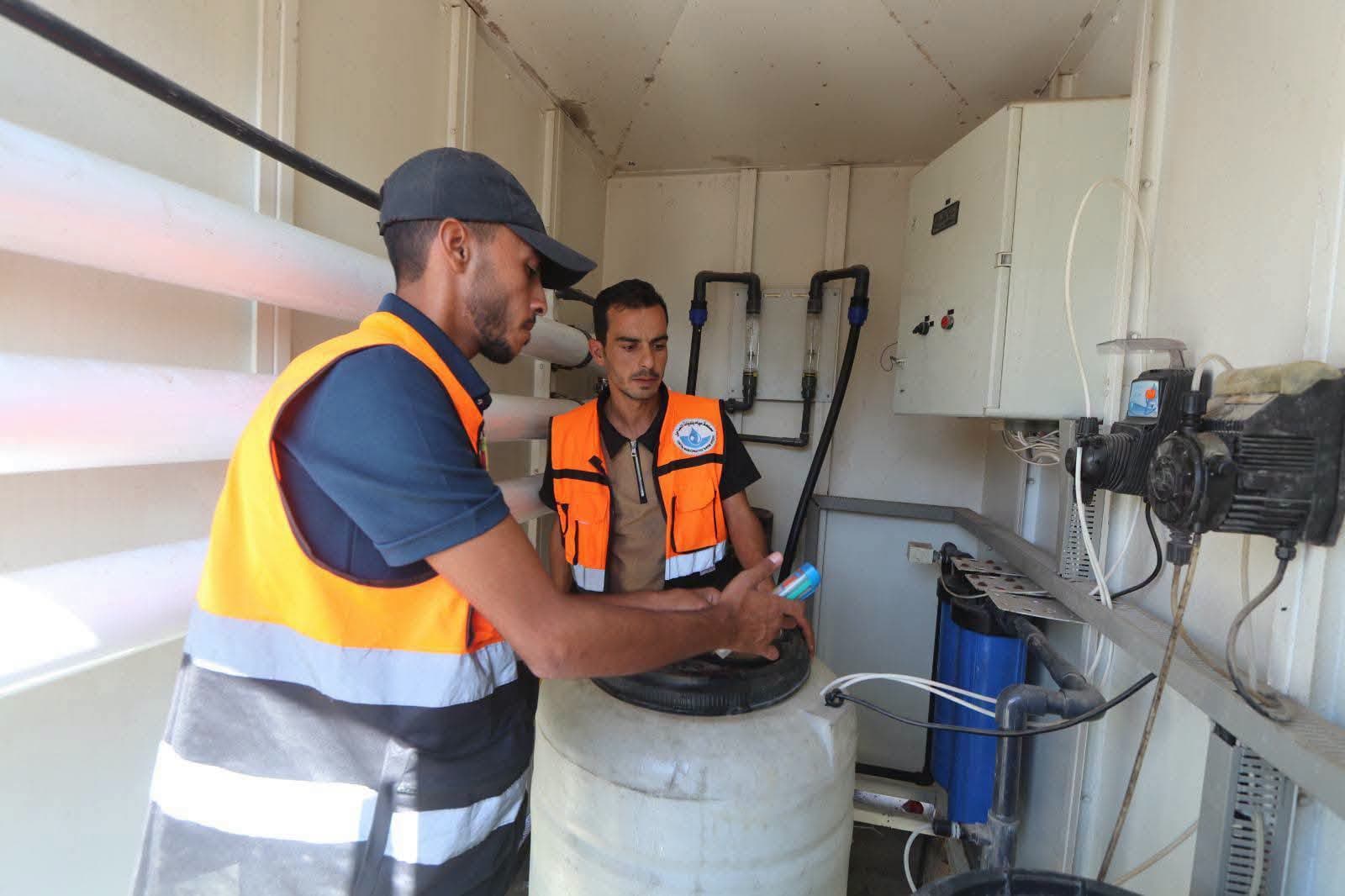
Opening of the sewage treatment plant in Al-Fukhari east of Khan Younis, attended by the Chairman of the Water Authority, to serve more than 200,000 people, funded by the Kuwait Fund, the Islamic Development Bank, and the Japanese government.
Opening of the Sewage Treatment Plant in Al-Fukhari East of Khan Younis Governorate
Gaza / CMWU
In the presence of the Chairman of the Palestinian Water Authority Eng. Mazen Ghunaim, CMWU participated in the opening activities of the sewage treatment plant in Al-Fukhari east of Khan Younis governorate, with the ceremony attended by CMWU's Chairman of the Board of Directors Dr. Majed Abu Ramadan, Khan Younis Municipality's Mayor Eng. Alaa Al-Din Al-Batta, Khan Younis Governor Dr. Ahmed Al-Shaibi, CMWU's Director-General Eng. Monther Shoblaq and his deputy Eng. Maher Al-Najjar, the Islamic Development Bank's Consultant Dr. Rifat Diab, and representatives of official and local organizations, and mayors and representatives of Khan Younis governorate's municipalities.
In his speech, Dr. Majed Abu Ramadan affirmed that the sewage treatment plant project in Khan Younis needs everyone's cooperation and unity, in order to ensure its sustainability, noting that this project will serve Khan Younis governorate, which suffered from the problem of sewage disposal to the point that it began threatening residents' safety and health and also threatening the groundwater aquifer with pollution, affirming that international and local organizations are working to find appropriate solutions to the Gaza Strip's humanitarian problems, calling for combining efforts so that sanitation networks reach all parts of the governorate.
Dr. Majed Abu Ramadan also addressed CMWU's role and its continuous efforts to ensure the sustainability of operation and maintenance processes, explaining that the current situation greatly affects these efforts, but there is a determination to continue the path toward improving services in the best possible way, particularly amid the cooperation of all relevant parties and national organizations.
In turn, the Chairman of the Water Authority Eng. Mazen Ghunaim said that the Water Authority implemented 93 projects in the water and sanitation sector in Palestine in cooperation with partners and donors, over the past two years at a cost exceeding $670 million, affirming that the past years witnessed continuous activity in water and sanitation projects across the nation from Rafah to Jenin, particularly in the Gaza Strip, including the largest project in Khan Younis, the sewage treatment plant, whose operation will have a great impact on residents' lives and the groundwater aquifer in the area.
He affirmed that this project came with determination and resolve, in cooperation with official and international bodies, despite the occupation's restrictions, to reach this important and long-awaited moment, expressing his appreciation to the Kuwait Fund, the Islamic Development Bank, and the Japanese government for their support of the project, which serves more than 200,000 people, with a capacity exceeding 26,000 cubic meters daily.
In turn, Eng. Alaa Al-Din Al-Batta affirmed the importance of the project, which will serve a quarter of a million residents of the governorate, as the plant's capacity is being raised to serve (376) thousand people over the next few years.
Eng. Al-Batta stressed the strategic importance of the project for Khan Younis governorate and the southern governorates of Gaza in the long term, adding that the project included constructing an integrated and effective plant to treat sewage water according to international standards, addressing the sewage problem in Khan Younis over the past years, which was disposed of by pumping it into the collection pool in Al-Amal neighborhood and then discharging it, after preliminary treatment, directly into the sea, explaining that work on the sanitation project began decades ago and the occupation obstructed its implementation since 1978.
In turn, Dr. Ahmed Al-Shaibi praised the efforts of the Water Authority, CMWU, and all the implementing bodies that contributed to achieving this accomplishment, calling for more work and cooperation between local, international, and donor bodies to strengthen the sustainability of these projects, in a way that eases people's suffering, affirming President Mahmoud Abbas's interest in implementing and completing these vital projects.