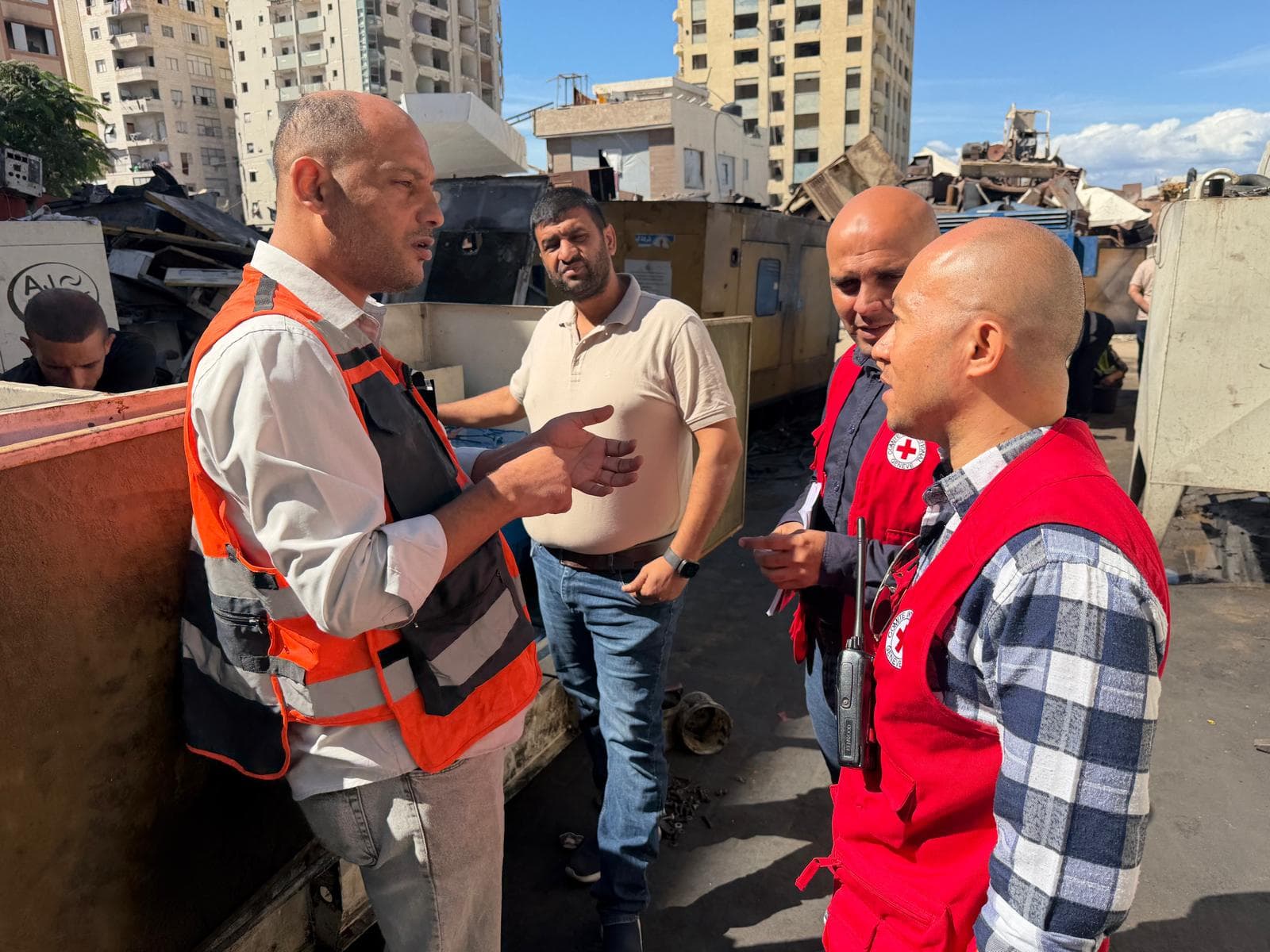
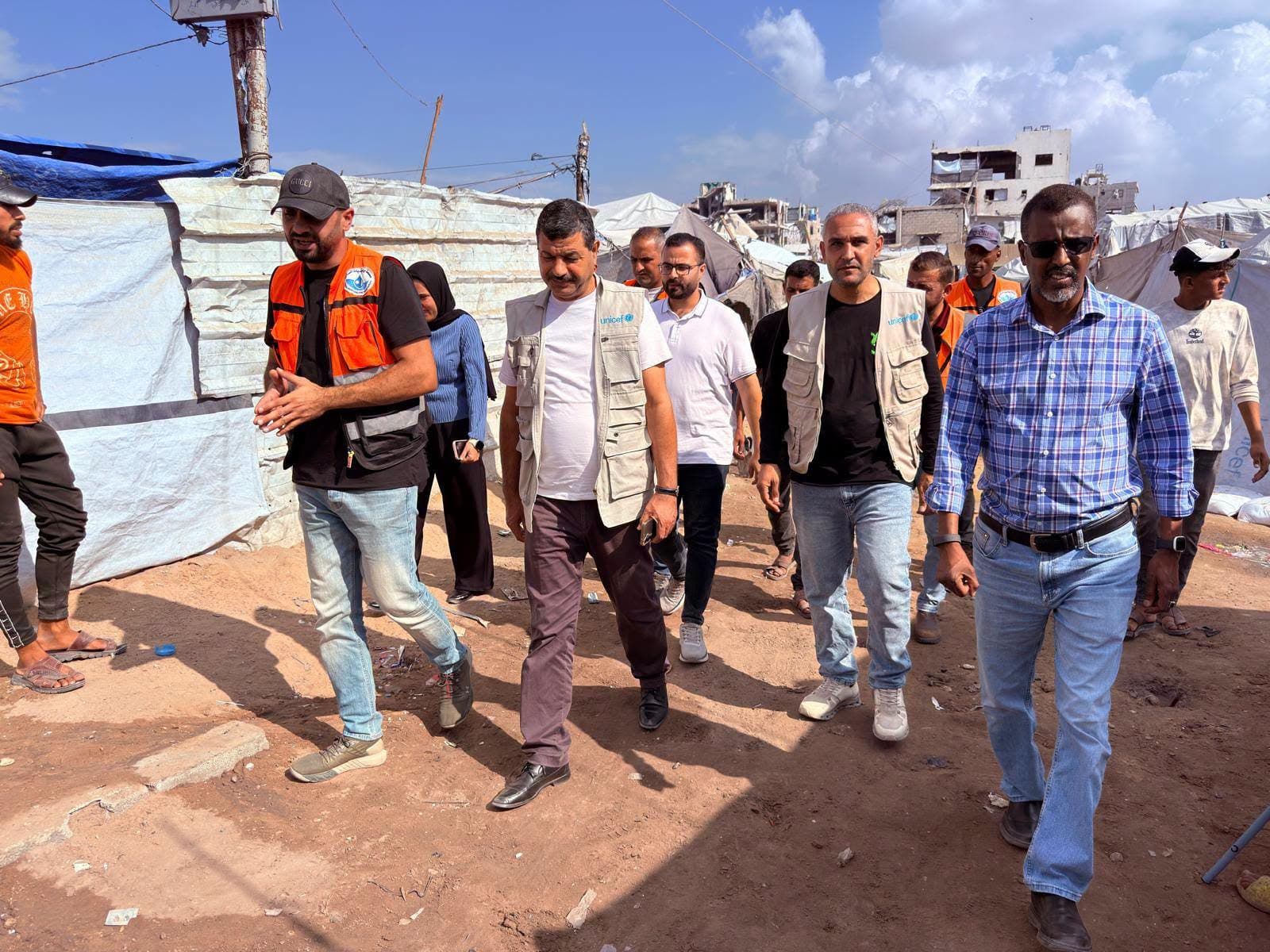
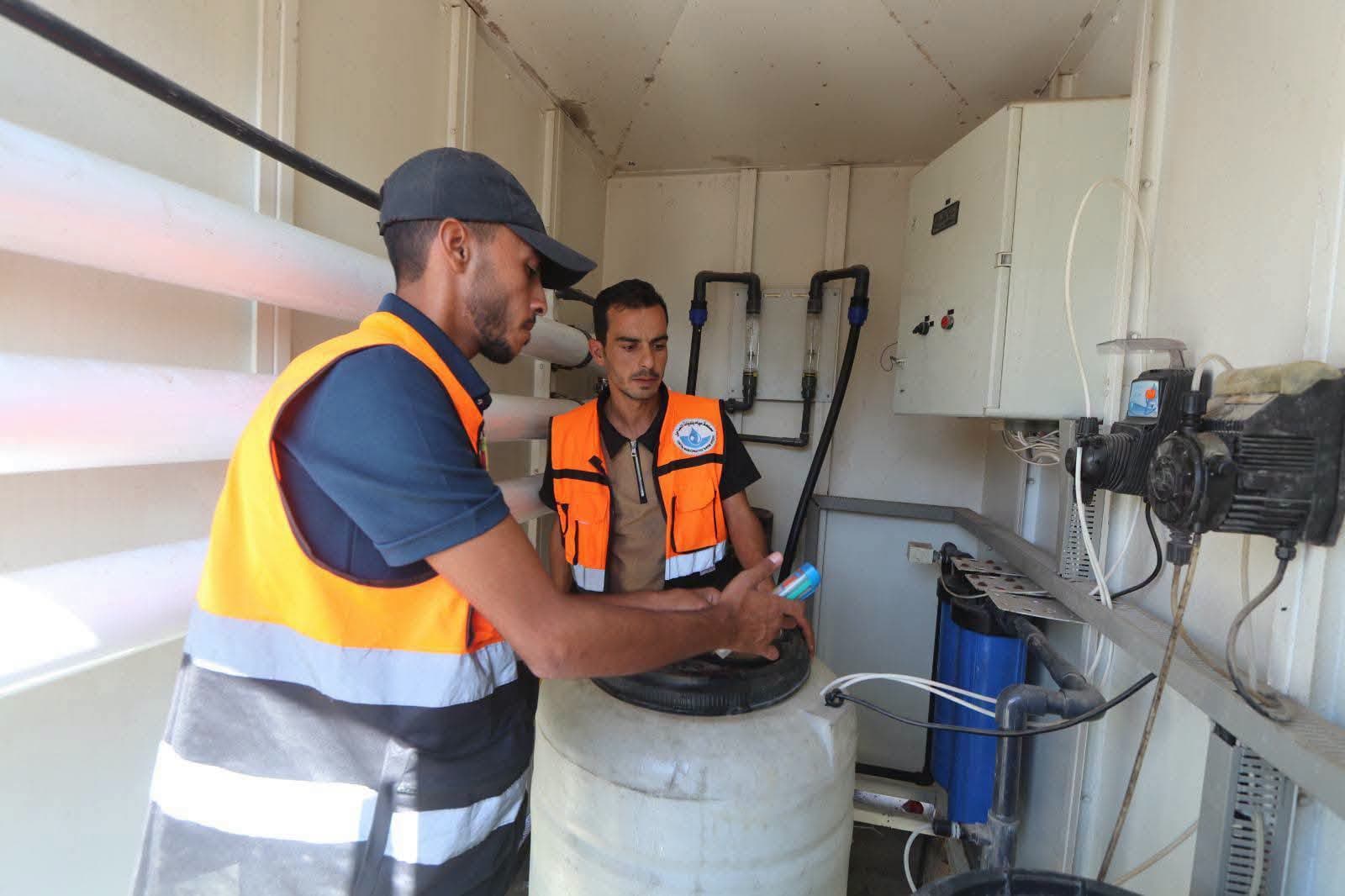
A workshop for media professionals at the southern desalination plant on the role of media in raising awareness of the water crisis, funded by the European Union through UNICEF.
During a Workshop at the Southern Desalination Plant
Gaza: Affirming the Role of Media in Raising Awareness of Water Issues
Khan Younis:
CMWU and the Palestinian Water Authority organized a workshop for media professionals at the seawater desalination plant in the south of the Gaza Strip, which is implemented by UNICEF in partnership with CMWU and the Water Authority, funded by the European Union.
The workshop was opened by Suhair Al-Bayoumi, public awareness officer at CMWU, who mentioned that this workshop comes within the framework of the plant's public awareness program activities, which coincide with the beginning of the plant's trial pumping and the approaching launch of official pumping.
Deputy Chairman of the Water Authority Eng. Rebhi Al-Sheikh spoke about the escalating water crisis in the Gaza Strip, which the Water Authority has adopted a strategy to confront for years, with the strategy including projects and programs for seawater desalination and sewage water treatment.
Eng. Al-Sheikh stressed the importance of solidarity and cooperation in implementing this strategy to achieve its goals concerned with improving residents' ability to access safe water resources in both quantity and quality.
He expressed his appreciation for the media, which is considered an important tool for conveying messages related to this crisis and the solutions being implemented on the widest possible scale and simultaneously, in order to overcome the repercussions of the current situation despite all the internal and external difficulties and restrictions.
He explained that these projects face Israeli restrictions and obstacles due to the internal political situation and the division that has negatively affected their implementation, while affirming at the same time that this has not stopped the intensive continuous efforts to overcome this matter.
For his part, Deputy Director-General of CMWU Eng. Maher Al-Najjar addressed the water and sanitation services that the Utility continuously seeks to improve in cooperation with all local and international partners through promising strategic projects.
Al-Najjar said that the various programs will greatly help in developing water and sanitation facilities, increasing the production rates of water suitable for household use and drinking, as well as reusing treated water in agriculture and irrigation.
He added that the future of coming generations requires everyone to stand seriously to implement these projects, especially since there is a race against time in this regard, which needs more support at all levels.
He praised the role of local and international media in presenting the water file in Gaza, calling for shedding more light on the programs proposed, being implemented currently, and to be implemented soon, in addition to contributing to raising residents' awareness of the importance of this matter.
For his part, UNICEF's water officer for the desalination plant Eng. Zaidan Abu Zuhri reviewed aspects of the plant's construction and the stages of progress of work on it and its operation, the current trial pumping, and the official pumping for the beneficiary residents in Khan Younis and Rafah governorates.
Abu Zuhri explained that this plant, upon completing its first phase, will produce 6 thousand cubic meters daily, serving 75 thousand residents in the Tal Al-Sultan area of Rafah governorate and Al-Amal neighborhood in Khan Younis governorate, while work will begin in the near future on the second phase, which will raise the plant's capacity to 12 thousand cubic meters daily.
He noted that UNICEF works continuously with CMWU and the Water Authority to complete this vital and important project with funding from the European Union, explaining that the organization continues its activities to contribute to efforts to improve the water situation in the Strip.
Regarding the role of media in awareness, media professional at the Water Authority Ahmed Dalloul said that the media plays a pivotal role in the process of conveying messages related to the water crisis and the efforts aimed at solving it, as well as contributing by focusing on raising residents' awareness in this regard.
Dalloul added that cooperation between the media and the bodies responsible for this file would contribute to clarifying positions and viewpoints on the importance of the water issue, which is considered a fundamental element influencing daily life.
He praised the role of the media in keeping the water issue constantly present, including supporting the awareness programs for residents implemented by CMWU, the Water Authority, and various institutions working in this sector, explaining that this workshop would be followed by other activities specific to journalists.
A number of journalists participating in the workshop intervened, raising questions and clarifications about the projects' files and their impact and the repercussions of seawater desalination and wastewater treatment on the environment and public health.
They also discussed aspects related to the services provided to residents in terms of quality and access, and how these projects can be sustained amid the current situation, including the continuous electricity outages.
During the workshop, a video was shown reviewing the stages of planning, constructing, and developing the plant, and it concluded with a tour for the participating journalists of the plant's facilities and its various work stages, and answering their questions in this regard.
On another note, and within the framework of the awareness programs organized by CMWU, an exhibition, the first of its kind in the Gaza Strip on water issues, will be organized next Wednesday, in cooperation with the Water Authority and funded by the European Union, with the participation of numerous active institutions.
The exhibition will include diverse segments reviewing various aspects of the work, organization, and management of the water sector, various information about the water situation in Gaza, and other cultural and recreational segments for various community groups.