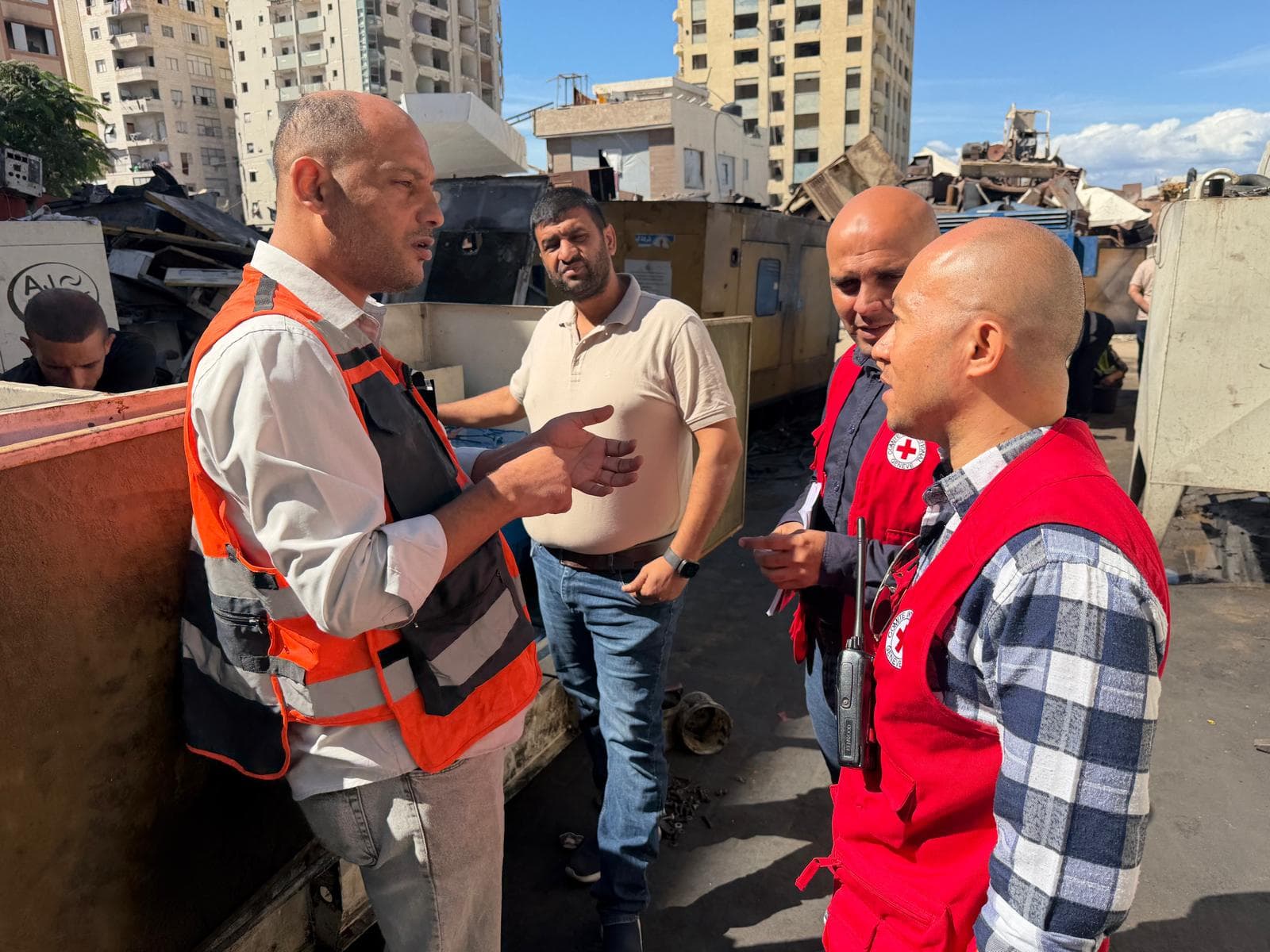
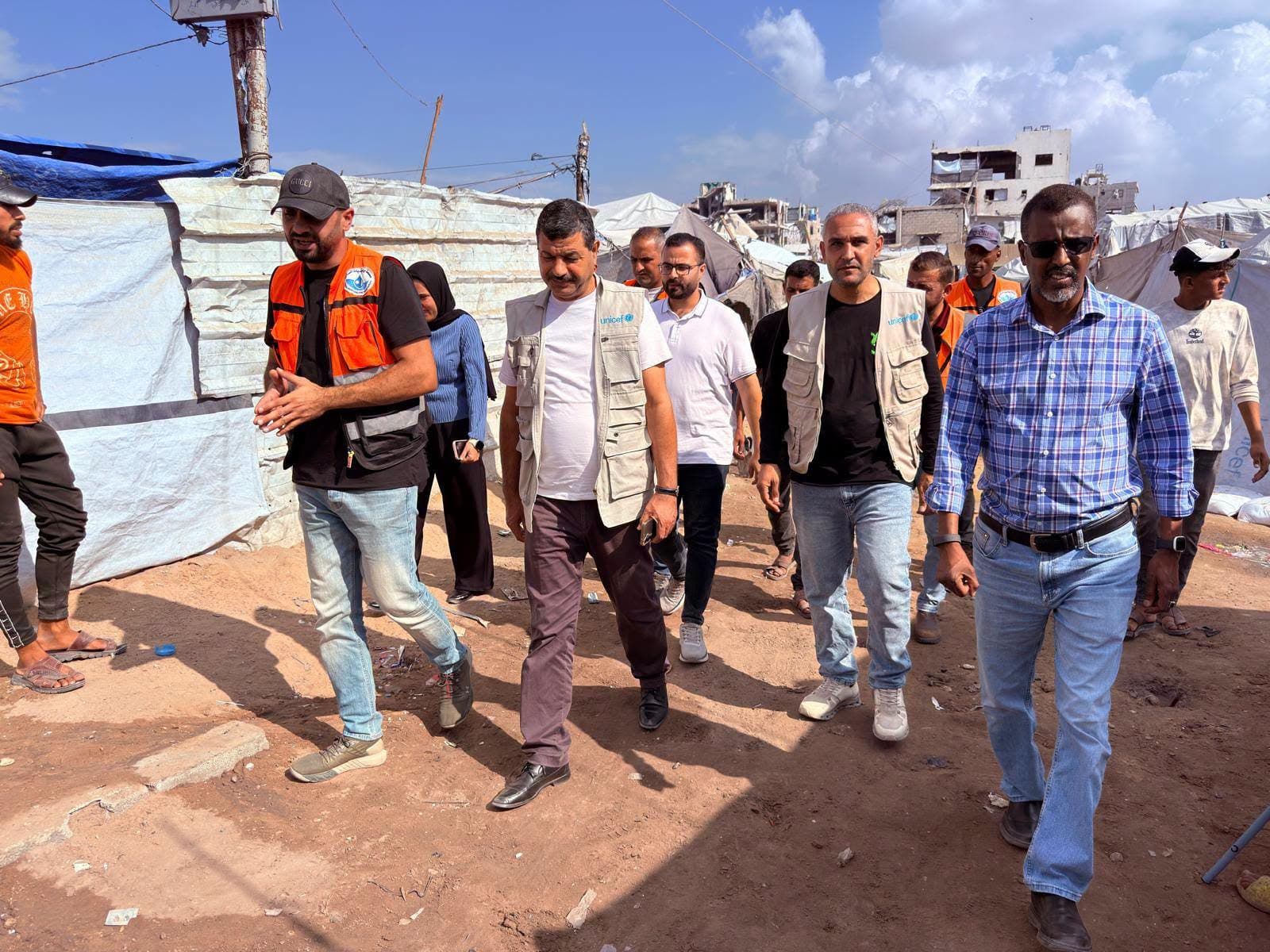
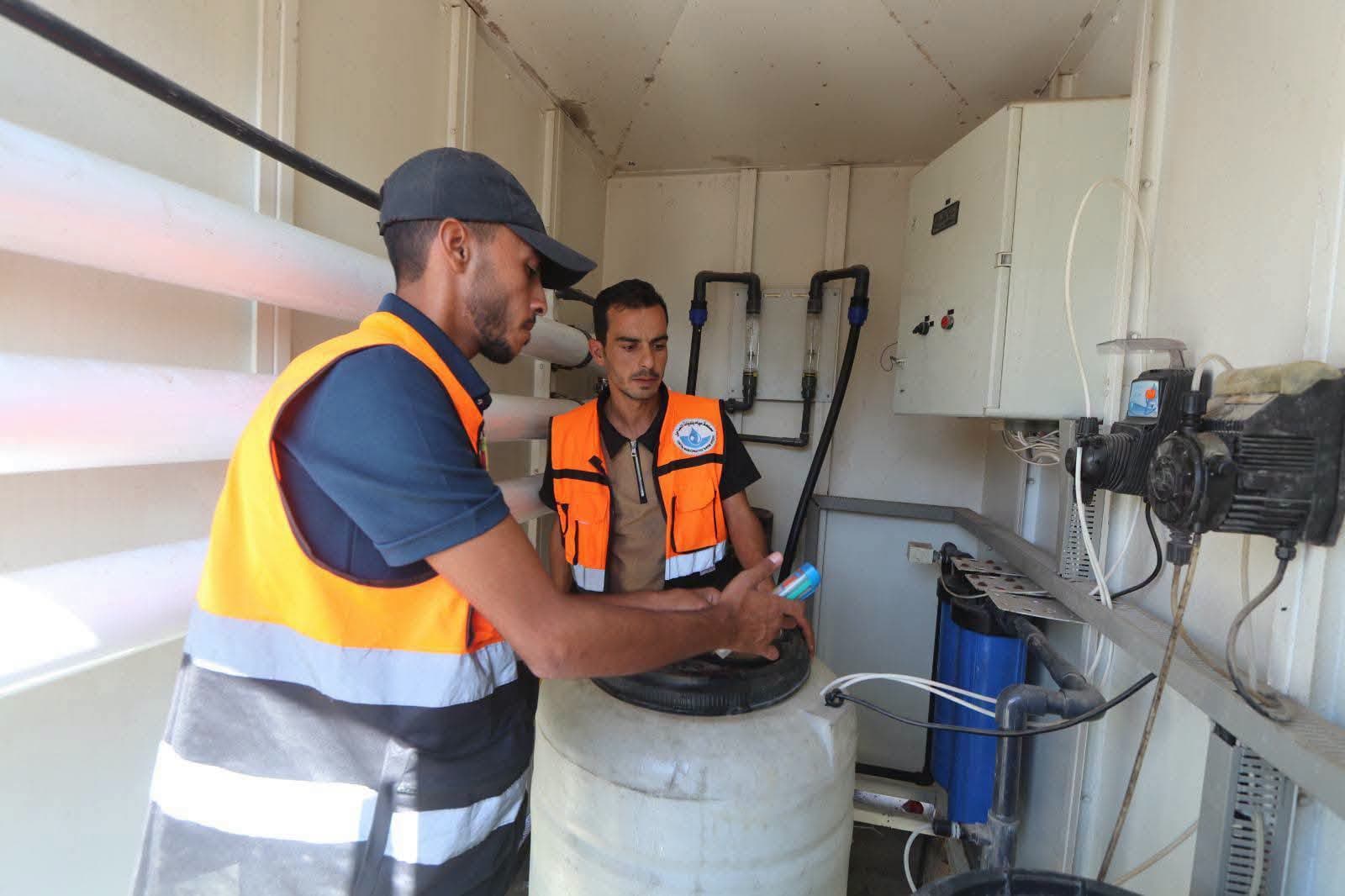
Laying the foundation stone for Phase One of the associated works project for the Central seawater desalination plant in the Central Governorate, funded with more than $5 million, to serve 300,000 people.
More than $5 Million, Serving 300,000 People
Laying the Foundation Stone for Phase One of the Associated Works Project for the Central Seawater Desalination Plant in the Central Governorate
CMWU's Chairman of the Board of Directors Dr. Majed Abu Ramadan participated in the foundation-laying ceremony for Phase One of the associated works project for the Central seawater desalination plant in the Central Governorate, which will serve more than 300,000 people in the governorate, in a ceremony organized by the Palestinian Water Authority under the patronage and in the presence of the Chairman of the Water Authority Eng. Mazen Ghunaim, CMWU's Executive Director Eng. Monther Shoblaq, his Deputy for Engineering and Planning Eng. Maher Al-Najjar, World Bank representative Dennis Gordy (via a recorded speech), Deir al-Balah Municipality's Mayor Dr. Diab Al-Jarou, and the mayors of the Central Governorate's municipalities.
The foundation stone was laid at Al-Baraka reservoir west of Deir al-Balah, which will be among the reservoirs benefiting from the outputs of Phase One of the project.
In his speech, Dr. Majed Abu Ramadan said that laying the foundation stone for this project will give a greater boost to improving water services in the Gaza Strip, particularly in the Central area, in addition to establishing further progress and expanding the coverage of water supplies, as CMWU seeks, in cooperation and with support from the Water Authority, to strengthen its efforts and develop its capacities in a way that positively reflects on serving residents.
He thanked the World Bank and the donor bodies for water and sanitation projects, which have left an impact on people's lives through projects that have touched their lives, and contributed to easing the repercussions of the water crisis amid continuous efforts to end it, and building on what has been achieved to create real development in this vital sector.
In turn, Eng. Mazen Ghunaim affirmed that the water issue constitutes a real and extremely important challenge in Palestine, as the occupation and its practices on the ground are the cause of the water crisis that has reached an extremely dangerous point day after day as a result of Israeli control over Palestinian water sources, which has negatively affected the quantities of water available.
He added that the crisis is intensifying amid the continuously increasing needs with the increase in urban and human development and progress, explaining that the crisis in Gaza takes on an exceptional dimension compared to what it had reached several years ago on a very dangerous trajectory, as the groundwater aquifer witnessed severe depletion, following which pollution and salinity rates rose.
He praised the efforts of local and international partners, and commended the supporting bodies for their belief in and continuous support for water and sanitation projects in Palestine, particularly in the Gaza Strip, as the value of investments over recent years has reached about $800 million.
Eng. Mazen Ghunaim announced that the coming period will witness the launch of the three remaining projects of Phase One of the associated works project, which include the southern transmission line and its accessories at a value of $25 million, and the central pumping station and main reservoirs in Khan Younis and Rafah at about $18 million, with the two projects supported by the Kuwait Fund, in addition to the project to rehabilitate the southern networks funded by the World Bank at about $25 million, which will provide drinking water to about one million people.
It is worth noting that this project is part of the associated works for the largest water project in Palestine, the "Central Desalination Plant Program", and consists of reshaping the existing water distribution systems, rehabilitating 25 wells and 7 existing reservoirs, in addition to connecting these wells to the rehabilitated reservoirs, in addition to all the works that will lead to establishing an integrated water supply system.