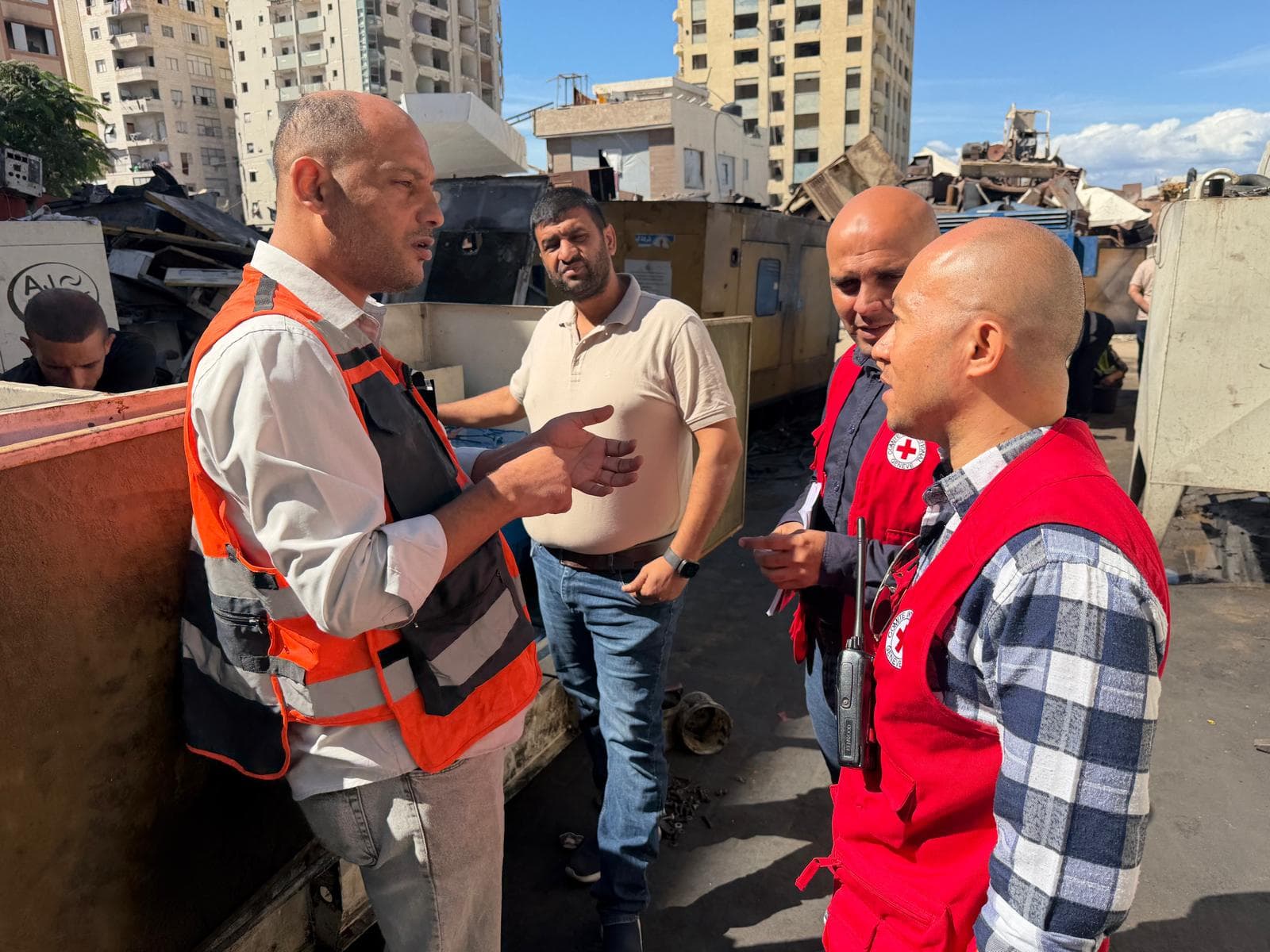
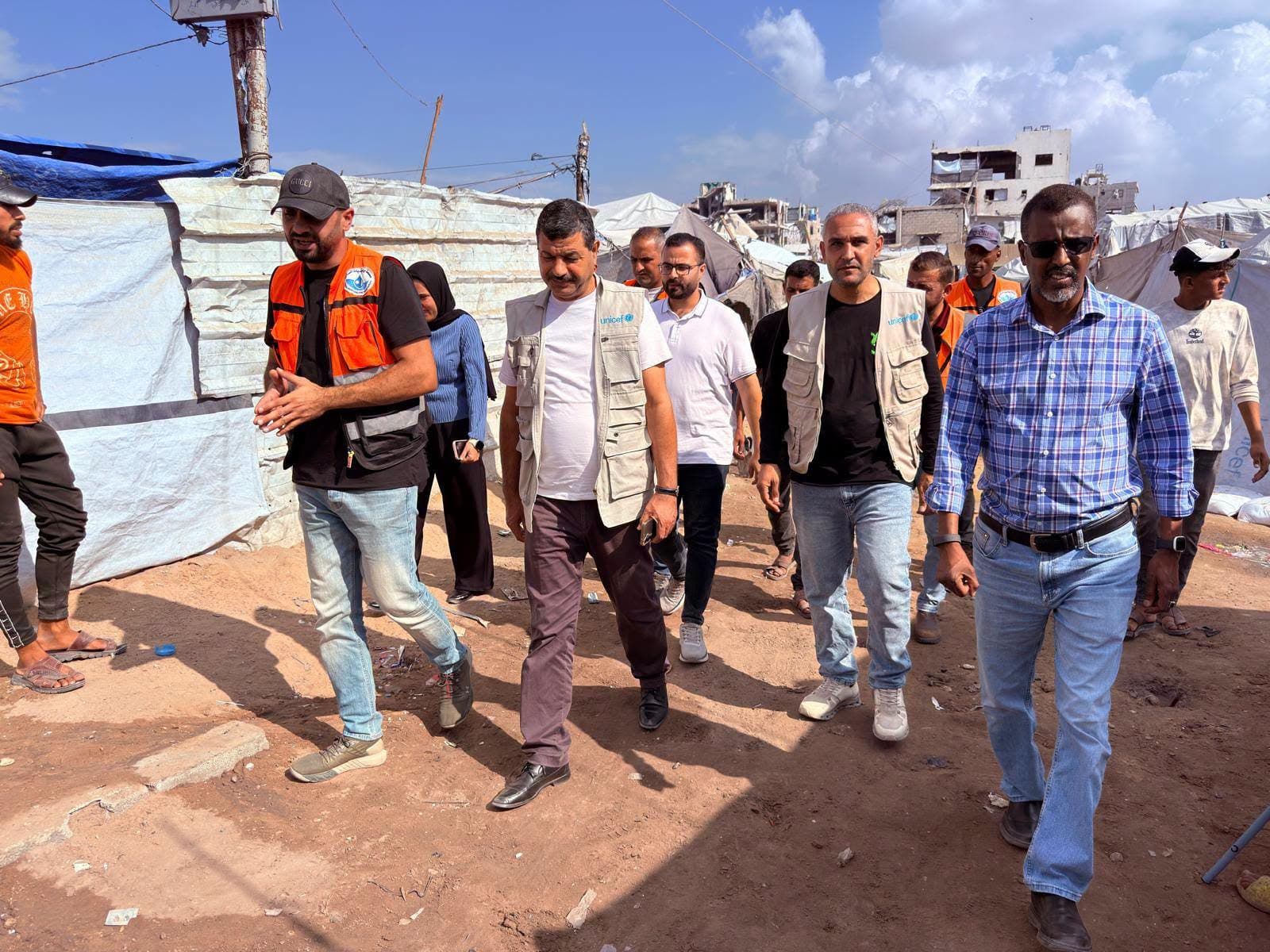
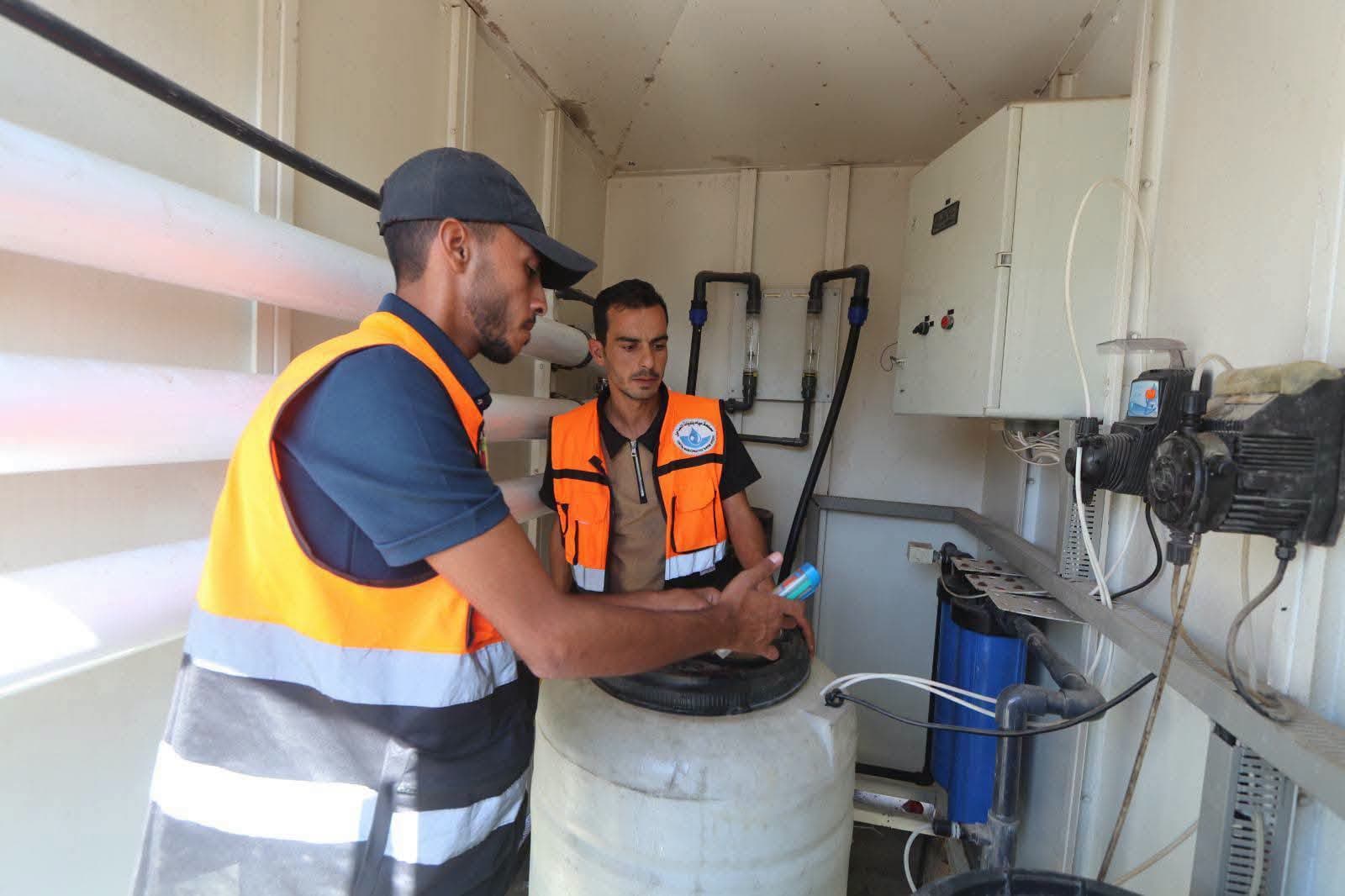
Organizing a training course on the water and sanitation sector emergency preparedness plan for times of emergencies and crises, in cooperation with the International Committee of the Red Cross.
CMWU Organizes a Training Course on the Water and Sanitation Sector Emergency Preparedness Plan for Times of Emergencies and Crises.
Gaza - CMWU, in cooperation with the International Committee of the Red Cross, organized a training course on the water and sanitation sector emergency preparedness plan for times of emergencies and crises, with the course opened by CMWU's Director-General Eng. Monther Shoblaq, with the course aiming to train the crews working in the water and sanitation sector on the emergency plan for working during crises and wars, strengthening the work of the emergency teams, and providing the capabilities to secure the minimum level of water and sanitation services for residents in the Gaza Strip, by repairing the damage inflicted on the infrastructure and operating water and sanitation systems, with the course organized under the supervision of Eng. Omar Shatat, Director of the Technical and Operations Department at CMWU, and coordination by Eng. Ashraf Ghanem, Director of the Occupational Safety Department at the Utility, with employees working at water and sanitation departments at CMWU and the Strip's municipalities participating in it.
In his opening speech for the course, CMWU's Director-General Eng. Monther Shoblaq affirmed that this course comes as part of CMWU's keenness to continue raising the administrative and professional level of workers in the water and sanitation sectors, and increasing the level of readiness needed among workers at the Utility and the Strip's municipalities, to be fully prepared should any emergency situations or crises occur in the Gaza Strip due to the unstable political and security situation the Strip is going through, with this course representing a meeting point for all the expertise and skills needed for field and logistical handling in times of emergency, including the communication, coordination, and field intervention mechanisms outlined in the emergency preparedness plan developed about two years ago by CMWU, the Water Authority, and the Ministry of Local Government, in coordination with the Strip's municipalities and funded by the International Committee of the Red Cross, and the importance of periodically reviewing and training on this plan, calling on all participants to benefit from this course and its outcomes.
Eng. Shoblaq also expressed his deep thanks to the International Committee of the Red Cross for its continuous and great cooperation in this regard, and its continued keenness on periodically holding this training course to ensure the full readiness of the crews working in the field of water and sanitation, also praising the role of the municipalities, which always prove their keenness on having their crews participate in all the training courses held by the Utility to strengthen their skills and experience.
In the Red Cross's opening speech for this course, Mr. Fayez Al-Aqra', Advisor to the Director of the Red Cross office in Gaza, affirmed his organization's desire and support for raising the efficiency and readiness of the crews working in the field of water and sanitation services during crises, aiming to protect them while carrying out their field duties, and enabling CMWU and the municipalities to continue supplying the residents of the Gaza Strip with water and sanitation services, and preventing environmental disasters that might result from those services stopping during security crises.
Eng. Omar Shatat affirmed CMWU's keenness and interest in continuing to raise the efficiency of all workers at CMWU and the municipalities in general and during crises in particular, through implementing numerous training programs carried out by CMWU since developing this plan, particularly regarding communication and coordination mechanisms and training on reading maps to prevent errors during crises, and with the aim of protecting workers while carrying out their duty and ensuring the continued provision of water and sanitation services. During this course, the readiness and understanding of all those concerned with this course of the plan's elements and the communication and coordination mechanisms with the plan's various levels will be verified.
In turn, Eng. Ashraf Ghanem, Director of the Occupational Safety Department at CMWU, affirmed that this course came as a product of previous experiences working with the Red Cross, particularly in times of emergencies, crises, and wars, explaining that all participants will receive all the important information in the field of handling crisis times and dealing with emergency situations and the mechanism of contact, communication, coordination, and reading maps.
Ghanem noted that the course strengthens the work of the Central Emergency Team, which covers all cities of the Gaza Strip's governorates, with the Central emergency room and the sub-rooms distributed across the five governorates operating, calling on all participants in the course to benefit from the Red Cross's expertise in handling times of wars and emergencies and raise the level of coordination for urgent intervention and carrying out repairs in border areas.
In turn, the course's participants thanked CMWU and the International Committee of the Red Cross for organizing the training course and providing them with all the theoretical and practical information, which reflects the extent of their interest and keenness on the safety of workers in the water and sanitation departments and serving residents amid the recurring crises and wars on the Gaza Strip.