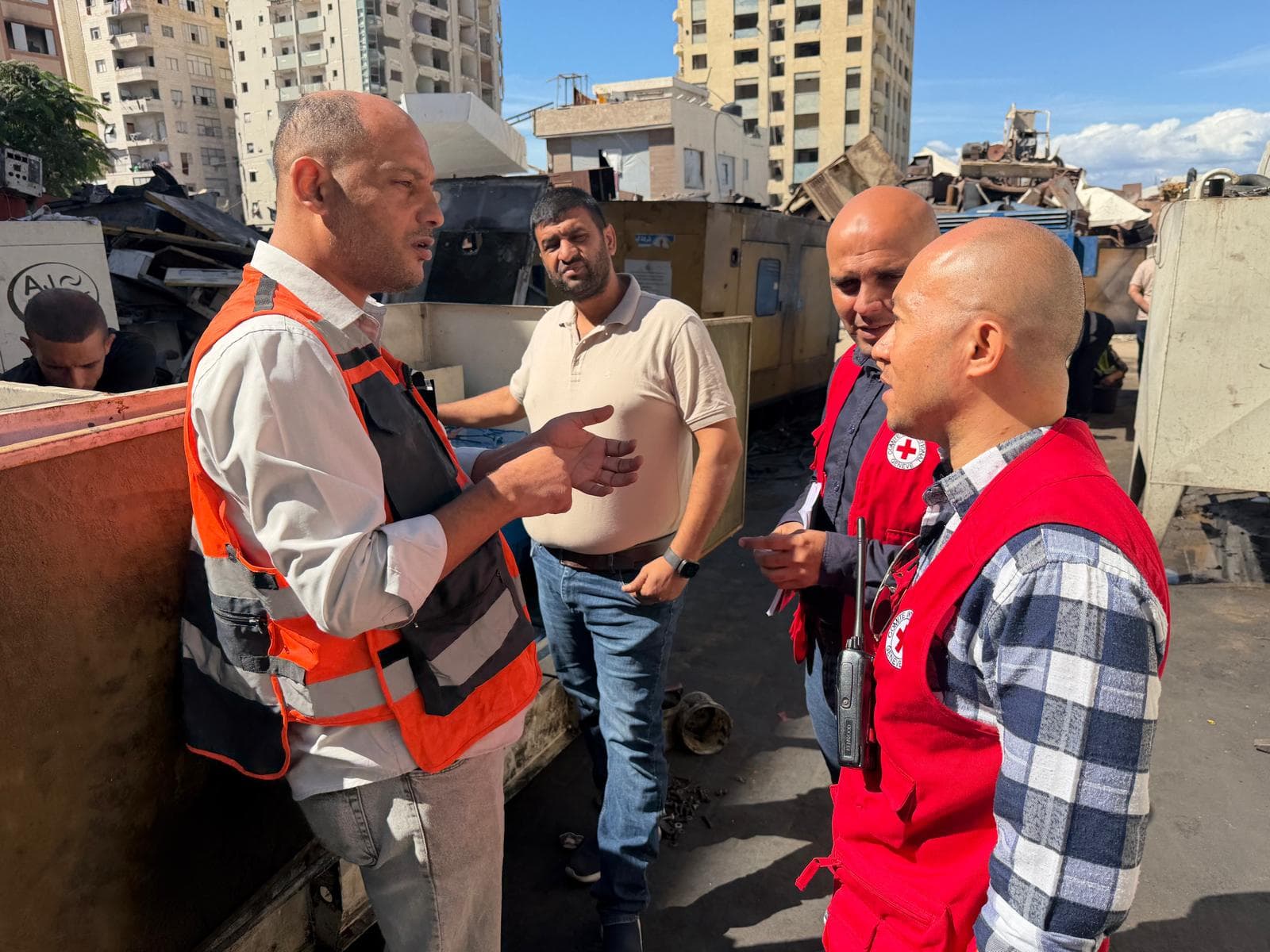
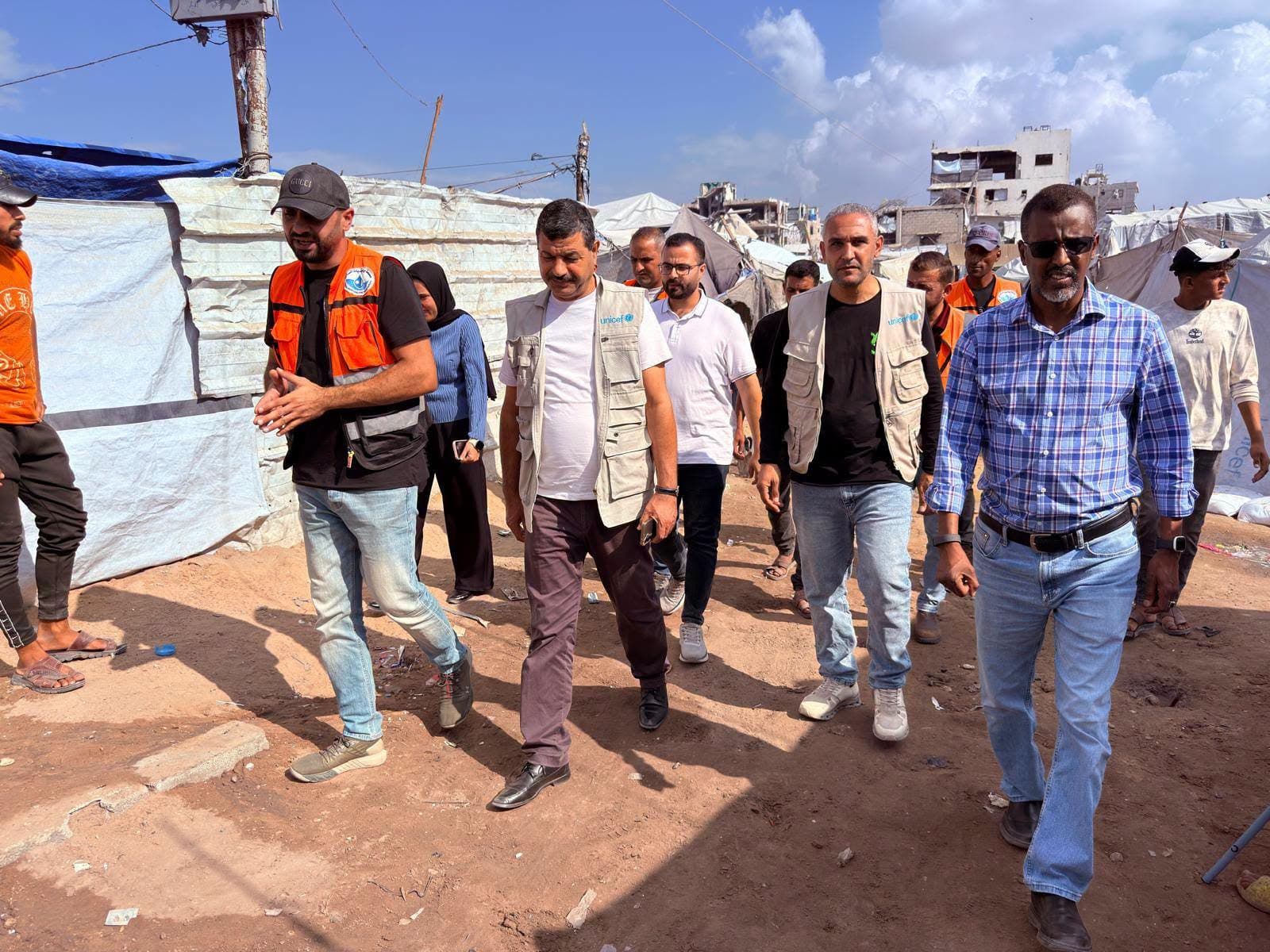
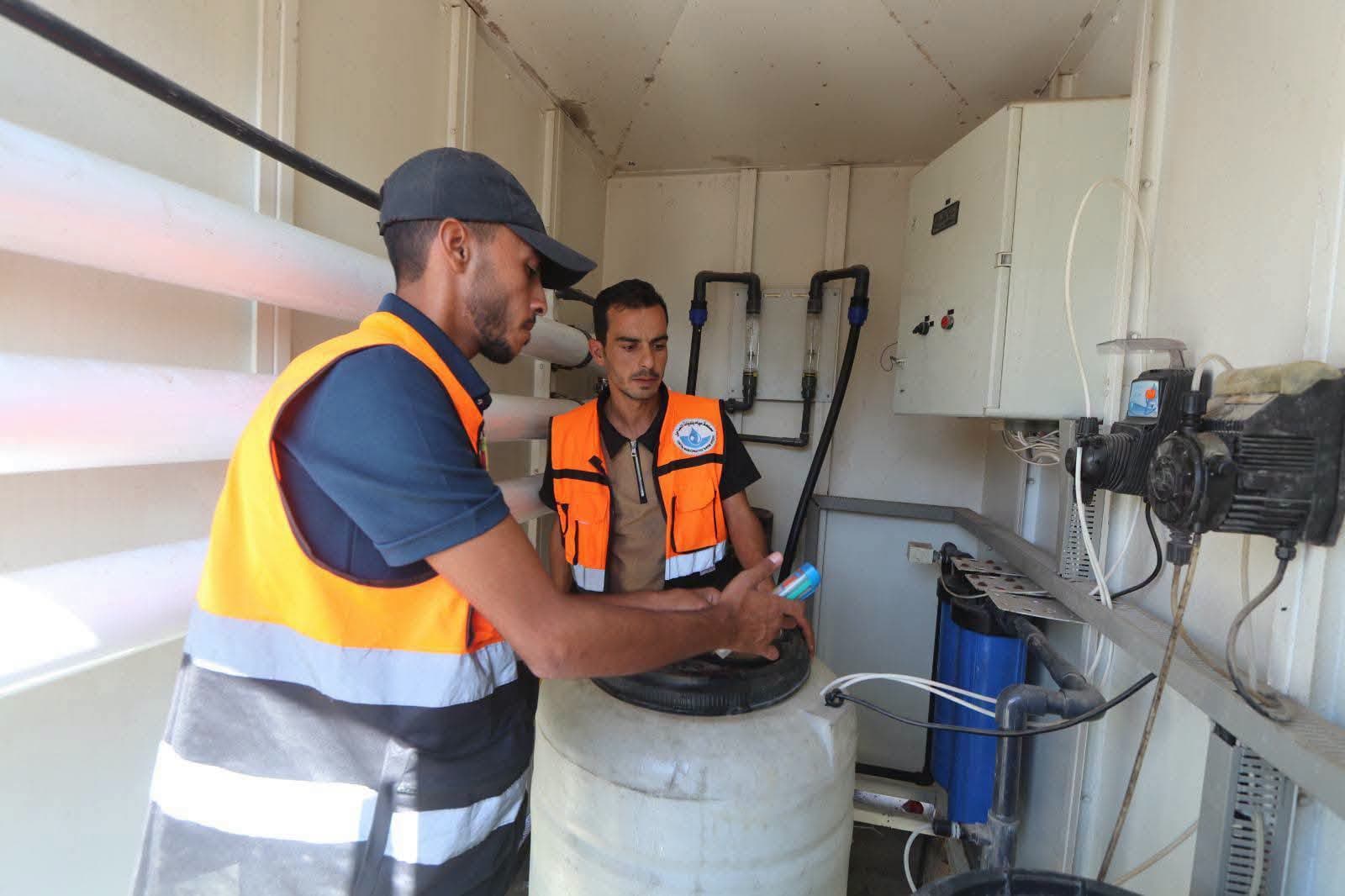
CMWU continues its efforts in all areas of the Strip to confront the weather depression by pumping rainwater and placing sand berms, with support from the Red Cross.
CMWU Continues Its Efforts in All Areas of the Strip to Confront the Weather Depression
CMWU - Gaza
CMWU continued its efforts in all areas of the Gaza Strip to confront the current weather depression, with emergency teams having worked and still working around the clock, in coordination and cooperation with the Strip's municipalities, to reduce any effects resulting from the continuation of rainfall and leading to damage to residents and their properties.
In Rafah governorate, the Utility, in cooperation with the emergency team at Rafah Municipality, formed two emergency teams, one to follow up on sanitation facilities and another to follow up on rainwater filters and drainage lines.
The sanitation team worked on draining rainwater from the Al-Najili station using the two main pumps and also a mobile pump, as this station receives large quantities of rainwater given that it is one of the lowest-lying areas in Rafah, and the same team followed up on pumping rainwater from the Jemeza Al-Sabeel station, which receives rainwater from the eastern areas of Rafah. In addition, the emergency teams in Rafah dealt immediately with calls from residents, Rafah Municipality, Civil Defense, and the police to clear and clean numerous rainwater and sewage drainage lines and manholes, and the Utility also contributed to leveling roads in some areas in cooperation with Save the Children.
CMWU's emergency teams continued their work in Khan Younis governorate, pumping out collected rainwater and building sand berms to prevent water from entering residents' homes in several streets of Khan Younis city, including Al-Misriyeen Street, Jamal Abdel Nasser Street, the Qizan Al-Najjar area, the Al-Wafa'a area, Al-Salaheen Street, and Jamal Jarghoun Street.
The Utility also maintained the mobile pumps in the Al-Qarara area and widened the rainwater collection pond, supplying it with an additional pump to pump the water collected in it, and built sand berms in the streets surrounding it to prevent water from entering residents' homes.
In the middle area, the Utility followed up on the field situation and worked to clear the sewage lines in the Al-Maghazi area, and in the Wadi Al-Salqa area, the Utility built sand berms on both sides of the valley to prevent the continuation of water flooding and the occurrence of major damage.
It is worth noting that placing sand berms in the various governorates was funded by the International Committee of the Red Cross.
In the northern governorate, the pumps at the Al-Manshiya sewage treatment plant in Beit Lahia were maintained to operate at the required efficiency, avoiding overflow and flooding of water.
In the same context, it is noted that CMWU managed to distribute about 66,000 liters of diesel during the weather depression to various areas of the Gaza Strip, and distributed electrical generators and fuel tanks to some areas, and pumps and spare parts to all areas of the Gaza Strip.