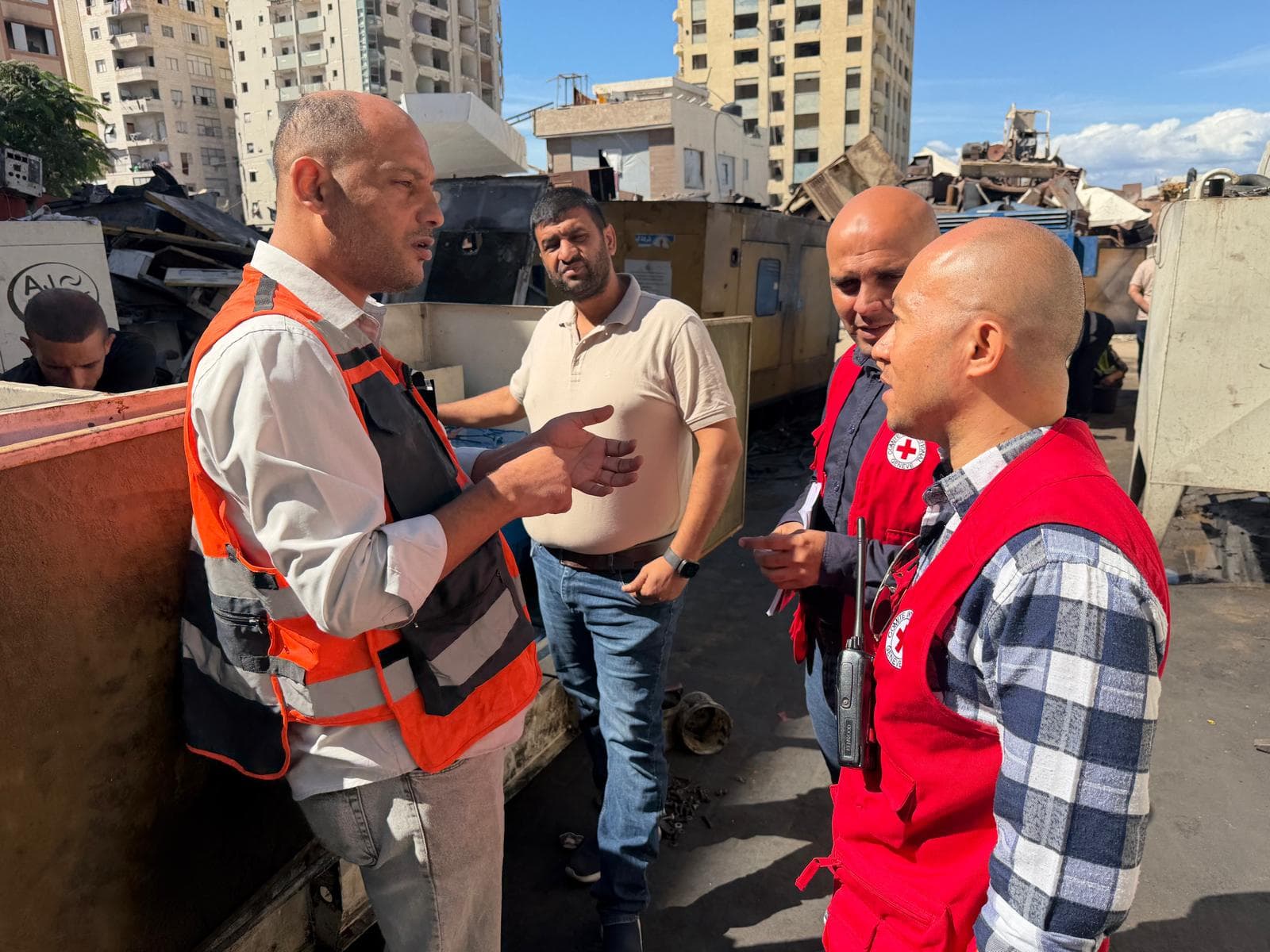
Permitting the entry of 5 pieces of heavy equipment to CMWU through Kerem Shalom crossing after an Israeli ban lasting more than 4 years, funded by the World Bank.
Heavy Equipment Permitted for Entry to CMWU After the Israeli Side Refused Its Entry for More Than 4 Years
Gaza / CMWU
After the intervention of numerous international bodies and a refusal lasting more than four years from the Israeli side, 5 pieces of heavy equipment were today permitted entry to CMWU through Kerem Shalom crossing, south of the Gaza Strip.
In turn, CMWU's Director-General Eng. Monther Shoblaq said that the Israeli side permitted the entry of 5 pieces of heavy equipment (loaders and excavators) for CMWU, used for excavation and maintenance work, after having prevented their entry for more than 4 years.
Eng. Shoblaq explained that this equipment had been purchased in 2015, funded by the World Bank as part of the Gaza Water Supply and Sewerage Systems Improvement Project (WSSSIP), at a total value estimated at $876,350, through the Palestinian Water Authority and for the benefit of CMWU, in order to improve its efficiency in operation and maintenance works. However, the Israeli side refused to allow its entry under various pretexts and justifications, despite the intervention of numerous international bodies to allow its entry, with the equipment having been stored in the Water Authority's water department warehouses in Ramallah until its entry was permitted.
Eng. Shoblaq noted that after an initiative and coordination by UNDP, approval was obtained from the Israeli side to allow the equipment's entry after equipping it with GPS devices to ensure it operates only within CMWU's operational works and projects, noting that the International Committee of the Red Cross covered the cost of transporting this equipment to the Gaza Strip.
The Utility's Director-General affirmed that the entry of this equipment would contribute to strengthening the Utility's capacity in its operational works, and would also contribute to reducing the operational expenses burdening the Utility, as it is often forced to contract with private construction companies to complete its works.
In the same context, Eng. Shoblaq considered that the entry of this equipment will further strengthen the role and readiness of CMWU in emergency interventions as part of the emergency preparedness program developed with the Water Authority and the International Committee of the Red Cross, which would greatly benefit residents in preserving their property and lives.