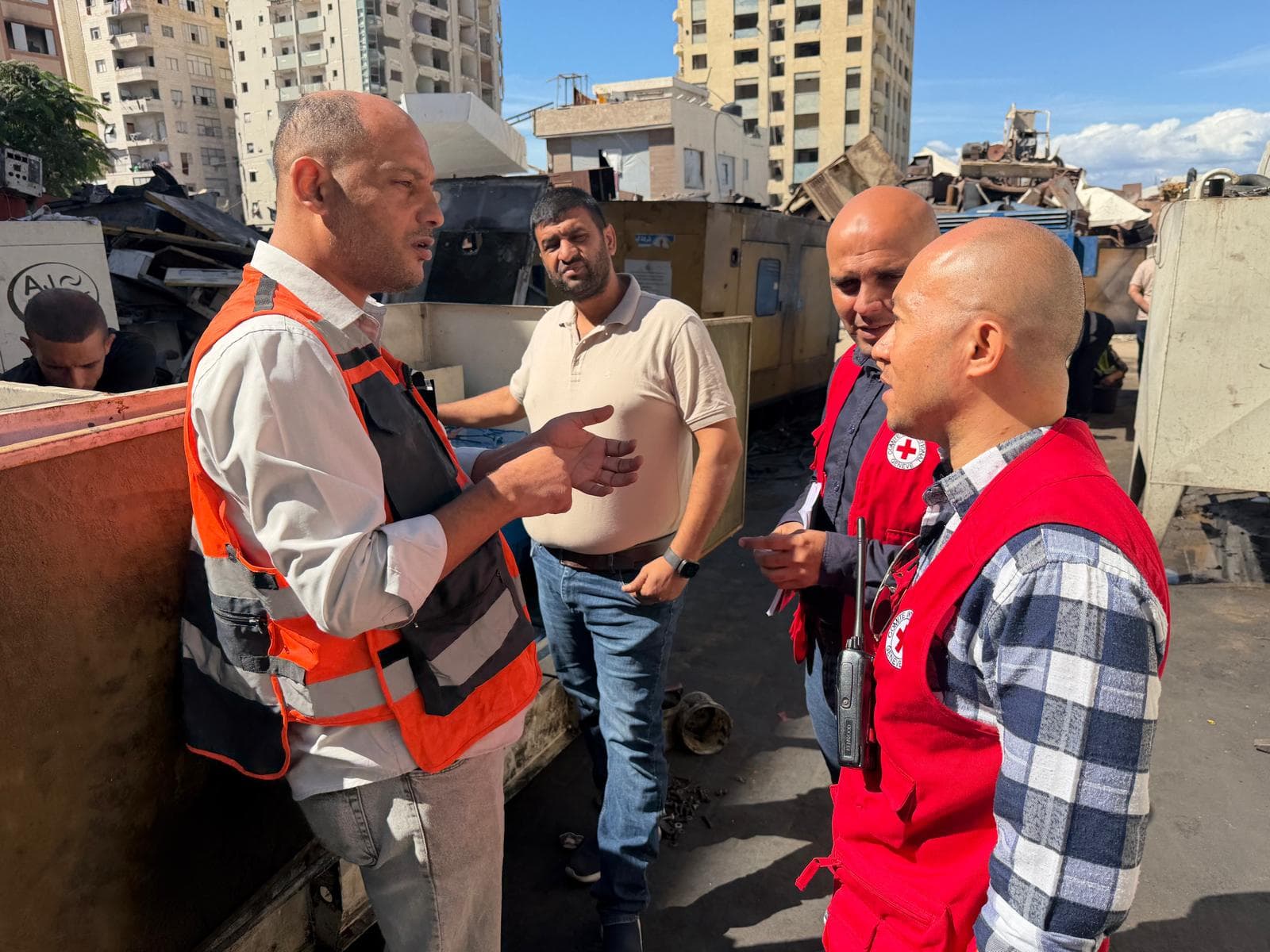
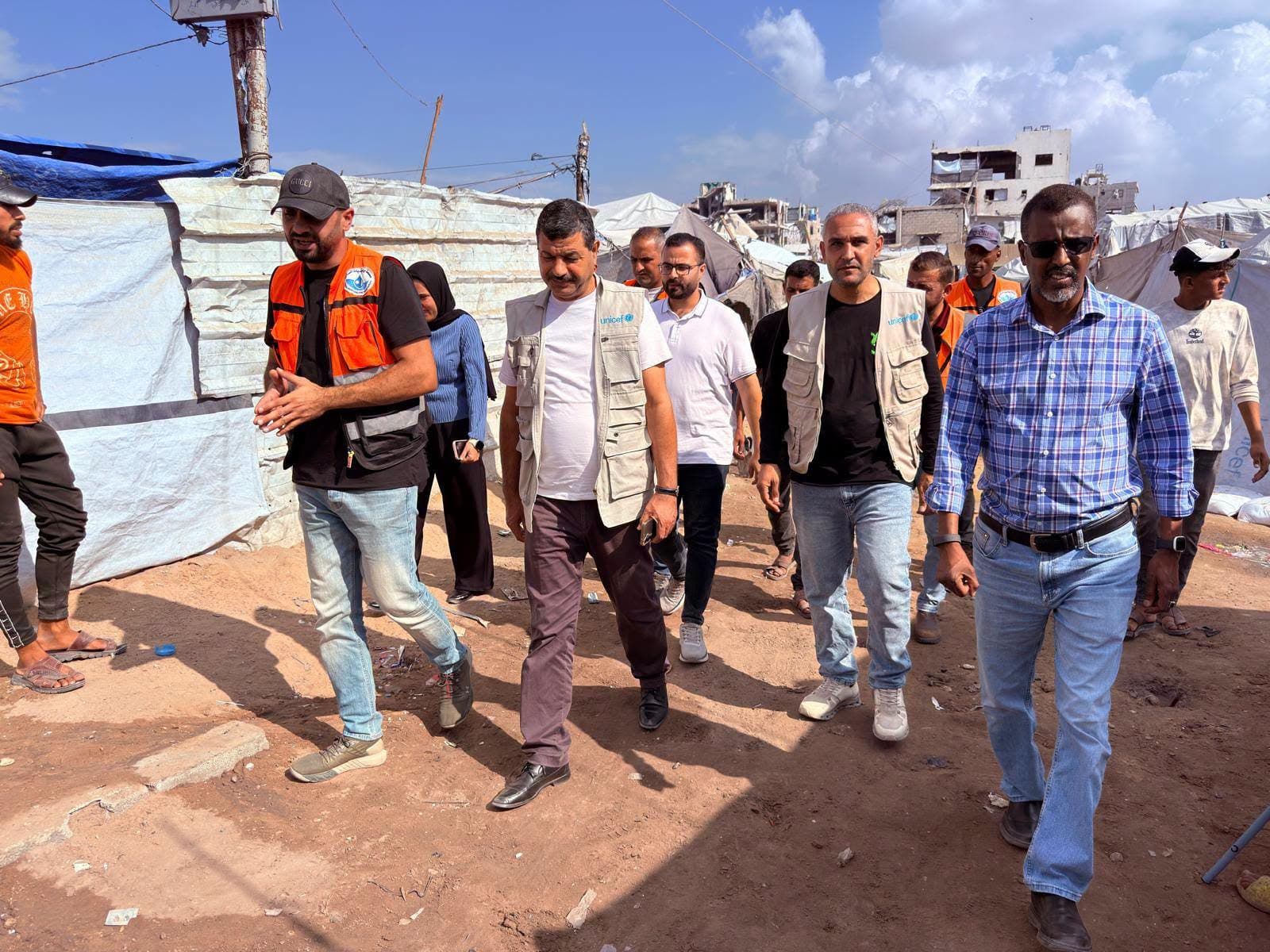
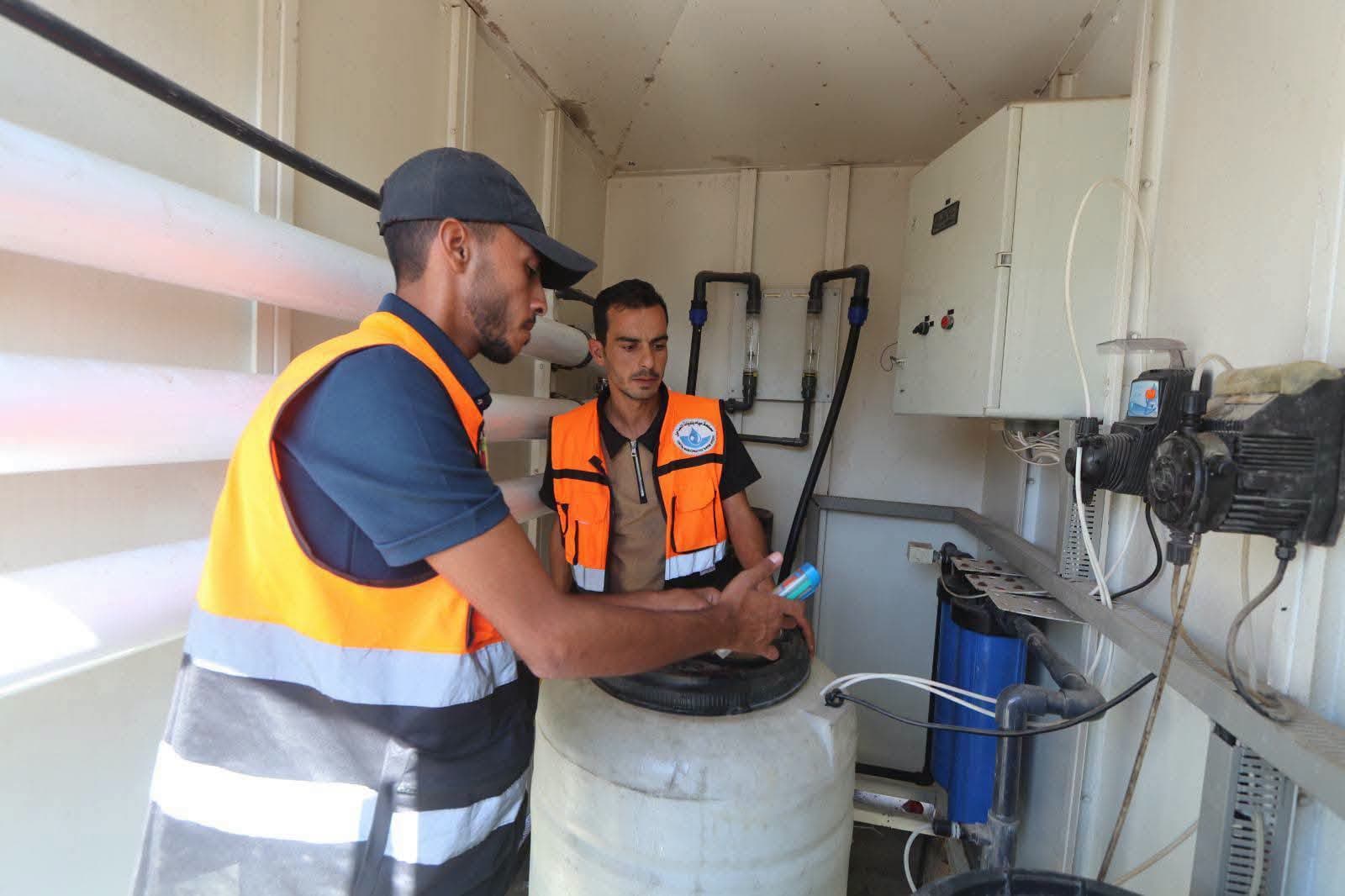
Beginning the Wadi Gaza rehabilitation project, funded by Germany through KfW at a value of €2 million, in two phases taking 9 months.
Beginning the Implementation of the Wadi Gaza Rehabilitation Project.
Gaza – CMWU
CMWU began implementing the "Wadi Gaza Rehabilitation" project, funded by the German government through the German Development Bank KfW, at a total cost reaching €2 million, implemented by Masoud and Ali Company, and supervised by the German consulting office "Dorsch" and CMWU, in cooperation with the Ministry of Local Government, with the project's implementation set to take 9 months.
In turn, Eng. Fareed Ashour, Director of the Central Gaza Sewage Project Management Unit at CMWU, said that the project will be carried out in two phases, the first taking 3 months, during which the wadi will be rehabilitated by removing waste and solid blocks within its boundaries and filling in all the sewage ponds currently existing, and constructing a main channel in the middle of the wadi's course, with a capacity sufficient for the advanced phases of the Central treatment plant, allowing the passage of about 60,000 cubic meters of treated sewage water, with the water's course running from the eastern boundary of Al-Bureij camp to the far west towards Wadi Gaza Bridge on the sea, while the second phase will take 6 months to finish the concrete unit works, during which crossings will be constructed to allow residents to move between the two banks of the wadi, in addition to electrical wiring.
Eng. Ashour added that the project will include connecting two of the pumping stations, Al-Wakala station and Al-Maghraqa station, to the Central treatment plant's electricity network, which relies on natural gas and solar power, to ensure the continuity of electricity and completely eliminate any possibility of the pumps stopping.
Ashour continued that the Wadi Gaza rehabilitation project will include cutting off all the household sewage connections that discharge into the wadi's course or on its banks and finding alternatives for them.
Eng. Ashour stressed the necessity of completing the Wadi Gaza rehabilitation project before the Central treatment plant begins operation, since this project serves as the discharge point for the treated water from the Central treatment plant.
Ashour noted the project's strategic importance in reviving Wadi Gaza and its natural reserve, as the continuous flow of treated water in the wadi's course will contribute to providing a suitable environmental climate for the growth of plants and wild bushes on both banks of the wadi.