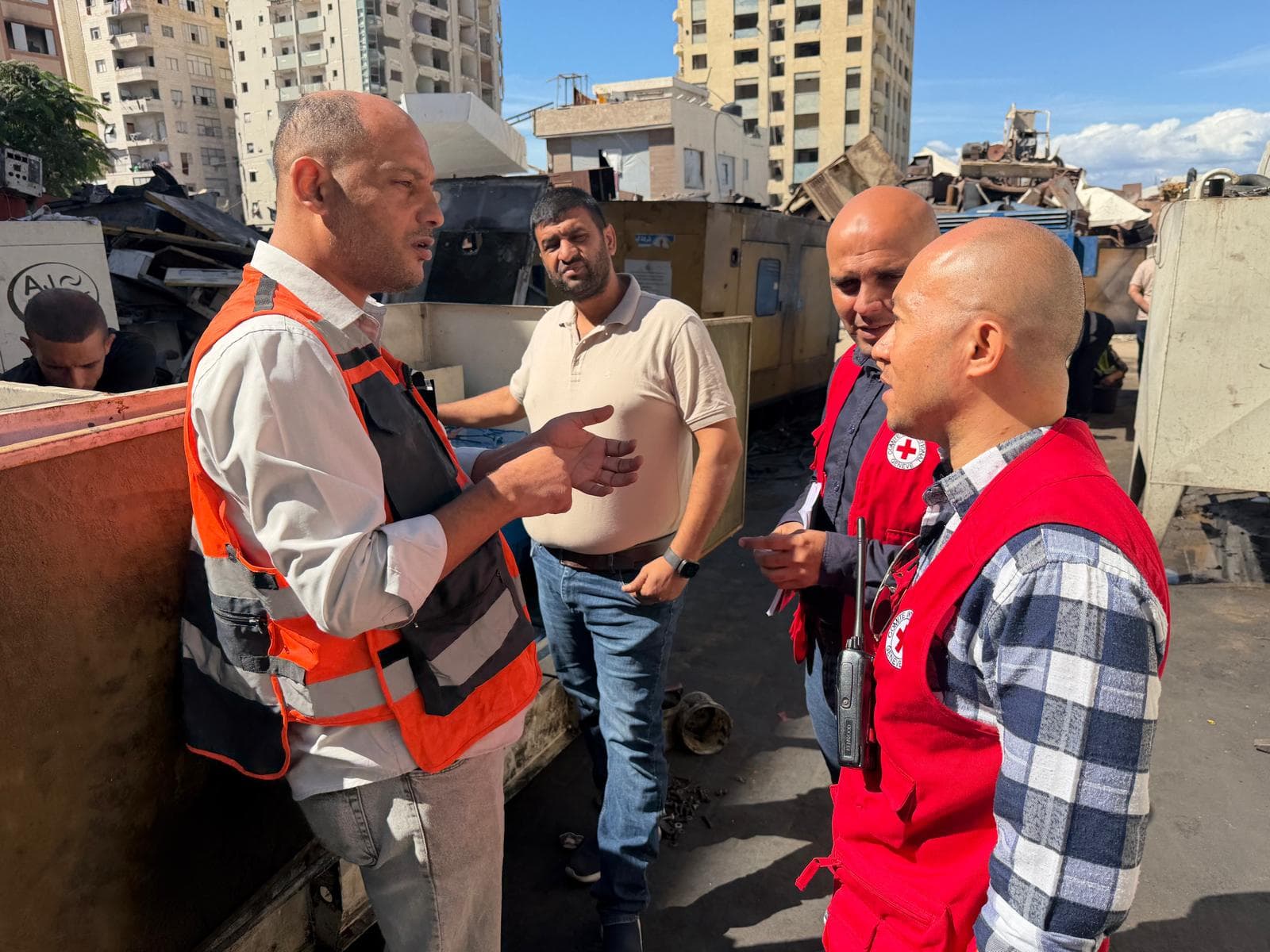
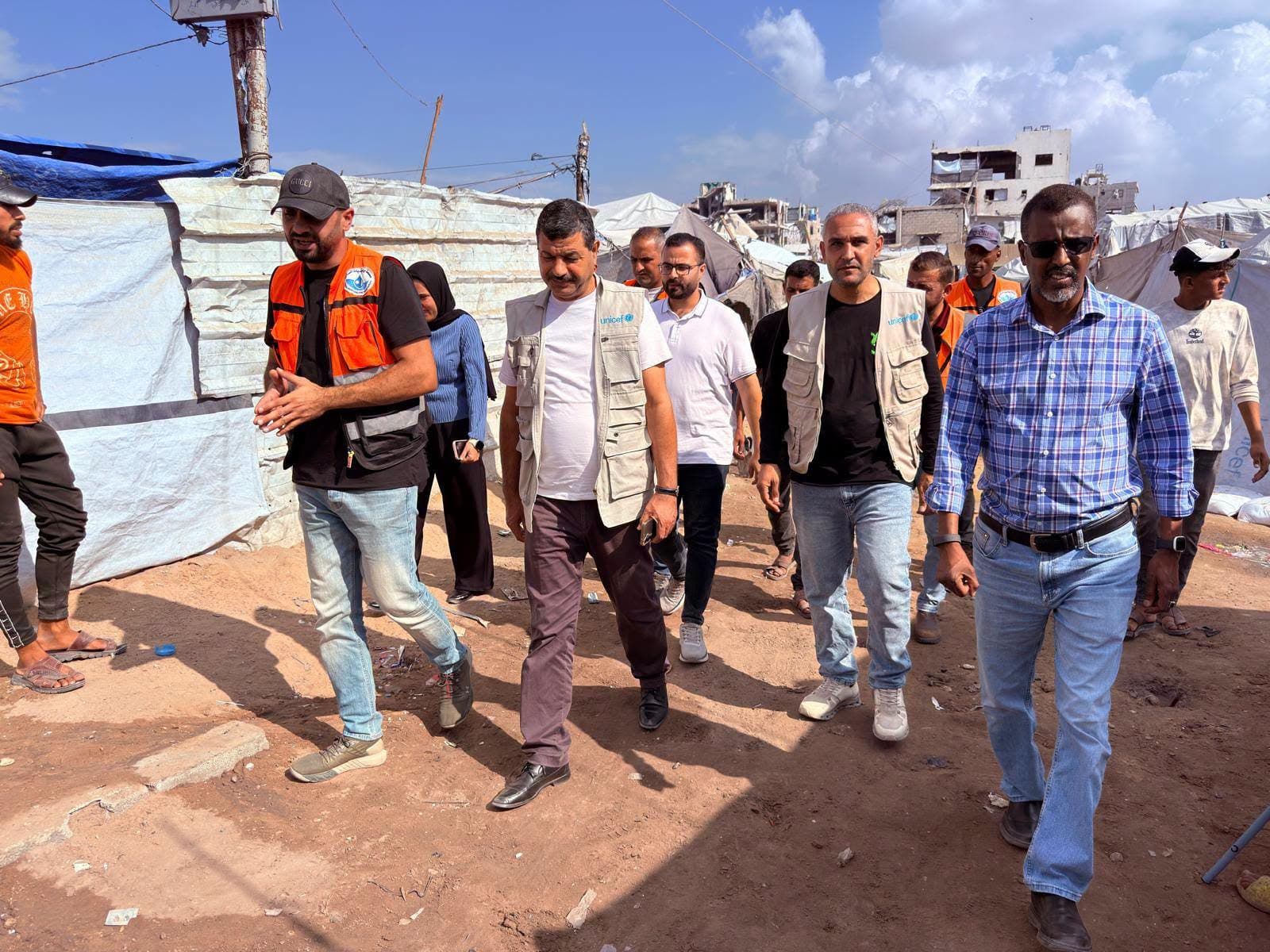
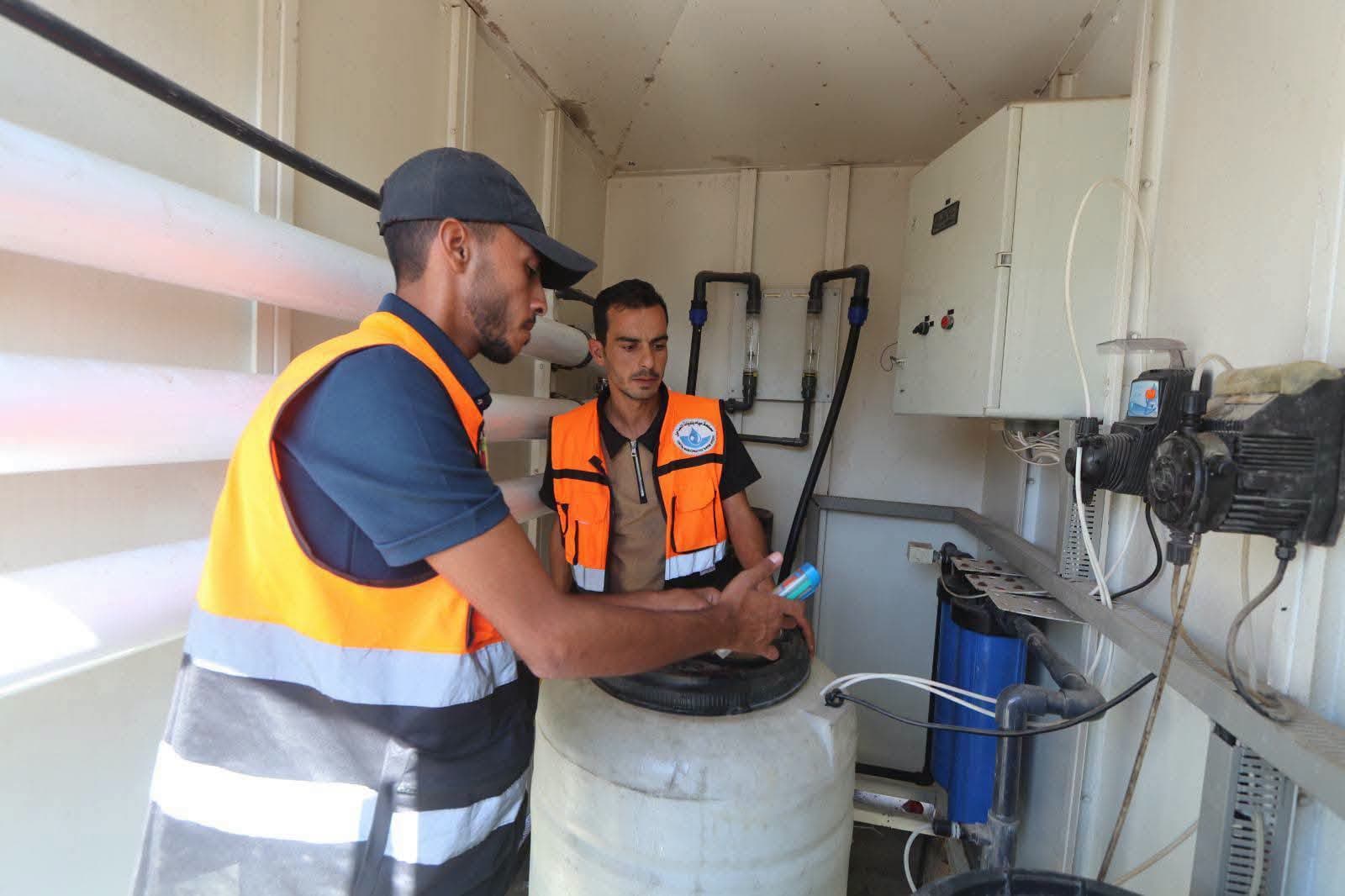
A visit by the German Consul and a delegation from KfW and GIZ to the Central Gaza Sewage Treatment Plant project, with trial treatment expected to begin in February 2020.
A Visit by the German Consul to the Gaza Sewage Treatment Plant Project
Eng. Shoblaq: The German government always gives us a wonderful example of diligent follow-up on its projects
Eng. Ashour: Trial treatment is expected to begin in early February 2020
Gaza – CMWU
Yesterday, the representative of the Federal Republic of Germany in Palestine, Christian Clages, visited the Central Gaza Sewage Treatment Plant project east of Al-Bureij, central Gaza Strip, leading a delegation from the German Representative Office that included Peter Rimm, official in charge of international cooperation at the German Representative Office.
The visit came in coordination with the KfW institution, the body responsible for implementing the largest project in Palestine, the Central Gaza Sewage Project, with the delegation accompanied by Jonas Blau, Director of the German Development Bank KfW in Palestine, the regional director of the German Corporation for International Cooperation (GIZ) in Palestine Dr. Max Turner, the Director of the Renewable Energy Support Project at GIZ Eng. Nadeem Malhem, and Eng. Hazem Al-Mashharawi, with the delegation received by CMWU's Director-General Eng. Monther Shoblaq and Eng. Fareed Ashour, Director of the Central Gaza Sewage Project Management Unit.
During the visit, Eng. Monther Shoblaq praised the German government's role, saying: "The German government always gives us a very important example in following up on its projects, and its role is not limited to funding the project and waiting for its results in the future, or leaving the Palestinian partner to solve their problems alone; on the contrary, it is always present in all the details of its projects, and they have been with us from the beginning until this moment, step by step, to overcome the obstacles we face, particularly regarding the coordination procedures with the Israeli side in bringing in the project's materials and equipment, noting that most of the project's materials are on the so-called dual-use list declared by the Israeli side, and had it not been for the intervention of the German government, represented by the KfW institution responsible for implementing the project, and the repeated visits by the relevant parties to the Israeli side and their diligent follow-up on the finest details of the project and their help in overcoming all obstacles facing the completion of this project's implementation, we would not have reached this stage of the project's completion, and at a time considered satisfactory."
Eng. Shoblaq noted that the German delegation's visit gives the project further momentum and attention, because the presence of officials at this level to visit the plant at this stage is a continuation of their supportive role for the Gaza Strip in numerous sectors in general, and in solving its environmental problems in particular, and support for CMWU as a partner in completing the project, which will bring about a qualitative shift in solving environmental problems in both Gaza and Central governorates, and will provide a permanent solution to the problem of seawater pollution.
Reviving Wadi Gaza and Creating Job Opportunities
Eng. Shoblaq pointed to other achievements the Central sewage treatment plant project will provide, which will benefit the residents of the Gaza Strip, the first of which is reviving Wadi Gaza as a natural reserve, which had turned into a dumping ground for all types of waste, through pumping most of the treated water from the plant towards the wadi, which contributes to reviving the wadi's course and restoring its natural life of birds and trees, alongside the possibility of farmers benefiting from this water and reducing the pollution of the wells surrounding the wadi, adding that the project, during its implementation phases, has also provided hundreds of job opportunities for engineers, technicians, and workers.
A Tour of the Plant
In turn, Eng. Fareed Ashour, Director of the Central Gaza Sewage Project Management Unit, accompanied the visiting delegation on an inspection tour inside the plant, informing them of the plant's components and parts, and explaining to them the stage the project has reached in terms of construction, with the plant expected to be ready by the beginning of February 2020 to receive quantities of sewage to begin the trial treatment process and the final calibration of the machines and equipment, with this stage, which will extend for three months, expected to end with the plant ready to receive all the required quantities of sewage water to be pumped from Gaza city and the cities of the Central Governorate through the Central pumping station constructed as part of this project.
Eng. Ashour affirmed that the project is now in its final stage, the dry testing and wet testing stage, through a full inspection of the equipment and machinery present at the plant, noting that within about a month, if coordination with the Israeli side is completed to bring in some equipment, particularly gas-powered generators alongside a set of paints needed to protect certain parts of the plant exposed to sewage water, the official date for the completion of the project's activities is expected to be announced.
Eng. Ashour said that this is not the first visit by the German Representative Office, but rather one of a series of visits made by the German Representative Office's office to learn about the project's implementation progress, the obstacles facing it, and to help solve all the obstacles, affirming that the German Consul has been in constant contact with us from day one until now, and likewise the KfW institution directly follows up on all the projects, particularly matters related to coordinating the entry of the project's materials and the relationship with the Israeli side.
An Energy Project
Eng. Ashour noted that the German Consul's visit also addressed an upcoming project funded by the German government through the KfW institution, in partnership with CMWU, related to multi-energy management, which will contribute to raising energy efficiency by finding alternatives to conventional energy and solving energy efficiency problems in many water and sanitation facilities by finding alternatives and reducing dependence on conventional energy, which in turn will positively affect the performance of these facilities, in addition to reducing their operational expenses. The project's components were presented to the visiting delegation, with its cost reaching €20 million, and its activities set to begin at the start of next year for a period of three years.