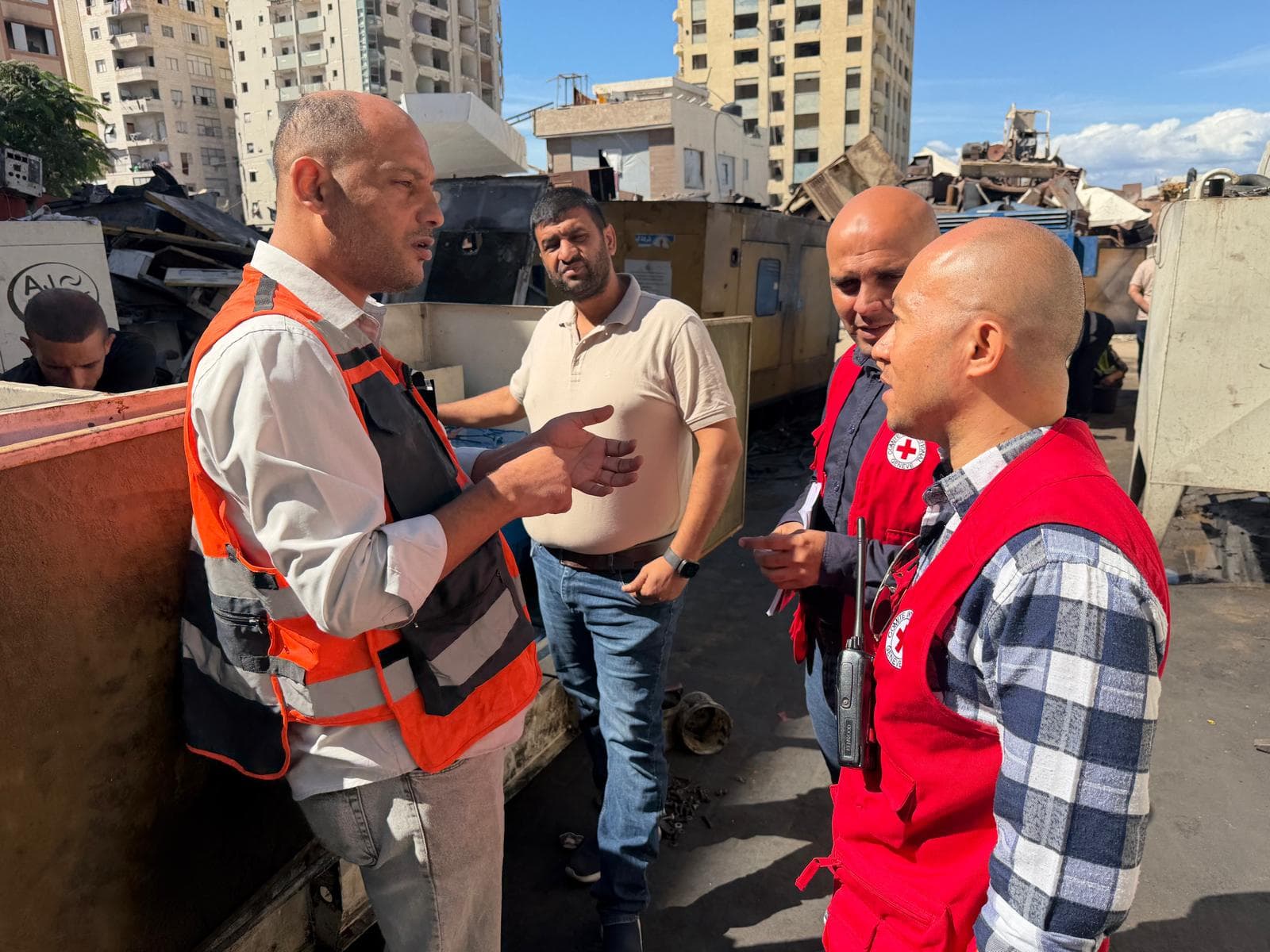
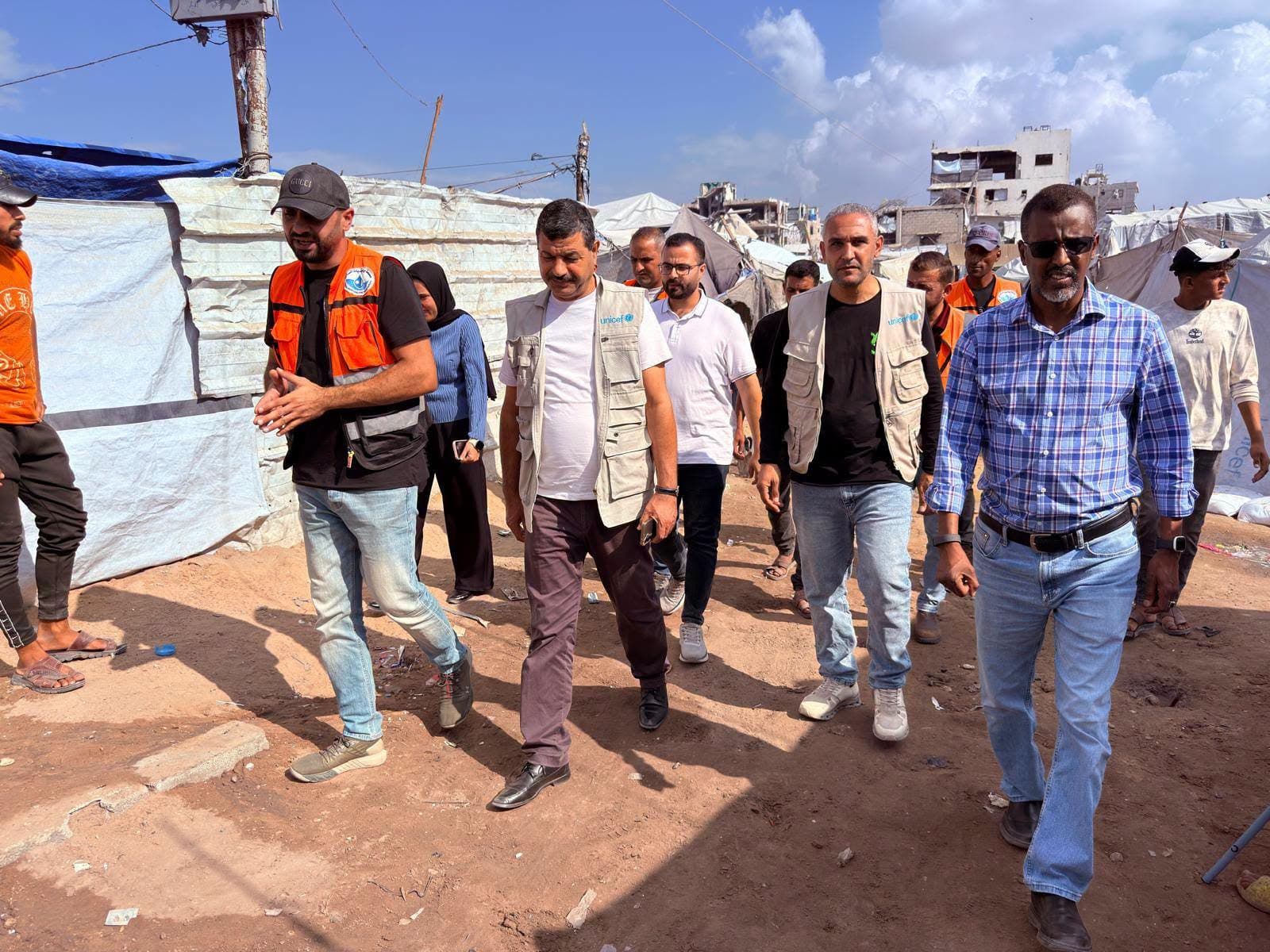
A high-level UNRWA delegation headed by the Commissioner-General visits the seawater desalination plant south of Gaza and reviews the Water Authority's strategy to address the groundwater aquifer crisis.
Headed by the Commissioner-General of UNRWA
A High-Level Delegation Visits the Seawater Desalination Plant South of the Gaza Strip
A high-level delegation from the United Nations Relief and Works Agency (UNRWA) headed by Mr. Pierre Krähenbühl visited the seawater desalination plant south of the Gaza Strip, which was opened on January 19th in the presence of the Chairman of the Palestinian Water Authority, to produce 6,000 cubic meters of desalinated water daily, benefiting about 75,000 residents of Tal Al-Sultan in Rafah and Al-Amal neighborhood in Khan Younis.
The delegation was received by Dr. Majed Awni Abu Ramadan, Chairman of CMWU's Board of Directors, Eng. Monther Shoblaq, CMWU's Director-General, and a number of specialized engineers at the Utility, along with Mr. Mohan Peiris and Eng. Zaidan Abu Zuhri, representatives of UNICEF, which oversaw the implementation of this plant.
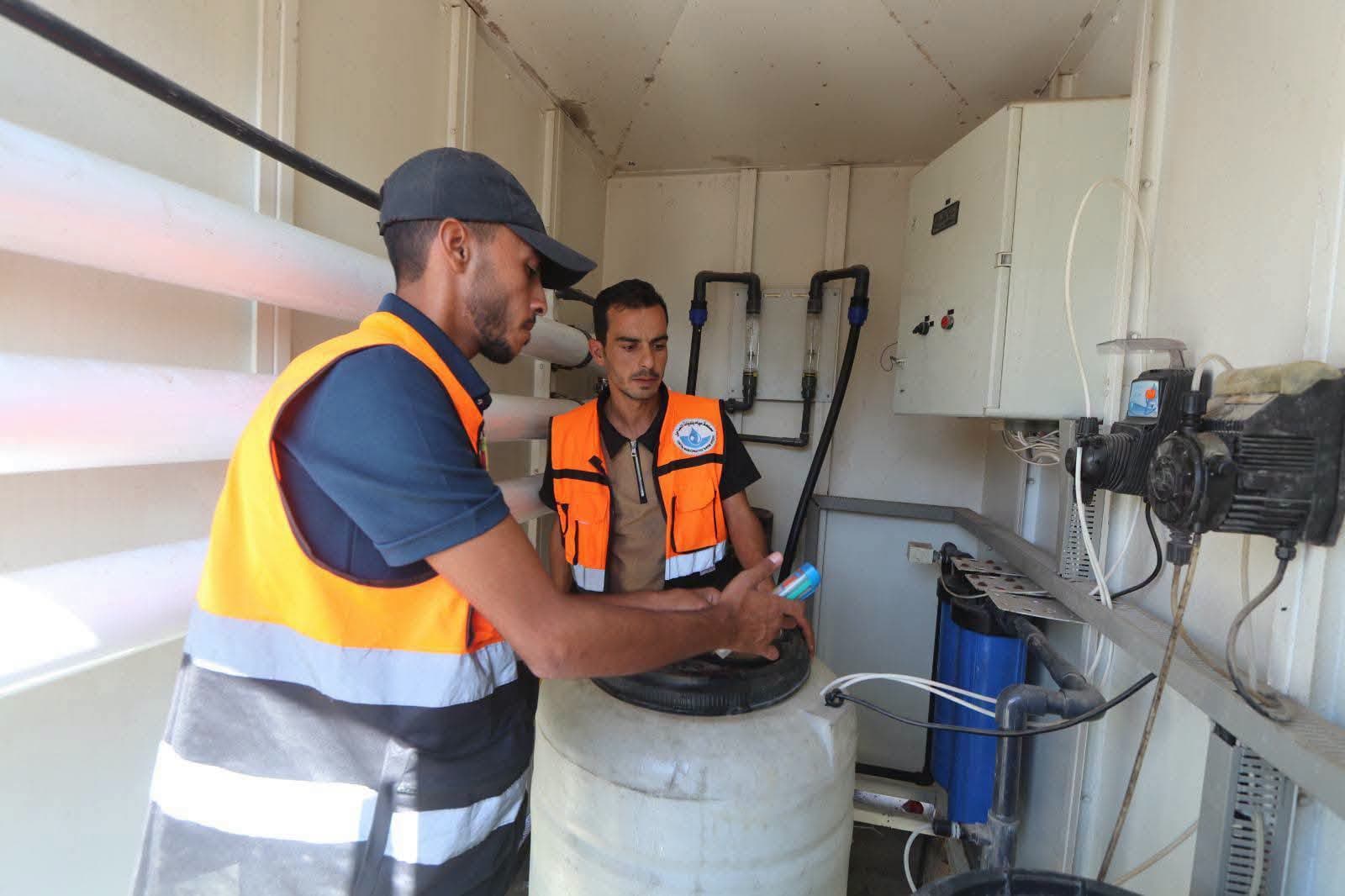
During its visit to the plant, the delegation listened to a detailed explanation of the project's implementation phases, the number of residents and areas benefiting from it, and toured inside the plant, hearing an explanation of how the plant operates and the type and quantity of water produced. During the tour inside the plant, the delegation discussed the most important obstacles the Utility faced during the plant's construction period, the most prominent of which were the Israeli side's obstruction of the entry of some equipment and the problem of the availability of the electrical power necessary to continue operating it, especially amid the electricity crisis in the Gaza Strip.
In the same context, Dr. Majed Awni Abu Ramadan, Chairman of CMWU's Board of Directors, presented, during a meeting with the delegation at the Utility's headquarters, a summary of the water situation in the Gaza Strip and the level reached by groundwater aquifer water and the reasons behind the rise in the proportion of chloride and nitrate salts in it, as well as reviewing the Palestinian Water Authority's and CMWU's strategy for improving the quality of water supply, particularly the urgent interventions to solve the water crisis in the Strip, most notably the construction of small-scale desalination plants, treating wastewater and filtering it into the groundwater aquifer and reusing it in agriculture, and collecting rainwater and re-injecting it into the groundwater aquifer, in addition to developing water networks.
Dr. Abu Ramadan also stressed the importance of building the central desalination plant... and reviewed the water and sanitation facilities operated by CMWU in the Gaza Strip, as well as the projects under construction and the challenges facing the development of the water and sanitation sectors, among which were the difficult economic situation and the siege imposed on the Gaza Strip and the rising cost of materials and equipment necessary for maintaining and operating the facilities, in addition to the weak electricity and energy supplies, which increases the cost of operating those facilities.
At the end of the delegation's visit, Mr. Pierre Krähenbühl expressed his admiration for what he saw and heard of the achievements and efforts made by CMWU in cooperation with the Water Authority to improve water quality in the Gaza Strip through improving water and sanitation services for the Strip's residents, especially refugee camps, and the Agency's interest in supporting these efforts with UN institutions and donor institutions, leading to the implementation of appropriate solutions to overcome the environmental and water risks mentioned in the UN report on the livability of the Gaza Strip by 2020.