CMWU participated in the inauguration of the Emirati transmission line (6.7 km) from the Egyptian desalination plant to Khan Younis Mawasi, raising the plant's capacity to 10,000 cubic meters per day.
CMWU Participates in the Inauguration of the Emirati Desalinated Water Transmission Line Project to West Khan Younis
CMWU participated, alongside Operation Al-Fares Al-Shahm 3 with generous support from the United Arab Emirates, and in cooperation with the Community Support Committee for Operation Al-Fares Al-Shahm 3, in the inauguration ceremony of the Emirati desalinated water transmission line project from the desalination plant on the Egyptian side to the Mawasi areas west of Khan Younis, in the presence of CMWU Deputy Executive Director Eng. Omar Shatat, the management of Operation Al-Fares Al-Shahm 3, and representatives of various civil society institutions.
This is the largest water project implemented in the Gaza Strip during the war, aiming to secure the needs of residents and displaced persons in the densely populated Khan Younis Mawasi area, which suffers from an absence of water sources, in addition to serving parts of northwest Rafah.
Eng. Omar Shatat, CMWU Deputy Executive Director, explained that the new transmission line extends 6.7 kilometers along the coastal Al-Rasheed Street, from the Egyptian border to the Al-Nas Street area in central Khan Younis Governorate, near the seashore, to transmit and pump drinking water from the seawater desalination plant established by the United Arab Emirates, which began operating in February 2024 to serve displaced persons in Rafah until May 2024.
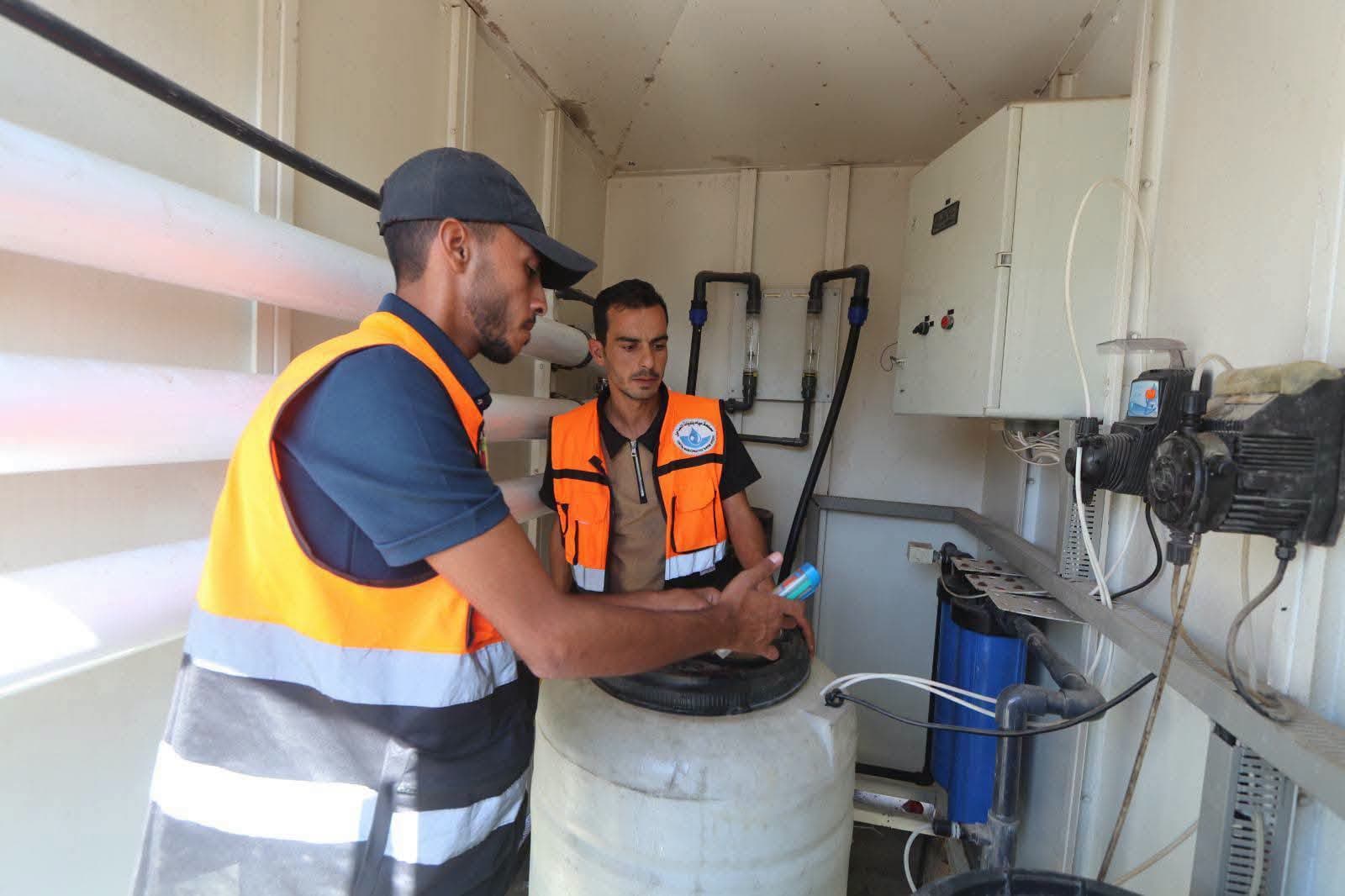
Eng. Shatat added that the construction of the new transmission line will make it possible to restore the desalination plant's operation with a larger production capacity of up to 10,000 cubic meters per day, providing a safe, healthy water lifeline serving hundreds of thousands of residents and displaced persons in the Khan Younis Mawasi area, who suffer from an acute scarcity of water sources.
In closing his remarks, Eng. Omar Shatat thanked the United Arab Emirates for its significant support and continued efforts in serving the people of the Gaza Strip, affirming that this project represents a living model of brotherly and humanitarian cooperation.