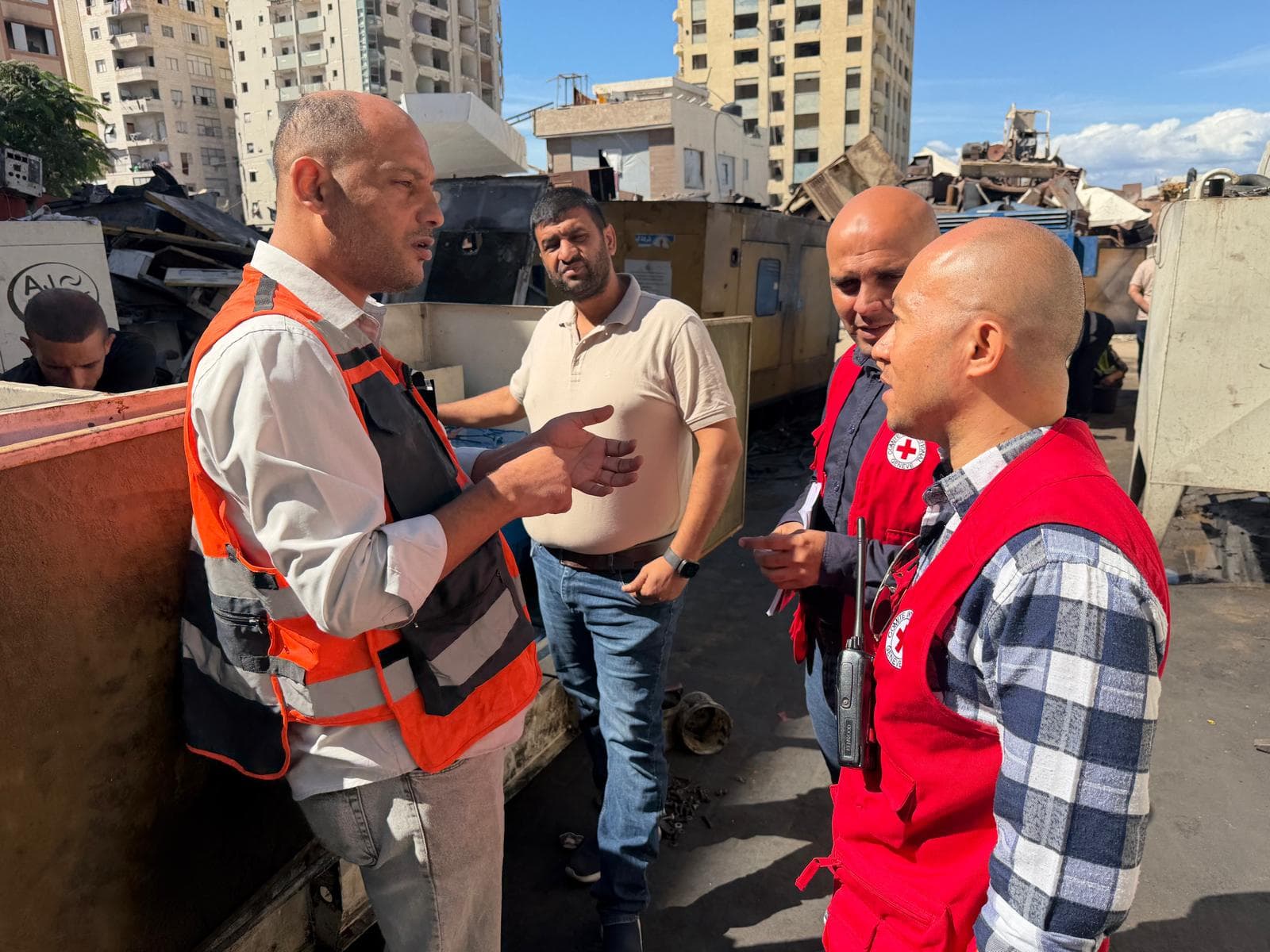
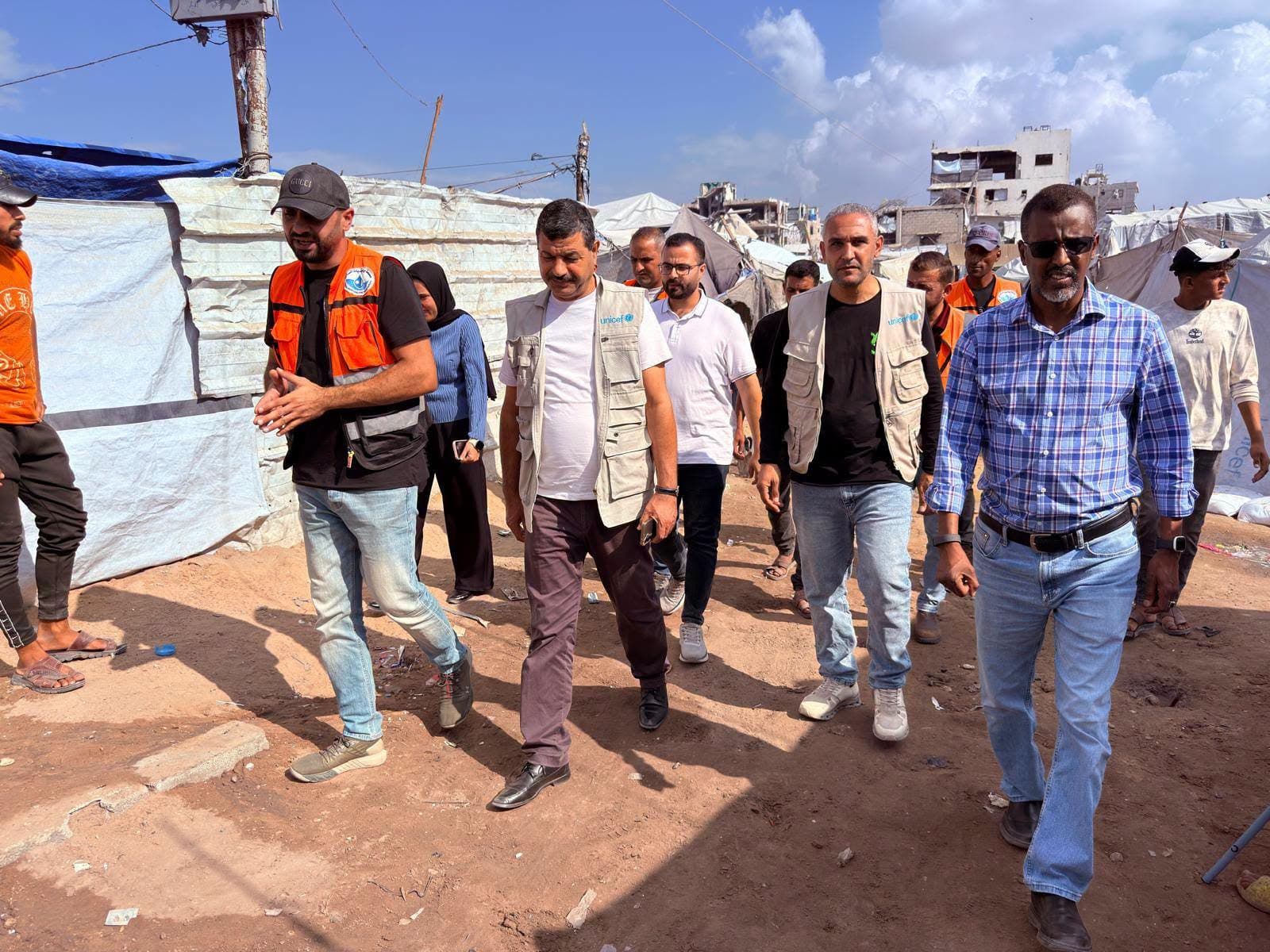
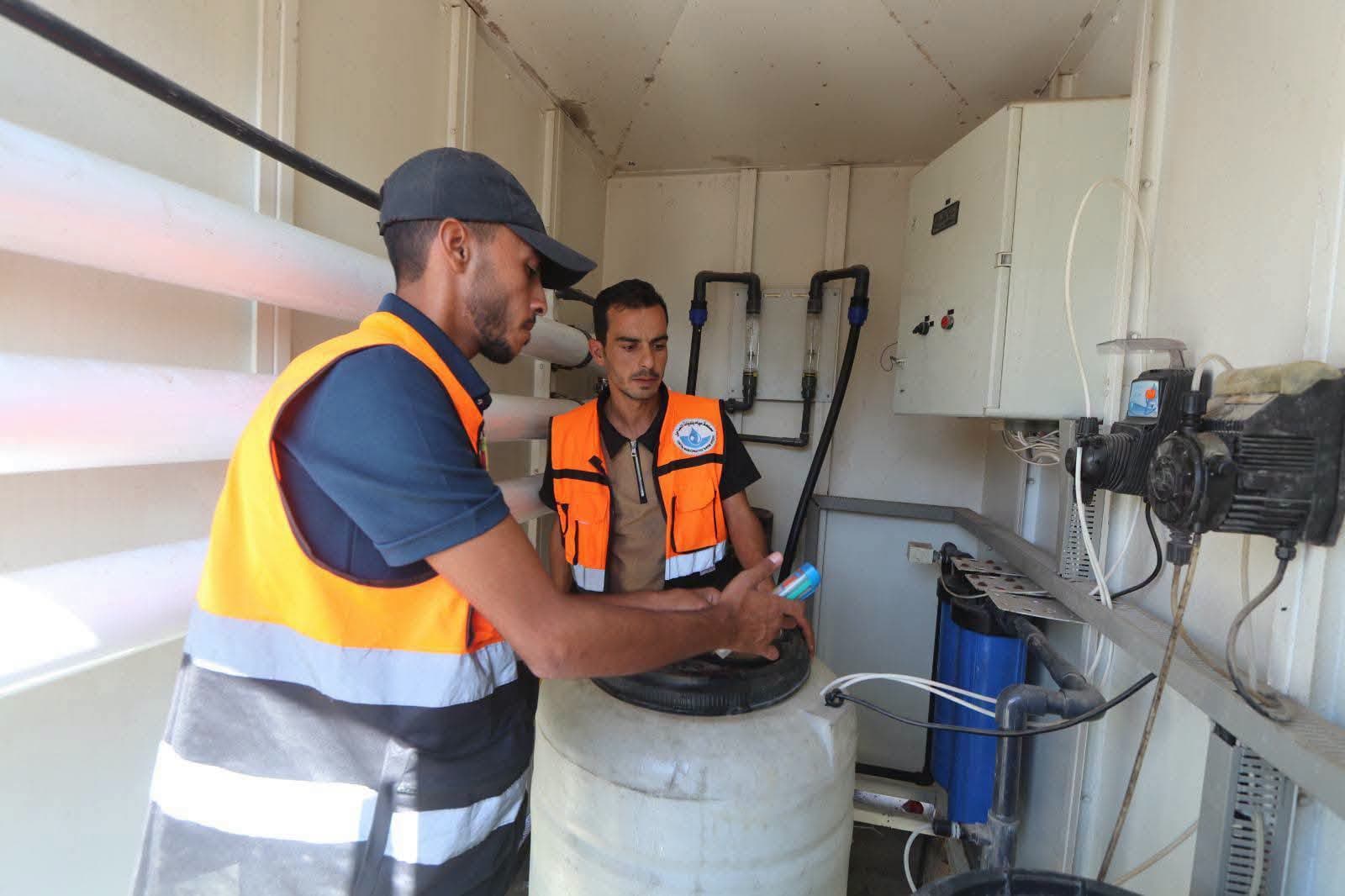
CMWU continues its maintenance and cleaning campaign for sewage treatment plants and rainwater collection ponds in various areas following the weather depression, with support from UNICEF and the Norwegian Refugee Council.
CMWU Continues Its Maintenance and Cleaning Campaign for Sewage and Rainwater Plants
Media Department - Gaza
CMWU continued its maintenance and cleaning campaign for sewage treatment plants and rainwater collection ponds in various areas of the Gaza Strip, which it began before the arrival of the last weather depression and continued working on during the days of the depression, in order to ensure the efficiency of those facilities.
With support from UNICEF, CMWU began, as soon as the depression subsided, several cleaning and maintenance works, including cleaning sewage treatment plants of the solid waste that reached them due to rainwater and pumping out the rainwater collected in low-lying areas and between houses and from rainwater collection ponds whose water level had risen significantly, and also reinforcing the collapse areas that some rainwater collection ponds were exposed to due to the large quantities of rain that reached them.
Eng. Monther Shoblaq, CMWU's Director-General, affirmed that the Utility's crews worked with all their capabilities and continuously since the beginning of the winter season in order to ease the severity of the effects that may result from rainfall amid infrastructure still in need of more projects and improvements and amid a continuing siege on the Gaza Strip.
It is noted that CMWU, with generous funding from UNICEF and the Norwegian Refugee Council, was able to implement numerous works in Khan Younis governorate, including constructing a 160-meter rainwater drainage line, in addition to rainwater manholes in the Abasan Al-Kabira area, and in the Al-Muharrarat area in Al-Qarara, a 25-meter rainwater drainage line was constructed to transfer water from the rainwater collection pond to the new collection basin. Near the Al-Wafa'a sewage treatment plant, a rainwater collection pond was constructed to reduce the accumulation of rainwater in the streets and the rise in the water level at the plant, which used to lead to water flooding towards residents' homes in the areas adjacent to it and hinder freedom of movement and travel and the implementation of maintenance works and intervention during weather depressions.
The rainwater collection and filtration basins in the Beit Lahia area and the Sheikh Zayed project basin were also cleaned, in addition to cleaning rainwater drainage manholes in various areas in the northern Gaza governorate, funded by the Norwegian Refugee Council.
In the Wadi Al-Salqa and Deir al-Balah area, cleaning and widening works were carried out on the Wadi Al-Salqa channel over a length of nine kilometers, with the channel widened and cleaned of rubble and solid waste in anticipation of the opening of dams by the Israeli side, which could lead to water flooding on both sides of the valley.
The Utility also constructed a new rainwater drainage network in the Al-Maghraqa area next to the Wadi Gaza bridge separating the Al-Nuseirat area and Al-Zahra city, which used to be an area of rainwater accumulation that hindered traffic movement.