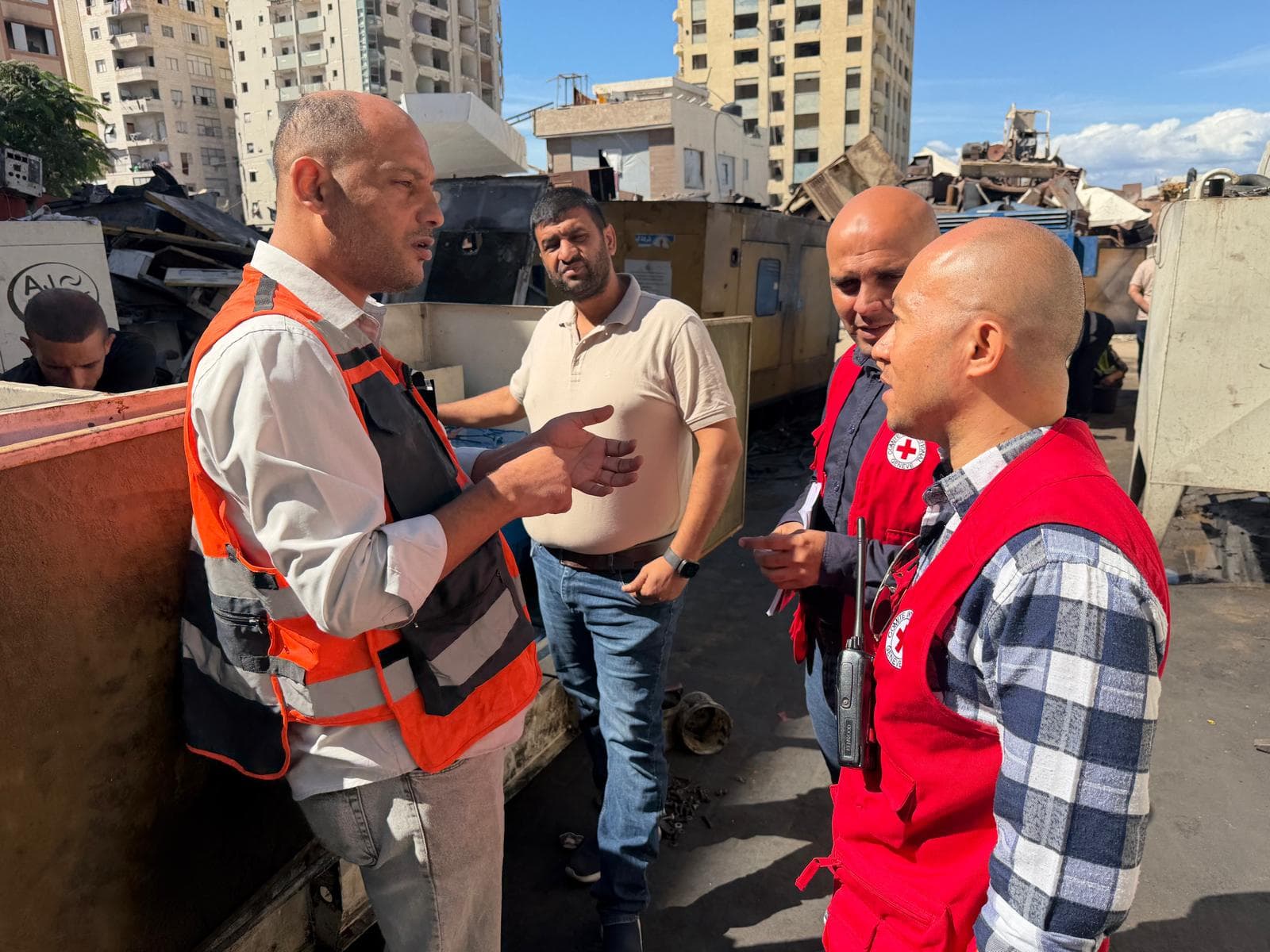
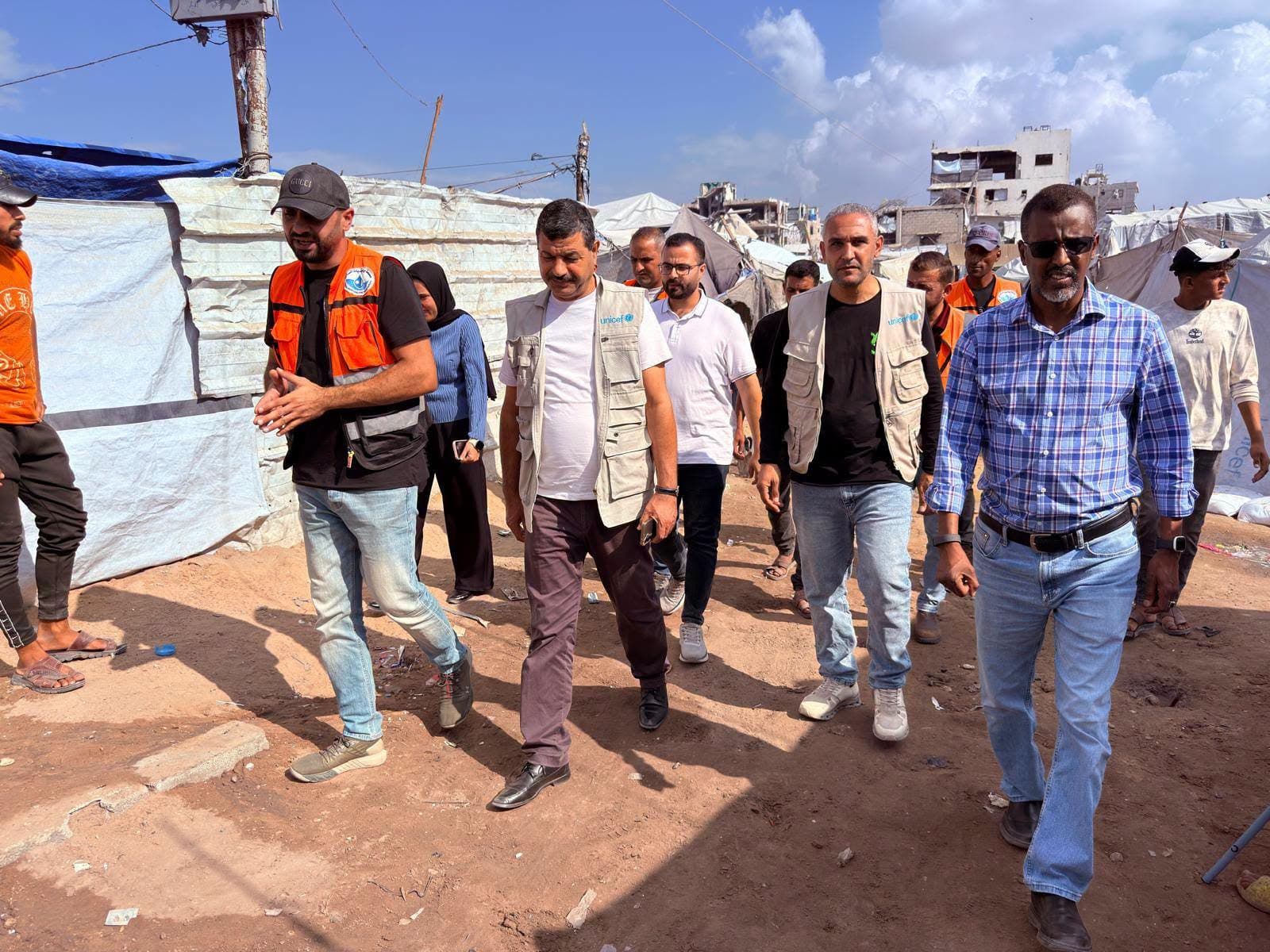
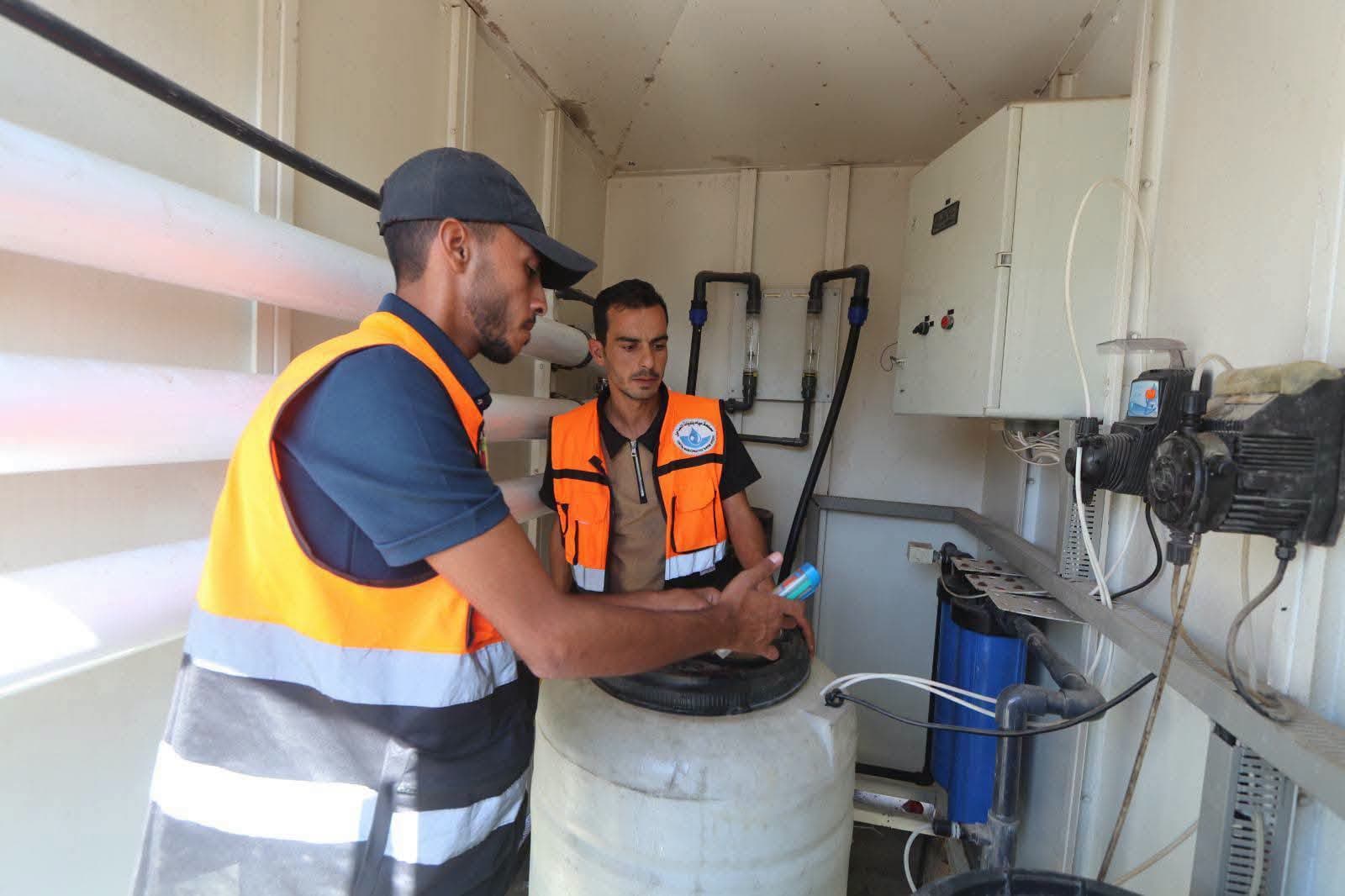
A community workshop in Rafah in preparation for operating the seawater desalination plant south of Gaza, funded by the European Union through UNICEF.
In Preparation for Beginning Operation of the Seawater Desalination Plant South of the Gaza Strip
CMWU Organizes a Community Workshop in Rafah City
In preparation for beginning operation of the seawater desalination plant south of the Gaza Strip, CMWU organized a community workshop attended by a number of representatives of local committees, community institutions, and workers in the health field, aiming to brief them on the project's stages, implemented by UNICEF in partnership with CMWU and funded by the European Union.
Eng. Mohammed Al-Abwaini, Director of CMWU's Regional Headquarters in Rafah, spoke about the escalating water crisis in the Gaza Strip and the efforts made to curb the worsening crisis, and the various projects and programs that contribute to developing water and sanitation facilities, and also spoke about the importance of cooperation and participation of all segments of society in strengthening the Utility's role in improving water and sanitation services for the future of coming generations.
For his part, Eng. Firas Abu Nqira, Director of the Sanitation and Rainwater Department, reviewed the most important problems facing the water sector, from rising salinity levels and quantity shortages, and the most important water facilities present in Rafah city and the mechanism by which they operate, and pointed to the strategy adopted by the Water Authority to confront the escalating water crisis, with the strategy including projects and programs for seawater desalination and sewage water treatment and reusing it in agriculture and injecting it into the ground.
Abu Nqira also reviewed the stages of building the seawater desalination plant and the stages of progress of work on it and its operation, and the current trial pumping and the approaching date of official pumping, and noted that the water produced from the plant would be blended with groundwater aquifer water to produce water meeting World Health Organization specifications, and that this plant, upon completing its first phase, would produce 6 thousand cubic meters daily and serve 75 thousand residents in the Tal Al-Sultan area of Rafah governorate and Al-Amal neighborhood in Khan Younis governorate, while work would begin in the near future on the second phase, which would raise the plant's capacity to 12 thousand cubic meters daily.
For her part, Suhair Al-Bayoumi, public awareness officer at CMWU, reviewed the awareness activities and programs specific to the desalination plant project and the messages directed to residents through these activities.
Al-Bayoumi stressed the importance of awareness programs in encouraging segments of society to participate in alleviating the water crisis by informing them of water problems and making them feel a responsibility towards preserving available water resources to provide them for coming generations and urging them to pay the water bill, which is considered one of the most important forms of cooperation with the service provider to preserve the continuity of projects and improve water supplies.
A number of workshop participants presented interventions and questions, discussing the importance of some projects and their impact and the repercussions of seawater desalination and wastewater treatment on the environment and public health.
They also discussed aspects related to the services provided to residents in terms of quality and access, and how these projects can be sustained amid the current situation, including the continuous electricity outages.