A press statement warning of an imminent health and environmental catastrophe as the electricity crisis worsens and the fuel needed to operate water and sanitation facilities runs out.
Press Statement Issued by CMWU
It is no secret to anyone what the Gaza Strip is suffering from a continuous and worsening crisis related to the inability of the electricity supply system in the Gaza Strip, across its various sources, to cover the various main aspects of life, including the water and sanitation sector, with the severity of the negative impacts steadily increasing over the past years, which may at times reach the level of a catastrophe, as a result of the failure to operate the sole power generation plant in Gaza regularly and sufficiently, providing only 137 megawatts, i.e., only the equivalent of thirty percent of the electrical power needs in the Gaza Strip, which has consequently led to the situation moving from a crisis state to the brink of catastrophe, amid the unavailability of sufficient fuel quantities needed to operate the backup electricity generators at water and sanitation facilities, which have come to operate outside the technically safe and recommended range in terms of the permitted daily operating hours, to cover the long hours of power outages, which exceed sixteen hours daily of continuous outage.
Therefore, CMWU announces that with the continuing worsening of the electricity crisis in the Gaza Strip, the continuation of long power outage hours, and the depletion of the diesel quantities needed to operate water and sanitation facilities, particularly after the grant allocated by OCHA ended, this has begun to significantly and negatively affect our capabilities to continue providing the minimum level of water and sanitation services required to residents in all governorates of the Gaza Strip, which will lead to major crises and consequences directly affecting residents' lives, such as water outages for long periods that might reach a week or more in numerous areas, in addition to the decline in the capabilities of CMWU and the municipalities to collect, pump, and treat sewage water, which warns of the possibility of sewage overflow incidents occurring, particularly in geographically low-lying areas.
In light of the worsening crisis, CMWU affirms the following:
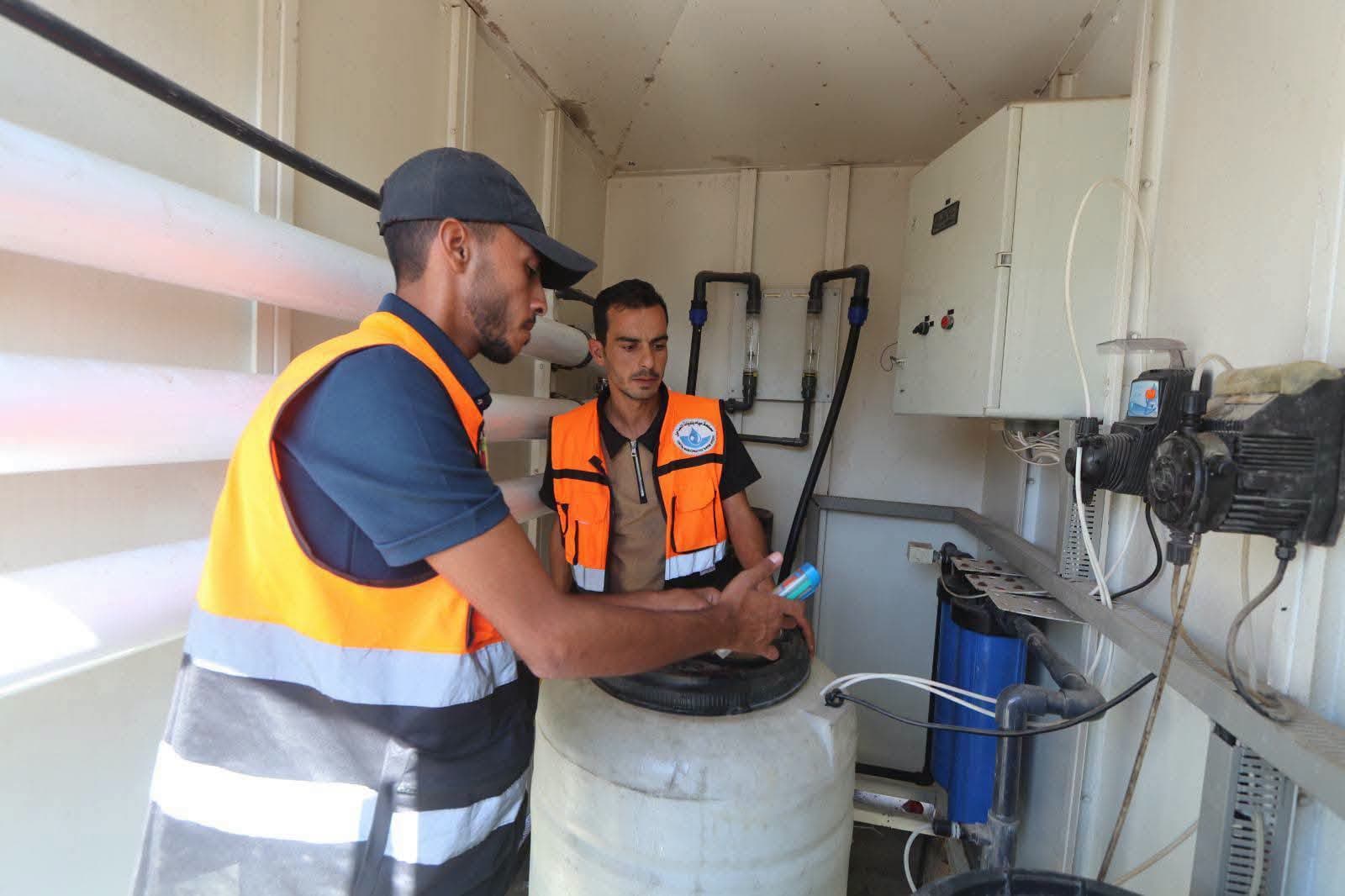
- The various facilities of the water and sanitation sector depend primarily on electrical power for their operation, and any malfunction in the electricity system directly affects the level of services provided, with the total power needed to operate these facilities in the current situation estimated at about thirty megawatts, distributed across the areas of the Gaza Strip.
- According to current circumstances and in order to maintain an acceptable level of water services, the diesel fuel needs have been estimated at about two hundred and fifty thousand liters monthly, in addition to one hundred and fifty thousand liters monthly to cover sewage pumping and treatment services, i.e., a total of approximately four hundred thousand liters monthly.
- Most of the other wells operate about eight hours on electricity in addition to six hours on generators, which has caused the water production system to lose about forty percent of its normal capacity in most cases, which has negatively reflected on the per capita share of water, dropping to sixty liters per person per day instead of ninety liters per person per day.
- The daily rate of water production during the current period of the year has dropped from two hundred and thirty thousand cubic meters daily to one hundred and seventy thousand cubic meters daily, due to the electricity and fuel supply crisis suffered by water production and pumping facilities, with a noticeable decline of seventy percent recorded in the production capacity of the water desalination plants.
- The electricity outage for long hours daily, combined with the inability to operate the backup electricity generators, inevitably leads to weakening the sewage treatment system, which needs continuous electricity supply to preserve the biological life needed to maintain an acceptable level of treatment, with current evidence indicating an increase in environmental and health risks and the deterioration of the safe environmental envelope for residents of the Gaza Strip.
- The quantity of poorly treated sewage water flowing into the sea has increased due to the intermittent operational reality resulting from power outages, reaching about one hundred and ten thousand cubic meters daily, with high levels of seawater pollution recorded around the outfalls on the sea coast, reaching seventy-three percent of the length of the Gaza Strip's coastline.
- The irregularity of the biological sewage treatment processes has led to an increase in the organic load of the treated water produced beyond the environmentally and health-permitted limits, reaching about one hundred fifty to two hundred BOD mg per liter.
- The system for collecting and pumping sewage water from various neighborhoods and cities has deteriorated significantly, as a result of the unavailability of the electricity needed to operate the lift pumps around the clock, particularly during peak flow times, and with the unavailability of fuel for the backup electricity generators, many residential areas have become exposed to the risks of flooding and environmental and health pollution as a result of sewage water overflowing in low-lying areas and around these stations.
- The continuation of the power outage crisis warns of a real crisis that will lead to a major decline in the quality of basic services provided to residents, and the continuation of this crisis will lead to reducing the operation of numerous water wells, water pumping stations, and desalination plants to the minimum of their capacity, and near-total paralysis in the sewage collection, pumping, and treatment operations, which warns of health and environmental problems that may have grave consequences.
- Many areas in the Gaza Strip are significantly exposed to a health hazard represented in sewage water overflow and flooding residents' homes, should sanitation services stop in those areas, which threatens the lives of thousands of residents at any moment should the shortage of fuel needed to operate the facilities continue, as happened previously in Rafah, Khan Younis, Gaza, and the north.
Stemming from our responsibility towards residents of the Gaza Strip and out of keenness to continue providing our services to the fullest, we affirm the necessity of combining all efforts by the national institutions, to find an urgent and permanent solution to this recurring crisis, given the environmental and health disasters it causes should it worsen.
CMWU also appeals to all international humanitarian and relief institutions and UN-affiliated agencies for urgent intervention to provide appropriate quantities of fuel to ease the electricity outage crisis in the Gaza Strip and enable the Utility and the municipalities to continue operating their vital facilities and providing their services to residents and supplying them with the necessary quantities of water for all aspects of life, and preventing an imminent health, environmental, and humanitarian catastrophe from occurring – God forbid.
CMWU
Gaza Strip - Palestine
5-9-2018