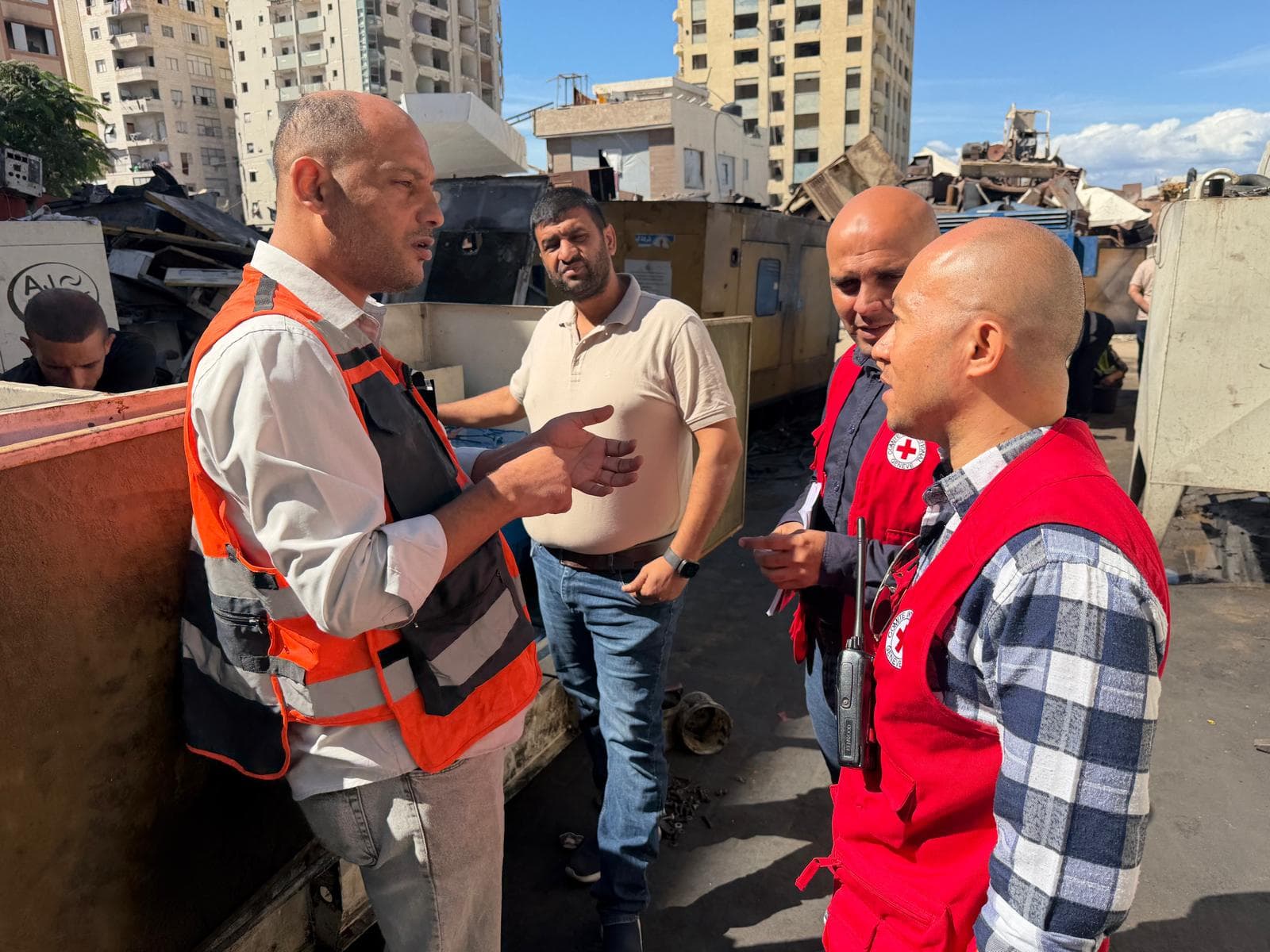
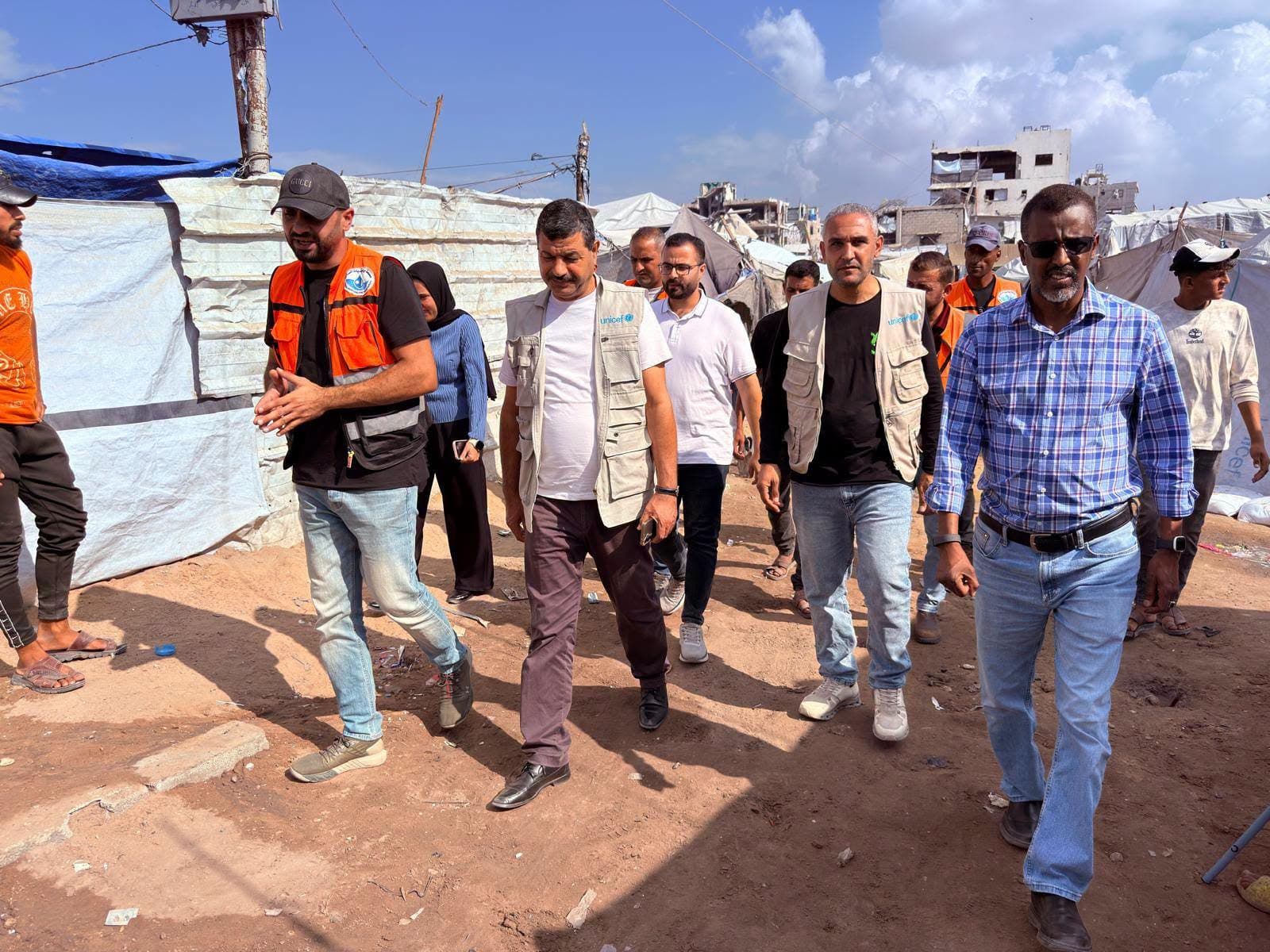
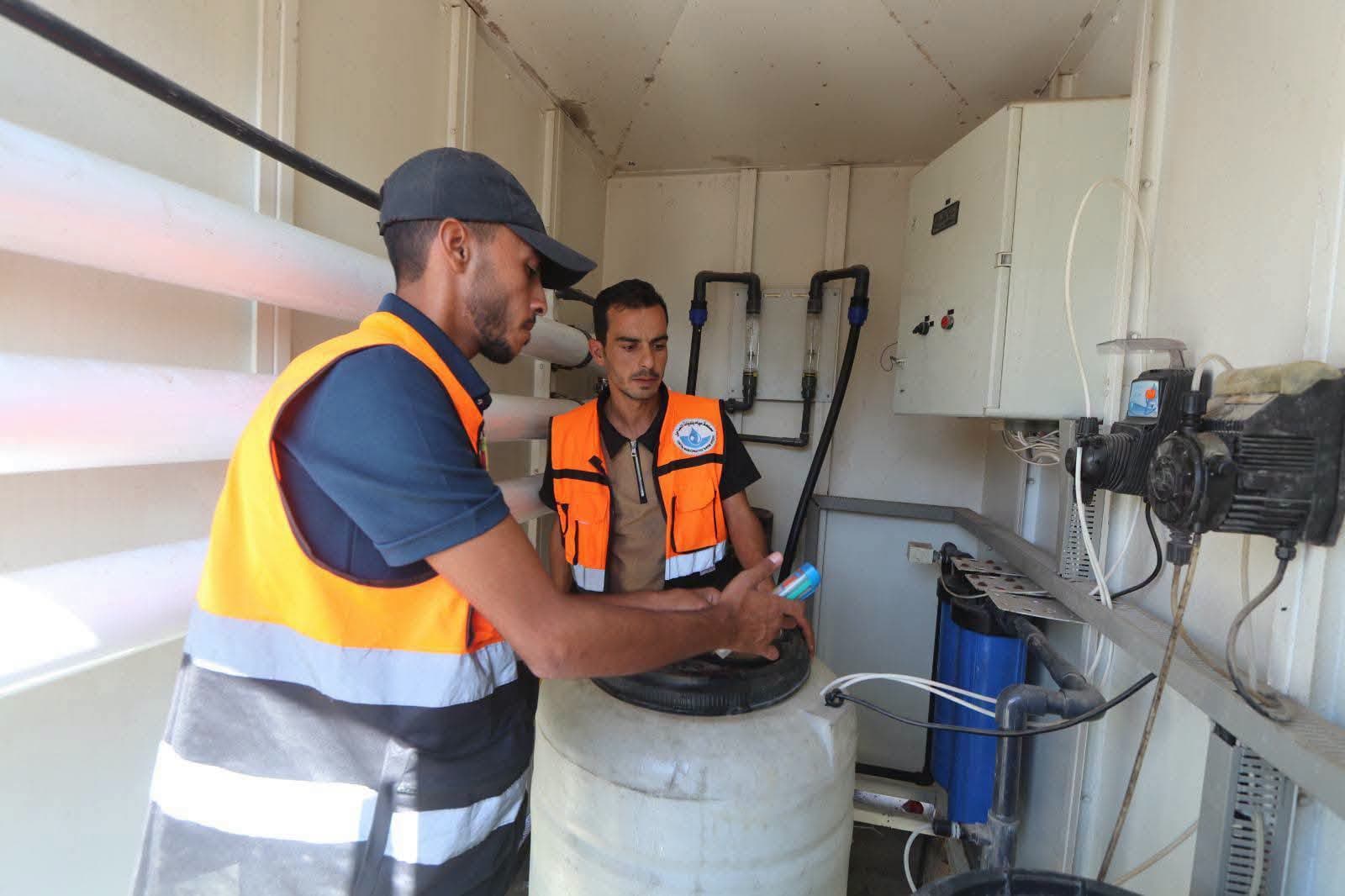
Completing the fourth course of the joint training program on non-revenue water management, funded by GIZ.
Funded by the German Corporation for Technical Cooperation (GIZ)..
The Palestinian Water Service Providers Union and CMWU Complete the Training Program for Workers in the Water and Sanitation Sector.
Gaza - As part of the training program launched by the Palestinian Water Service Providers Union, in cooperation with CMWU and funded by the Water Program in Palestine implemented by the German Corporation for Technical Cooperation (GIZ), and implemented by the local company (EMCC), with the program including, in its fourth course, a specialized course in non-revenue water management "network losses," with the course including several practical aspects related to the mechanisms and practical and technical procedures related to non-revenue water management, which benefits the efficiency of water networks at the municipalities' and CMWU's facilities, aiming to raise the efficiency of workers in the water and sanitation sector, particularly technicians working in managing drinking water networks, with the course continuing for three intensive days.
Eng. Monther Shoblaq, Director-General, Chairman of the Board of Directors of the Palestinian Water Service Providers Union - CMWU's Director-General, affirmed, in his opening speech for the fourth training course, the importance of this qualitative course in raising the efficiency and capabilities of workers in the water sector, and increasing their experience and sharpening their skills in technical and professional aspects, and passing this information and experience on to their colleagues at the Gaza Strip's municipalities.
Shoblaq also praised the role of the institutions and partner bodies in this training program, and praised the great interest shown by the German Corporation for Technical Cooperation (GIZ) in supporting the water and sanitation sector and continuously supporting qualitative projects, and also thanked the municipalities participating in the training course, which prove their keenness on upgrading their cadres in a way that benefits the quality of the service provided to residents, wishing this training program would achieve its desired goals.