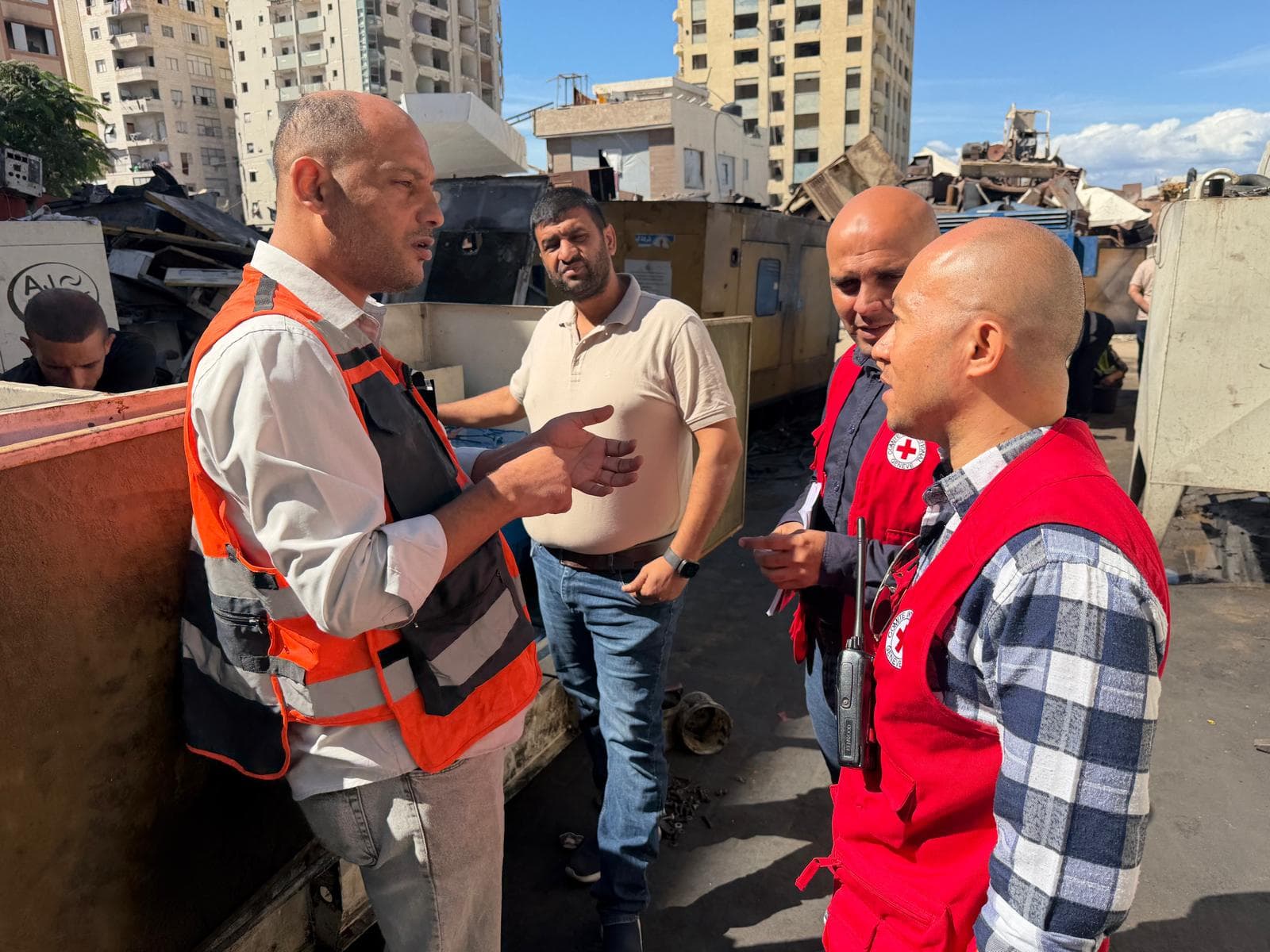
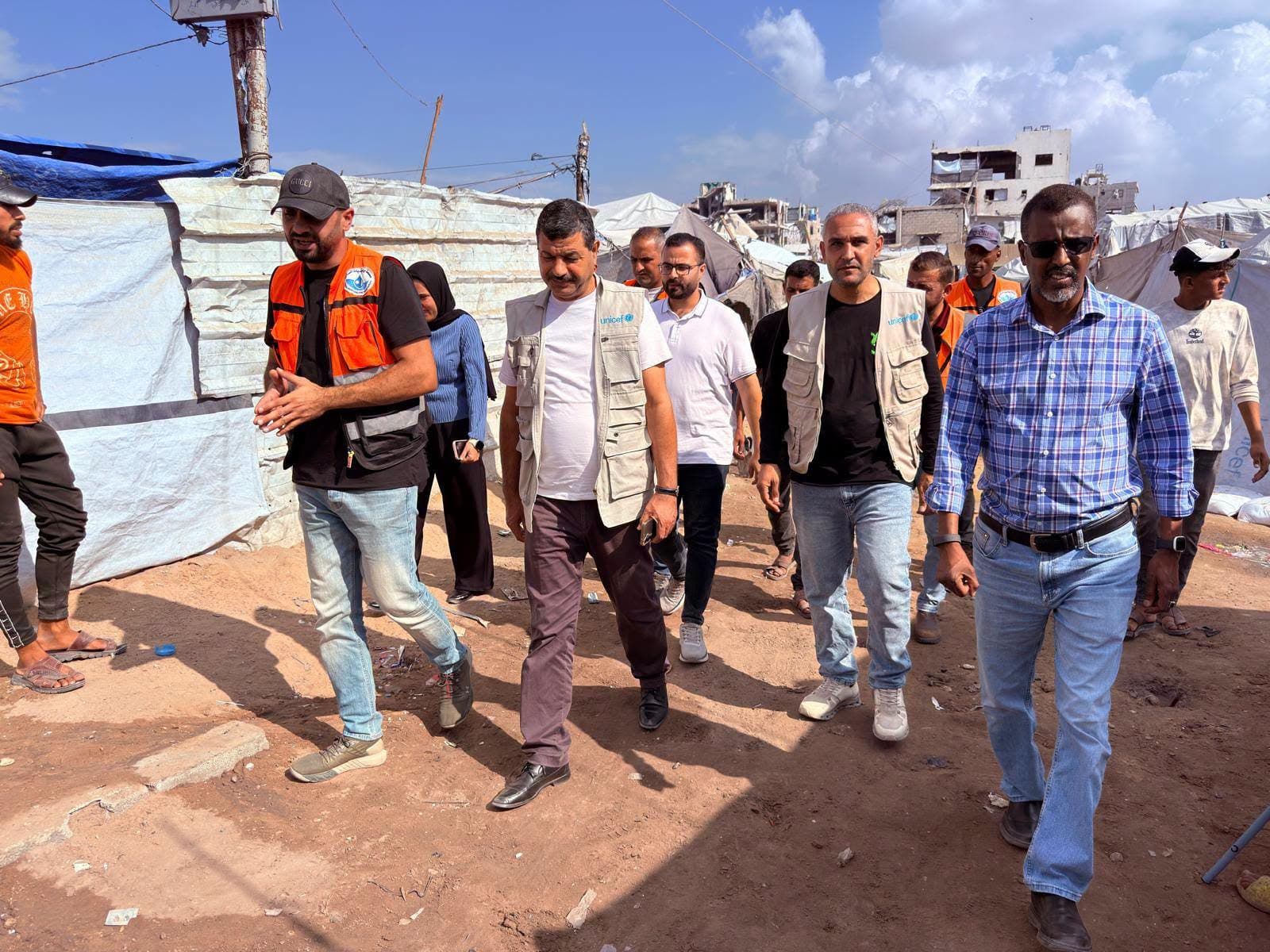
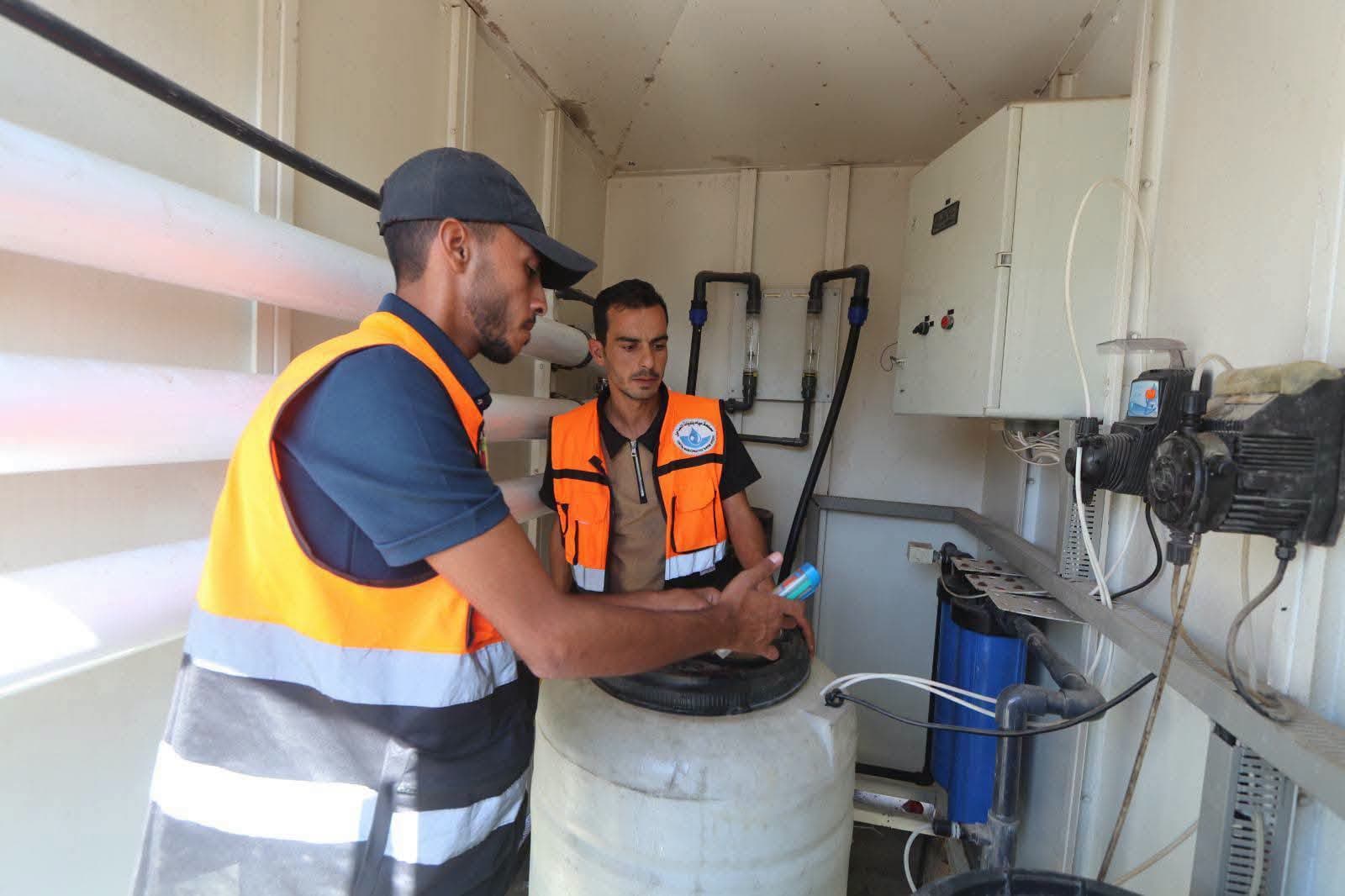
Beginning trial operation of Khan Younis sewage treatment plant, funded with $57 million from Japan, the Islamic Bank, and UNDP, with an initial capacity of 26,600 m3 daily.
Beginning the Trial Operation Phase of the Sewage Treatment Plant for Khan Younis Governorate.
Gaza – CMWU.
The sewage treatment plant for Khan Younis governorate was constructed using advanced technology according to international standards, using activated sludge, through which the plant can treat 9 million cubic meters annually (in the first phase) and 16 million cubic meters annually at the end of the second phase, suitable for filtration into groundwater and then reuse in agriculture.
With funding of about $57 million, UNDP succeeded in securing it from several funding bodies, including $14.8 million from the Japanese government, $42 million from the Islamic Development Bank (funded by the Kuwait Fund for Development), and $1.1 million from UNDP, with cooperation and joint efforts from all relevant institutions: UNDP (as the implementing body) and CMWU (as the supervising and operating body), in coordination and cooperation with the Palestinian Water Authority, Khan Younis Municipality, and the Ministry of Local Government. The first phase of the project was successfully implemented without delay.
In turn, Eng. Yahya Abu Obeid, CMWU's Director-General's Advisor for Sanitation Affairs and Director of the Khan Younis treatment plant project, stated that the first phase of the treatment plant was constructed with a capacity of 26,600 cubic meters daily to serve the residents of Khan Younis governorate as a first phase, and a filtration system and a pipeline for discharging treated water and for emergencies were also constructed, while the second phase will be constructed if the necessary funding becomes available, so that the plant becomes able to treat about 45,000 cubic meters daily by 2025.
Eng. Abu Obeid added that the current project included constructing the sewage treatment plant building near Sofa, which has been completed at 95%, constructing basins for filtering treated sewage water at Al-Fukhari, completed at 97%, constructing a transmission line for treated sewage water from the main plant to the filtration basins, completed at 99%, a transmission line for sewage water from the filtration basins to the sea (emergency line), completed at 45%, and constructing an electricity connection line from Salah al-Din Street to the treatment plant at Al-Fukhari, completed at 98%.
Eng. Abu Obeid noted that the project's implementation was contracted to an international contractor and local contractors to implement the project's various components, but due to the project's technology and the complex nature of its work, an international engineering consulting company was contracted to work in partnership with a local engineering consulting company to supervise the project's implementation and operate it for one year.
Eng. Abu Obeid noted that most parts of the project are nearly in the final stages of handover and operation, with the plant's trial operation beginning on Thursday, 5/9/2019, and the plant's actual operation is expected to begin in mid-October 2019, noting there is a delay in supplying the emergency line's pipes due to the difficulty of the procedures for materials entering the Strip, with completion expected before the end of the year, noting that the emergency line will transport treated sewage water from the filtration basins to the sea, with the possibility of using this line to use the treated water for irrigation at Al-Muharrarat.